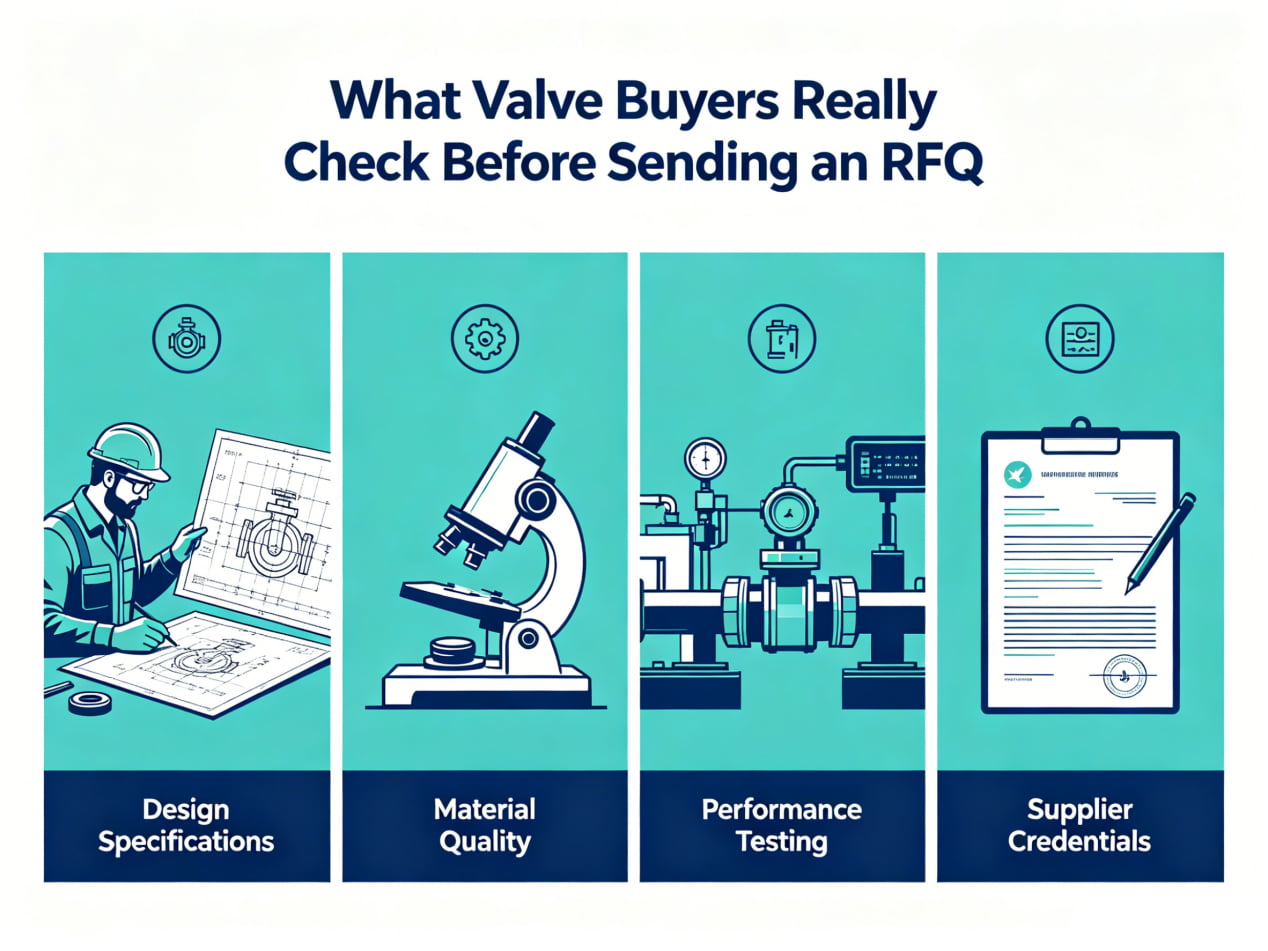
What Valve Buyers Really Check Before Sending an RFQ
The Request for Quotation (RFQ) process plays a key role in industrial valve procurement. It acts as the main link between what buyers need and what suppliers can offer. In big industrial projects, buyers must get specifications right and follow technical rules. This helps keep operations safe and smooth. Buyers send out an RFQ after checking various technical and business factors. They make sure every quote fits the project’s details, like pressure class, material grade, and testing needs. A good RFQ leads to exact quotes. It also boosts procurement speed by cutting down on changes in the bidding stage.
Importance of Buyer Evaluation Before Sending an RFQ
Buyers do a full check of possible suppliers before they send an RFQ. They want to confirm the suppliers are reliable, meet quality levels, and can hit delivery dates. This early check involves looking at certifications, past work, and following global standards. Buyers match technical specs to project papers to avoid errors that might cause extra costs or hold-ups. This careful work keeps talks between buyer and maker smooth during the whole procurement period.
What Technical Factors Do Valve Buyers Examine Before Sending an RFQ?
Buyers look at key technical points before starting the quote process. They do this to make sure the valves fit operational and rule-based needs.
Material Specifications and Compliance Requirements
Choosing the right material is vital for how valves work in different industrial settings. Buyers check that materials follow known industry rules like ASTM, API, or ISO specs. They pay close attention to resistance against rust for harsh liquids, pressure levels that match system designs, and heat handling in tough spots. Buyers often ask for papers like Mill Test Certificates (MTC) early to prove the raw materials can be traced.
Design Standards and Dimensional Compatibility
Following design rules helps valves fit well into current systems. Buyers look over if valves match codes like ASME B16.34 or API 600 based on the type and use. They check sizes, such as face-to-face lengths, flange levels, and end links, to ensure they work with pipe setups. Matching all parts evenly cuts down on upkeep issues when things run.
Performance Criteria and Testing Requirements
Checking performance is a main part of the review before RFQ. Buyers see if tests like hydrostatic or pneumatic ones follow API 598 or ISO 5208 rules. They must confirm leak levels for important uses where no leaks are allowed. Some jobs need special tests, like for cold temps or emission control. So, buyers check supplier test skills ahead to skip problems later.
How Do Buyers Evaluate Supplier Capabilities Before Sending an RFQ?
After technical checks, buyers look at if suppliers have the setup and plans to give steady quality on time. This goes beyond just the valve features.
Quality Management Systems and Certifications
Suppliers with ISO 9001 or API Q1 certifications build more trust with buyers. They have solid quality systems in place. In the review, buyers check inside inspection notes, tool calibration papers, and ways to handle flaws. Good tracking systems let each part be followed from raw material buy to final build. This matters a lot in fields that need full compliance files.
Production Capacity and Lead Time Reliability
How much a supplier can make affects if projects stay on schedule. Buyers study output data and past delivery success to see steady work under different loads. They also check if suppliers can handle rush jobs without hurting quality steps. Smart planning for capacity lowers risks when demand gets high.
Technical Support and After-Sales Service Availability
Strong technical help from suppliers improves teamwork during spec clear-up. Buyers like makers who give engineering advice in RFQ prep. This cuts confusion in what the job covers. Services after delivery, like upkeep tips or fix help, matter a lot in picking suppliers for the long run. They help keep things running well after setup.
What Commercial Aspects Do Valve Buyers Review Before Sending an RFQ?
With technical fit confirmed, buyers shift to business sides that affect full ownership costs and deal setup ease.
Pricing Structure and Cost Transparency
Clear price setups are key for fair bids among sellers. Buyers want broken-down costs that show unit prices, extra parts, test fees, packing costs, and shipping under set Incoterms. This openness stops surprise costs in the deal run. It also matches budget plans from the project start.
Delivery Terms and Logistics Capabilities
Reliable delivery is a big part of checking suppliers. Late shipments can mess up whole project times. Buyers look at delivery terms under Incoterms like FOB, CIF, or DDP to figure total arrival costs. They review packing ways to match global ship safety rules. This prevents damage in transit, especially for big valves in sea or plant uses.
Warranty Policies and Contractual Conditions
Warranty cover gives peace of mind against build flaws after setup. Buyers check how long the warranty lasts and clauses for fix services or part swaps. They look closely at deal terms for pay on delays or rule breaks. These set who takes blame in the work stages.
Why Do Buyers Review Documentation Readiness Before Sending an RFQ?
Right papers are the base for clear talks between buyer and maker all through procurement.
Technical Data Sheets and Drawings Availability
Full technical papers let suppliers make quotes without guesses that could change prices or times. General Arrangement Drawings (GAD) help check sizes before order lock-in. Detailed data sheets list pressure levels, flow rates (Cv), build materials, coating info, and test needs. All these are key for right cost guesses.
Compliance Declarations and Traceability Records
Papers that show rule following prove supplier skill and meet market rules. Tracking records with heat numbers, batch codes, or make logs build trust in product strength. They cover every step from forging to build. This boosts faith before formal buy orders go out.
How Does Miwival Support Professional Valve Procurement?
Miwival stands as a steady partner in worldwide valve buying. It mixes engineering care with quick customer help from start to end.
Miwival’s Commitment to Quality Manufacturing
Miwival builds industrial valves by sticking to global codes like API 600 for gate valves, ASME B16 series for sizes, and ISO-based quality plans. This gives steady work across valve types. Each valve goes through strict checks, including hydrostatic tests, sight reviews, size confirms, and coating looks. These aim for lasting strength in hard conditions.
Comprehensive Support from Inquiry to Delivery
The firm helps clients sharpen technical specs before RFQ send-off. This cuts after-bid questions in tough projects with many valve kinds or rare metals. Miwival’s flexible make plans fit rush needs. Its worldwide ship network makes sure deliveries come on time, no matter the place or job size.
Conclusion
Full checks before RFQ are a main part of good valve buying plans in fields like oil & gas, chemical plants, power making, and water care. Skilled buyers go over technical details like material rule fits along with business points such as price clearness and warranty rules before sending quote requests. Checking supplier skills early cuts risks of quality slips or time overruns. It also builds long-term steadiness in supply lines. Working with trusted makers like Miwival boosts buying speed. It lines up engineering know-how with solid make power. This makes sure every valve sent matches spec rightness and work lasting needs in full valve buying lists.
FAQs
What is the most common reason buyers delay sending a valve RFQ?
Buyers often wait to send an RFQ because of missing technical data sheets or unconfirmed designs from engineering groups.
How do buyers verify supplier authenticity before issuing an RFQ?
They usually check certifications like ISO 9001 or API approvals, audit notes, client refs, and past delivery info.
Why is documentation readiness crucial before requesting quotations?
Right papers stop mix-ups between buyer and supplier. They make sure quotes match exact materials, sizes, test needs, and delivery hopes.


 consult
 WHATSAPP
 leave message
 top
top