Advanced Insights into Ball Valve Purpose for Industrial Applications
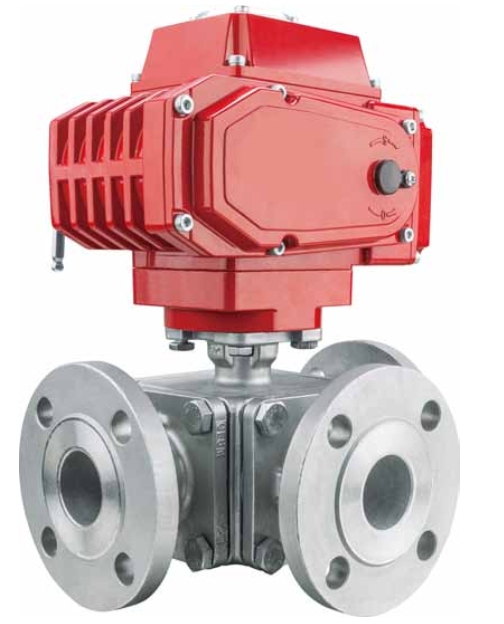
The ball valve is a type of valve that is a quarter turn valve and is used to control the flow of fluid by means of a spherical disc. The core design of a ball valve is used to provide precise control as well as absolute shutoff. The internal structure of ball valves is designed to handle a variety of fluids including liquids, gases and slurries, with minimal pressure loss. According to data from the Valve Manufacturers Association (VMA), ball valves are one of the most widely used industrial valves, and make up approximately 20% of all industrial valve installations worldwide. The ball valve has become a popular choice as it is robust and easy to use, ideal for isolation as well as throttling, with the added benefit of fast action when required.
Key Industrial Applications of Ball Valves
We’ll cover a few of the applications for these types of valves before diving into the various technical designs. As I stated earlier, the Ball Valve is a very popular type of valve used extensively in oil and gas pipeline services, in chemical processing plants, and in municipal water treatment plants. This type of valve functions exceptionally well in high-pressure and high-temperature applications and has inherent leakage characteristics that function well in highly corrosive media. Ball valves are found on offshore oil platforms where trunnion-mounted ball valves are often used to control the flow of crude oil while functioning at pressures in excess of 10,000 psi. In chemical processing plants, the Ball Valve’s ability to function in aggressive media such as acids and solvents makes it an ideal choice for safe and durable service.
Structural Components and Design Features
Ball valves mechanical design provides the explanation to why Ball valves are reliable to be used in many industries.
Main Parts of a Ball Valve
The body of a ball valve is the principal pressure vessel containing all of the other components. The ball has a bore, running centrally through it. This allows the ball to rotate within the body of the valve thus allowing fluid to pass through the open section of the ball or to be blocked by the hard surface of the ball. The seats of the ball valve are typically made of PTFE or reinforced polymers and are hard wearing, running against the ball in the open position. The stem, which connects the actuator or handle to the ball, is used to rotate the ball thus controlling the flow of fluid. The various components of a ball valve are subject to a variety of mechanical and chemical stresses and it is important that all of the parts are dimensionally stable, even when subjected to variations in temperature.
Types of Ball Designs
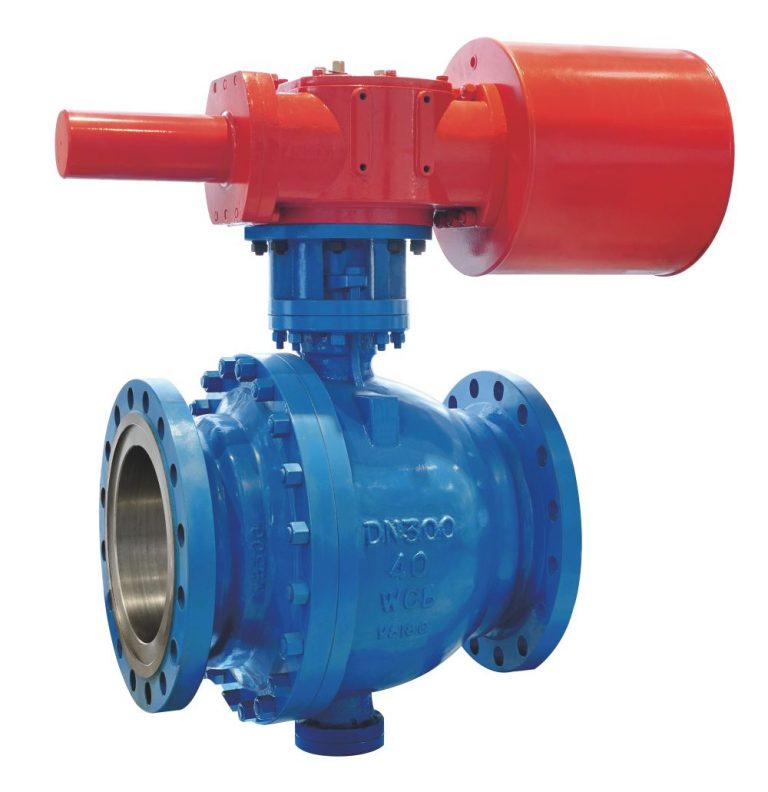
There are several configurations that a ball valve can be provided in to suit application requirements. Floating ball valves are pressurised from the internal of the valve to seat the ball off against the downstream seats. These types of valves are ideally suited for diameters of 6 inches and below. Trunnion mounted ball valves are provided with bearings at the top and bottom of the stem and are ideal for very large diameter pipes or high pressure applications. The V-port ball valve has a notched section to the ball which allows for the proportionate of flow as required in process control loop applications as opposed to standard on/off service.
Mechanism of Operation
The mechanism of a ball valve determines how efficiently a ball valve runs in industrial dynamic applications.
Flow Control Through Quarter-Turn Action
A typical ball valve goes through a 90 degree rotation with the handle or actuator. When the valve is straight through, the bore of the ball is open allowing for fluid to pass through the pipeline. When the valve is 90 degrees through, the bore of the ball is fully closed allowing for no fluid to pass through the pipeline. This quarter turn action allows for a very rapid shut down should a pipeline rupture occur. A ball valve also has a very low turbulence and friction loss which allows for very efficient operation of pumping systems. Studies have shown up to 5% reduction in total energy use when using a ball valve versus a gate valve.
Sealing Mechanisms and Pressure Management
The sealing integrity is determined by the type of seat material and the cavity design. Soft-seated variants such as those with PTFE or nylon seat rings can achieve bubble-tight shut-off under average pressure. The metal-seated variants are designed to withstand abrasive fluids and even steam at temperatures above 400°C. Additional features such as pressure-balancing holes that are drilled into the ball or into the body cavity can also be integrated in order to avoid excessive pressure build-up during thermal expansion in closed systems.
Variations Based on Port Configuration and Connection Type
The configuration of the ports of a valve significantly affects its capacity to handle flow as well as its installation flexibility.
Port Configurations in Industrial Use
In a full port configuration the bore of the throttling valve is the same as the bore of the connected pipe or pipe segment. Thus, no loss in pressure is incurred which is an advantage for cleaning “pigging” operations in oil pipelines. Reducing the bore of the port area of a valve causes a loss of area which decreases cost but restricts flow by about 10 to 15%. The ports of a segmented port design can be individually controlled to provide a variety of throttling characteristics. Such characteristics are useful for a number of process conditions. For example, a slurry may need to be thinned, or a solution may need to have its pH adjusted.
Connection Methods and Installation Considerations
Sealing connections are designed for various applications, i.e. threaded ends for low pressure applications, flanges for easy maintenance, and welded connections for maximum seal performance under extreme conditions. Proper installation and alignment of the sealing connection is required to prevent undue seat wear and to ensure long term sealing performance. Refer to industry guidelines for recommended torque values after installation to ensure that stem is not deformed by stresses induced by misalignment.
Material Selection and Performance Factors
The choice of material has a direct effect on the service life, the corrosion resistance and the efficiency of the cooling system.
Materials Used in Construction
Stainless steel remains the dominant material due to its superior corrosion resistance against saline water or acidic chemicals. Carbon steel versions are preferred where strength outweighs corrosion concerns—such as high-pressure gas transmission lines. For highly corrosive environments like hydrochloric acid processing units, alloys including Hastelloy or Monel offer exceptional durability despite higher initial costs.
Factors Influencing Operational Efficiency
Seal elasticity can be influenced by thermal fluctuations, thus it is crucial for fluid seals to be made of materials that have constant coefficients of expansion. This allows the seals to maintain their seal quality within a temperature range from –50°C up to +500°C. Also the fluid’s composition will determine the long-term compatibility of the fluid with the seal. Abrasive slurries can for instance wear soft seats much faster than metallic seats. Regular maintenance, by means of regular checking of the torque of the bolts, can extend the lifespan of the valve by more than 25%. This has been shown by field tests of API-certified operators.
Automation and Control Integration in Modern Systems
As industries progress to more sophisticated process automation, it is increasingly important to integrate the actuation technology into the valve assembly.
Actuation Methods for Ball Valves
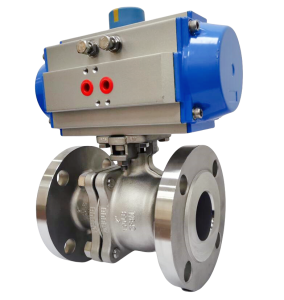
For low frequency of operation, such as for isolation of plants during maintenance shutdowns, manual levers are sufficient. Pneumatic actuators are suitable for high speed of operation and are used for automated control sequences in refineries and in power generation plants, where even milliseconds are important. For accurate modulation of electric motors, by means of for example electric globe valves, actuation by means of electric actuators is integrated with PLCs (programmable logic controllers) and from the control rooms where the operators are seated, they can operate the plants by means of the centralized control rooms.
Integration with Industrial Automation Networks
Smart valve assemblies, equipped with torque sensors, can send diagnostic information like cycle counts to supervisory control systems like SCADA or DCS systems. This information can be used for predictive maintenance and allow for repair before failure occurs. This can improve uptime by 15-20%. Also, digital monitoring of fugitive emission, in accordance with ISO 15848, is an important monitoring criterion in modern process facilities.
Maintenance Practices and Longevity Optimization
Inspection of a valve in operation is vital to its continued reliability.
Inspection and Servicing Procedures
Regular inspection for wear or damage of the seals, seats and stem packing is recommended by technicians for valves subjected to repeated cycling under load. Lubrication of the bearings reduces the friction during the actuation of the valve and prevents galling of the bearing surfaces. Accurate reassembly after servicing ensures that all parts are correctly orientated to ensure a bubble-tight closure in accordance with the ANSI B16 standards.
Common Operational Issues and Mitigation Strategies
Cavitation damage can be avoided by proper dimensioning with regard to flow velocity by means of computational fluid dynamics (CFD) during design. By selecting the right seat materials from a thermally stable material range, leakage due to expansion differences at rapid temperature changes can be avoided. Scheduled functional testing under actual load condition ensures the valve’s response and thus fulfills the safety requirements for SIL certification at critical applications.
Miwival — A Reliable Partner in Industrial Valve Solutions
Miwival has been a supplier of ball valves for many industrial fields all over the world and has lots of experience in this field. It has been offering consulting services for design, assistance for selection of materials based on the process chemistry and after-sales service such as inspection after installation to achieve maximum efficiency for long time. Also, Miwival has been supporting clients from when the specification is being written up until the commissioning, in order to satisfy the international standards such as API 6D and the high quality standards of Miwival which has ISO 9001 certification.
Conclusion
Industrial assets rely on ball valves to control the precise flow of fluids and gases. The robust design of the valves is versatile enough to be used in any number of applications, from the cryogenic liquefaction of gases to the complex refining processes of the petrochemical industry. Advances in materials have enabled the ball valve to withstand the effects of corrosion fatigue while remaining compact enough to be easily integrated into automated systems. When correctly selected and properly maintained, the humble ball valve can deliver significant cost savings by reducing the number of hours that assets are taken out of service as well as extending the life of those assets.
FAQs
What are the determining factors for a floating ball valve or a trunnion mounted ball valve?
Floating ball valves are suitable for small diameter lines and moderate pressure, they use the self-centering feature of the ball and seal inside the bore. Trunnion mounted ball valves are used for larger diameter lines, they have low operating torque and are suitable for high differential pressure applications.
How frequently should industrial ball valves receive preventive maintenance?
According to the ISO maintenance guidelines for industrial ball valves, inspection frequency is to occur every 6 months for most severities of service; for critical applications, every 3 months, focusing on the seat verification to assess for wear.
Does the metal-seated ball valve perform in abrasive slurry service?
Yes. The metal-seated configuration of the ball valve is especially suited for erosive type applications and is used in many mining applications including the handling of mining tailings as well as catalyst suspensions. This type of ball valve is ideal as it can withstand the severe wear that soft-seated types would normally suffer in similar applications.


 consult
 WHATSAPP
 leave message
 top
top