What Are Lined Valves? Types, Applications, and Benefits
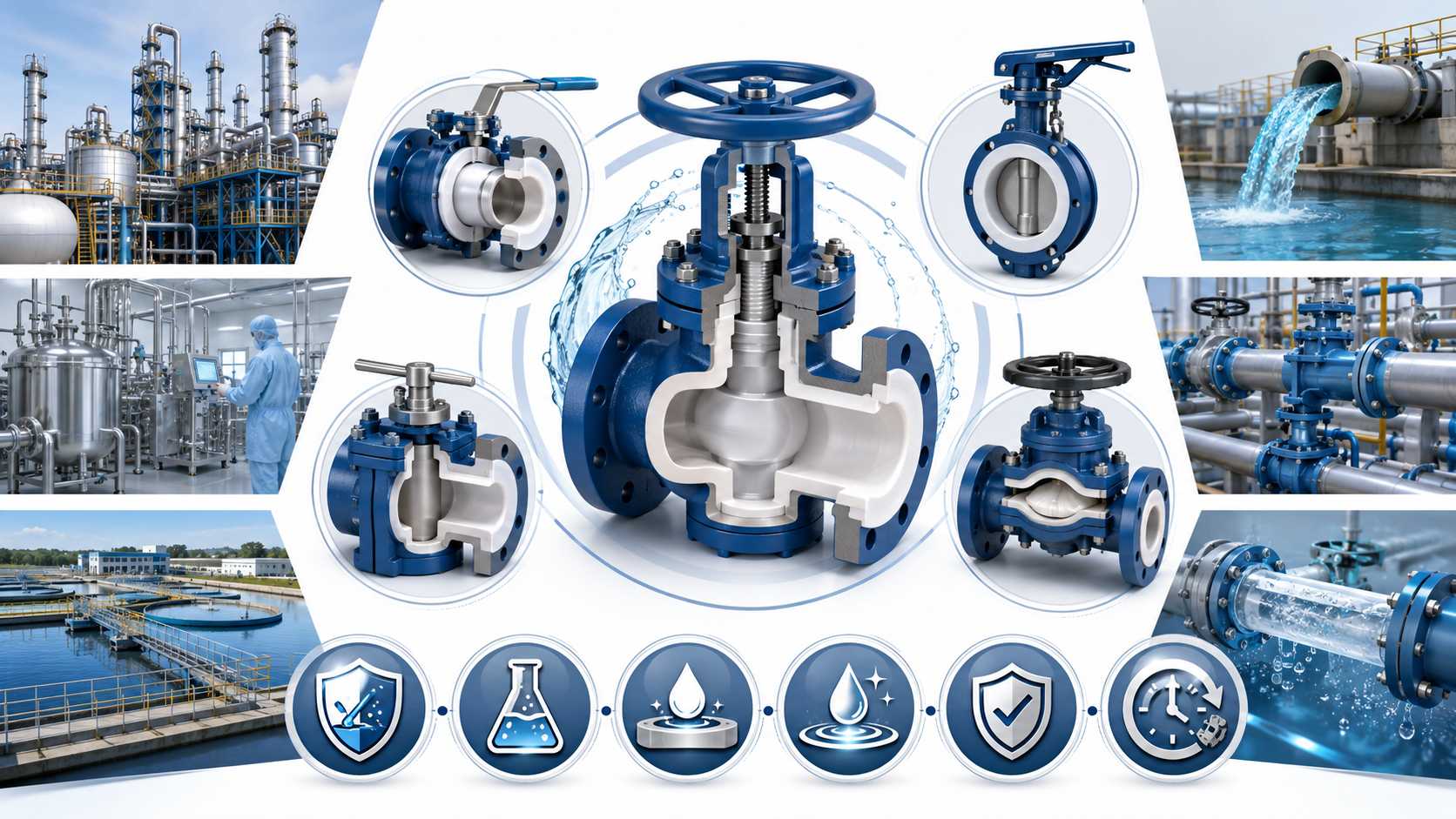
In chemical processing, water treatment, mining, fertilizer production, and other fluid-handling systems, valve selection directly affects safety, maintenance cost, leakage risk, and project reliability. When the media is corrosive, abrasive, or sensitive to contamination, a standard metal valve may not provide enough protection. Lined valves are often used to combine the strength of a metal valve body with the chemical resistance of an internal lining. For engineers, contractors, distributors, and procurement teams, the key is to match the lined valve type, lining material, pressure rating, temperature range, and documentation requirements to the real working conditions.
Why Do Buyers Use Lined Valves in Industrial Systems?
Valves that have linings are used in cases where the fluid can attack the body material or other process requirement. They are one of the more common styles of valve used in services where corrosion is a problem. They are very effective because the area that comes into contact with the media is covered with a lining which does not come into contact with the body of the valve.
How Does the Lining Protect the Valve Body?
A lined valve has a metal body for mechanical strength and an internal lining on the wetted surfaces. The lining acts as a barrier between the process fluid and the metal pressure boundary.
Typical lining materials for valves are PTFE, PFA, FEP, PP, PVDF and rubber. Each of these materials has a number of characteristics, especially in relation to how a material will react to chemicals, temperature, pressure, wear and cleaning. No valve should be chosen on the basis of the product name and general chemical resistance claims.
When Is a Lined Valve a Practical Choice?
A lined valve may be suitable when carbon steel or stainless steel is not sufficiently resistant to the fluid, but a fully alloyed valve is too expensive or unnecessary. A lined valve can be used for acids, alkalis, salts, some solvents, wastewater chemicals and a few slurry applications.
Lined valves are not for every application. Conditions that could cause premature wear to the liner include severe vacuum, high temperature, abrasion, media that crystallizes and frequent thermal cycling. These potential problems should be investigated before purchase of a lined valve.
What Types of Lined Valves Are Commonly Available?
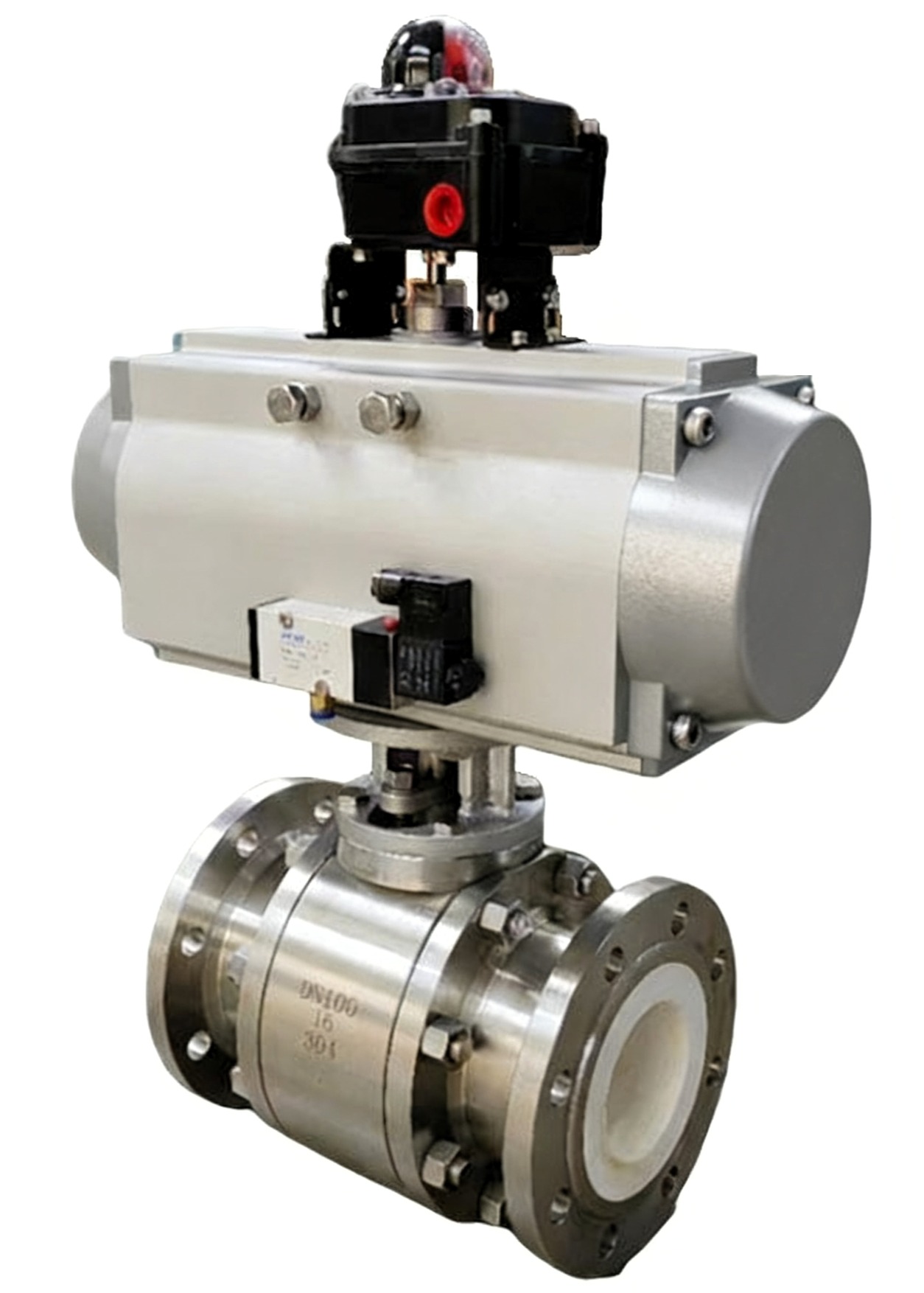
There are various types of lined valves to suit different applications of flow control. Some of the types are designed to function well for on/off service, for large line size applications, for backflow prevention, etc. And for applications where clean fluid is to be maintained.
What Are the Main Lined Valve Options?
| Lined Valve Type | Common Use | Buyer Points to Check |
|---|---|---|
| Lined ball valve | On/off chemical service | Seat design, stem sealing, torque, cavity protection |
| Lined butterfly valve | Larger pipelines | Disc lining, shaft sealing, flange fit, pressure limits |
| Lined plug valve | Chemical isolation | Plug design, sleeve condition, torque, spare parts |
| Lined diaphragm valve | Corrosive or cleaner media | Diaphragm material, cycle life, pressure-temperature range |
| Lined check valve | Backflow prevention | Flow direction, cracking pressure, installation position |
When selecting a valve type it is important to consider the function of the process, not just the size of the pipes or cost of the valve. Two lined valves of the same nominal size can have vastly different performance due to differences in lining thickness, seal design, valve body design and test requirements.
How Should Buyers Compare These Valve Types?
We carry a selection of lined ball valves that offer tight shutoff and low pressure loss. Lined butterfly valves are a compact solution for larger lines, but typically require special flange bolting and careful attention to disc lining quality. Lined diaphragm valves can be a good solution where the diaphragm material is compatible with the fluid and your maintenance crew wants readily replaceable seal parts. Lined plug valves can be a good answer for frequent chemical service, where isolation is a key factor. Lined check valves are typically specified to minimize backflow.
Where Are Lined Valves Usually Applied?
In process industries where corrosion resistance, compatibility of fluids and cost of operation over time are key factors Lined valves are widely used. Chemical and water treatment plants, Fertilizer manufacturing, Mining and associated support process, Pickling lines, Handling of Acids and Alkalis, Fine Chemicals etc.. are typical areas where Lined Valves can be considered.
What Should Chemical Plants Check?
Chemical plants should provide the service data required to generate a quotation. This could include the name of the media, concentration, temperature, pressure, flow rate, solids content and the cleaning method.
Small changes in concentration or temperature can make a big difference in material compatibility. In addition, there are potential consequences of failure. A low cost lined valve is not necessarily a good choice for a hazardous chemical service such as a line to a valve where a leak could pose a safety, environmental or shut down problem.
What Should Water Treatment and Slurry Systems Check?
In Water treatment plants a variety of different Chemicals are used. Some of these are acids, alkalis, disinfectants, coagulants as well as sludge. The flow in these plants can be intermittent. The choice of material is then a function of two criteria: the chemical resistance of the material and the access for maintenance.
When using a slurry or media that contains particles, abrasion has to be checked as well as the resistance to the chemical environment. The effect of flow velocity and the solids in the slurry on the lining has to be taken into account as well. Due to the possibly remote location of a valve, sufficient stock of spare parts as well as the planning of a replacement should be carried out early enough.
What Benefits Can Lined Valves Provide?
Lined valves can provide protection of thewetted surface by utilizing a variety of materials to counteract the corrosive effect of media that may otherwise cause premature failure of a valve. By selecting a suitable material for the lining, it is possible to reduce risk of corrosion related failure and aid reliable wet handling of fluids.
How Can Lined Valves Help Reduce Corrosion Risk?
A suitable lining can prevent direct contact between media and metal. Such linings can help prevent internal corrosion as well as leakage and premature wear of pump components. The choice of linings will, however, depend on a number of factors.
Reliable selection of the material for the wear lining is key to this benefit. Check the lining material, liner thickness, the design of the sealing, the maximum temperature and pressure as well as whether there are any metal parts exposed to the process fluid.
How Can Lined Valves Support Cost Control?
In many corrosive services a lined valve may prove to be the more cost effective option than a fully alloyed valve. Additionally the lined valve can offer reduced maintenance due to internal corrosion, provided the valve is correctly matched to the application.
Cost control over the entire product lifecycle, not only by means of the purchase price, is an important factor for buyers to make their decisions. This involves aspects such as service life and the risk of downtime as well as factors such as the range of spare parts available, the cost of the actuator, the testing required and the delivery time. After sales service and support is also important.
How Should Buyers Select and Inspect Lined Valves?
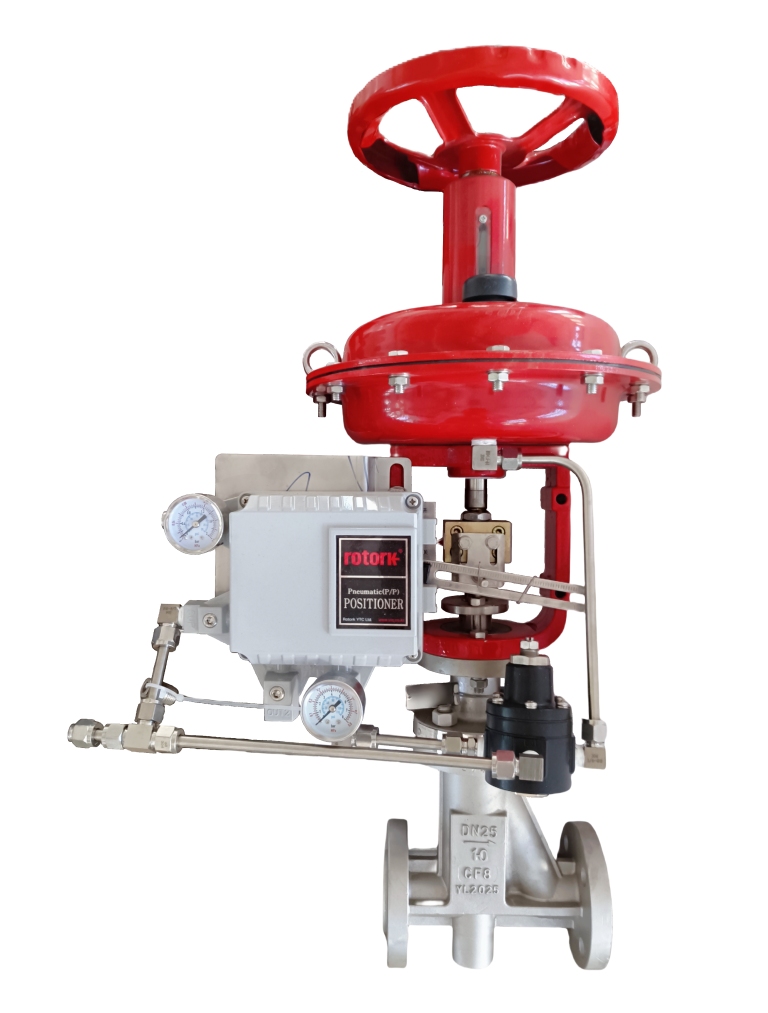
A clear specification of your needs prevents wrong selection, quotation errors as well as incorrect installation. Before you place an order it is best to prepare your required technical data and the documentation you require.
What Information Should Buyers Provide?
A good inquiry would list items such as: size of valve, pressure class, end connections, service media, typical concentrations, working temperature, working pressure, typical flow rates, solids by weight or volume content, and even where the valve will be installed.
Also please specify the operation method, e.g. manual handle, gearbox, pneumatic actuator, electric actuator etc. Any special requirements for testing, labeling, packaging, documents etc. must be specified before production.
What Quality Documents Should Buyers Review?
Some of the common documents that may be requested are drawings, manufacturer’s data sheets, pressure test reports, material information, inspection records etc. as well as operating instructions, packing details and parts lists for spares. For particularly high risk projects the buyer may also wish for the vendor to carry out witness testing or for the items to be inspected by a third party.
If required, such standards have to be clearly stated in the purchase order or in the project specification. It is important to make a clear distinction between the mandatory requirements of the project and the voluntary standards as well as the supplier’s self-declaration.
How Can Miwival Support Lined Valve Procurement?
Miwival supports industrial buyers who are looking for the right lined valve for their corrosive or demanding application. In addition to discussing the valve type and required lining material, Miwival can send drawings and discuss the order details with the buyer. Miwival can also discuss the packing requirements with the buyer and provide the buyer with the basic documentation that is required by the buyer. Importers, distributors, contractors and procurement teams will find this support useful for converting the technical requirements and purchase specification into a purchase specification that can be used to issue a purchase order to selected suppliers. Importers, distributors, contractors and procurement teams should however compare the supplier’s specification and documents with those of other selected suppliers and also compare their prices, price, delivery terms and any proposed services.
What Should Buyers Remember Before Choosing Lined Valves?
Lined valves can be a cost effective solution when a standard metal valve poses a risk of corrosion, wear or contamination with the process media. The value of lined valves is mainly determined by a number of key factors, including the type of valve, the lining, the pressure- and temperature-range, the application and the maintenance. A number of pitfalls can be avoided by not basing the selection of a lined valve on price, the trade name or on the general chemical resistance of the lining. A clear specification, proper testing, proper packaging and full documentation all play a major part in avoiding many of the problems encountered by buyers during the procurement process and later in service. Before placing an order for a lined valve it is wise to check the service data, the capability of the supplier, the availability of spare parts, the delivery time and the after sales service.
FAQs
What Are Lined Valves Used For?
Lined valves are used for controlling of fluids that are corrosive, aggressive, abrasive or contain contaminants. The metal body of the valve is protected from the media.
What Is the Difference Between a Lined Valve and a Standard Metal Valve?
In regular metal valves the fluid resistance is achieved by the material of the valve. In lined valves the body of the valve is made of metal to keep its strength and to achieve the resistance to corrosion or contamination by the internal lining.
Are PTFE Lined Valves Suitable for All Chemicals?
A. Yes. No lining has broad chemical resistance. But no lining material is universal. Buyers must check concentration, temperature, pressure, cleaning method and mechanical conditions.
4. Can Lined Valves Be Used for Throttling?
While there are various designs of lined valves which may allow some degree of throttling, many are designed purely for isolation purposes. It is essential for the supplier to confirm the type of valve, seat, actuator and liner suitability for continuous flow control duty.
What Should Buyers Check Before Ordering Lined Valves?
The buyer must check among other things the size, the pressure class, the connection standard, the medium, the concentration, the temperature, the pressure, the lining, the sealing design, the test requirements, the documentation, the spare parts and the delivery terms.


 consult
 WHATSAPP
 leave message
 top
top