
Bellow Seal Globe Control Valves for High-Temperature Applications: Design, Selection and Performance
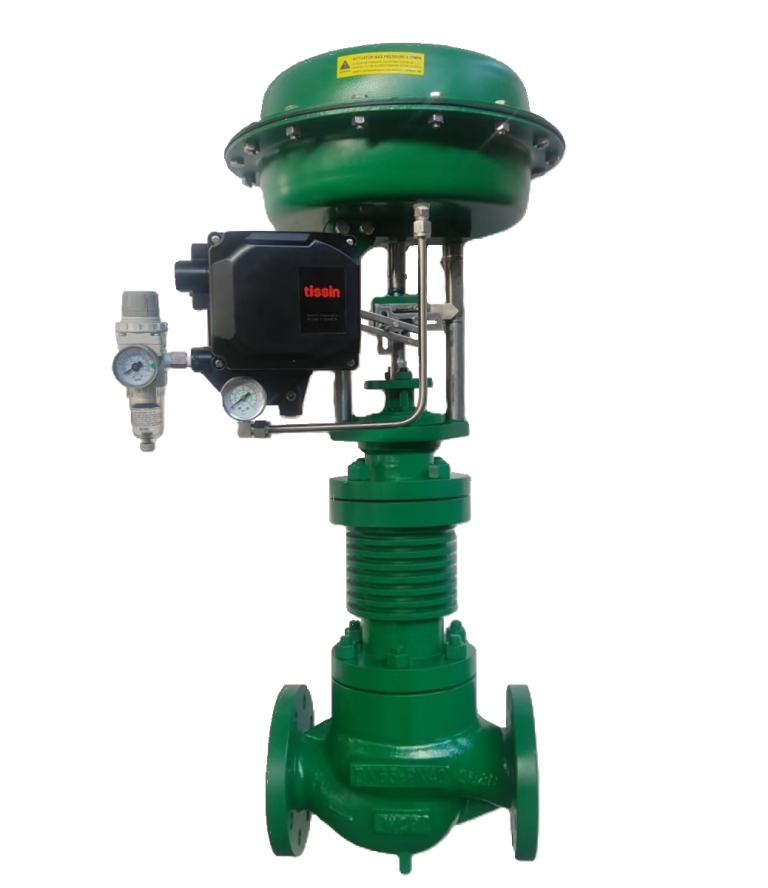
Industrial systems running at high temperatures put strict demands on control valves. Intense heat often speeds up packing wear. It also raises thermal stress and impacts the overall reliability of actuators and related parts. For hot oil, steam, chemical, petrochemical, and power operations, bellow seal globe control valves deliver precise flow regulation. At the same time, they boost sealing performance around the valve stem. However, their real-world success relies heavily on the total valve setup. This includes the bellows, bonnet, body and trim materials, flow characteristics, actuator, and pressure class.
What Makes a Bellow Seal Globe Control Valve Suitable for High-Temperature Service?
A bellow seal globe control valve mixes the strong throttling power of a standard globe-style unit with a tough metallic bellows assembly fitted around the stem. A bellows seal bonnet relies on this bellows to stop leaks near the valve plug stem. Consequently, it creates an extra sealing barrier between the internal process fluid and the outside environment.
This specific build proves incredibly helpful when working temperatures climb very high. It is also ideal if the handled fluid demands much tighter leak prevention.
How Does the Bellows Seal Help Control Leakage?
The metal bellows completely separates the moving stem from direct contact with the outside air at the main sealing zone. Because of this, it lowers the chance of outward leaks. Such leaks typically happen due to worn-out packing, constant stem shifting, or frequent temperature shifts.
When dealing with high-temperature tasks, engineers must pick the bellows based on several factors. These include the working temperature, pressure levels, fluid compatibility, needed stem travel, and the anticipated cycle rate. Furthermore, the chosen design has to permit enough movement during the entire control stroke. It must do this without putting too much mechanical strain on the bellows itself.
Why Is Bonnet Design Important?
Intense heat can easily move from the main valve body up toward the packing zone, actuator, positioner, and attached accessories. Therefore, the bonnet design plays a massive role in proper thermal management.
MIWIVAL provides standard bonnet styles alongside stem-extension setups equipped with cooling fins. This cooling-fin layout greatly boosts heat dissipation. As a result, it helps shield the upper valve parts from extreme process heat. MIWIVAL’s Customized Bellow Globe Control Valve is offered for a broad temperature range of -196°C to 650°C. The exact limit depends entirely on the chosen setup.
Which Design Features Matter Most at High Temperatures?
Solid reliability in hot environments relies on the entire valve assembly instead of just one single part. The materials, trim layout, flow characteristics, sealing method, connection style, and actuation must all perfectly match the actual field conditions.
A few crucial design elements need special focus during the specification phase.
What Body and Trim Materials Should Be Considered?
Picking the right material must start with checking the design temperature and the working pressure. You also need to look at the process fluid, local corrosion risks, and the desired lifespan.
For its Customized Bellow Globe Control Valve, MIWIVAL supplies several body materials. These options include WCB, CF8, CF8M, CF3, CF3M, WC6, and WC9.
Carbon steel works well for many basic hot-fluid tasks. On the other hand, stainless steels are often chosen when you need better resistance to rust and decay. Alloy steels are great options for much harsher pressure and heat situations. Additionally, trim and hard-facing materials need careful review. This review should account for erosion, cavitation, pressure drops, and the necessary shutoff quality.
Which Flow Characteristic Is Appropriate?
The link between valve travel and overall flow capacity directly impacts process control. MIWIVAL delivers linear, equal-percentage, and quick-opening flow options for this specific product line.
A linear setup gives a fairly steady, proportional shift in capacity as the valve moves. Equal-percentage profiles prove highly useful when working conditions change across a broad flow span. Meanwhile, quick-opening types create a huge jump in flow during the very first part of the valve’s stroke.
Therefore, the final decision needs to rest on your main control goals and the overall system behavior. It should never depend on temperature alone.
How Should a High-Temperature Bellow Seal Globe Control Valve Be Selected?
Picking the right valve must start with gathering complete process details. Selecting a control unit based merely on nominal pipe size and pressure class can easily lead to weak control results. This happens because the real flow rate, pressure drops, heat levels, and fluid traits also heavily affect proper sizing.
A thorough specification sheet allows the valve maker to set up the body, trim, bellows, actuator, and extra accessories with much greater accuracy.
What Process Data Should Be Provided?
Crucial details to share include:
-
Process medium
-
Design and operating temperature
-
Inlet and outlet pressure
-
Minimum, normal, and maximum flow
-
Pipeline size
-
Required shutoff performance
-
End connection
-
Actuator and control signal
-
Required fail position
-
Corrosion or erosion conditions
-
Potential cavitation or flashing
MIWIVAL’s Customized Bellow Globe Control Valve comes in sizes ranging from 1 to 28 inches. It also covers pressure ratings from Class 150 to Class 2500. Buyers can choose flanged, butt-weld, or threaded connections. Furthermore, the company supplies standard, angle, offset, and various other custom body shapes.
How Should the Actuator Be Chosen?
The chosen actuator has to deliver enough power to properly move and seat the valve under the expected pressure drops. At the same time, it must react perfectly to the incoming control signal.
MIWIVAL provides diaphragm, pneumatic cylinder, and electric actuators for this particular valve family.
The needed fail position must also be clearly defined based on plant safety rules. For instance, certain setups need the valve to fail closed if the air supply or power fails. Conversely, other systems might demand a totally different safety stance.
What Affects Performance in High-Temperature Operation?
Having a high temperature rating by itself does not promise steady, reliable operation. Factors like control stability, seal strength, mechanical toughness, and heat management must all be weighed during the valve engineering phase.
Real-world project conditions easily show how all these elements work together in the field.
How Can a Cooling-Fin Bonnet Help?
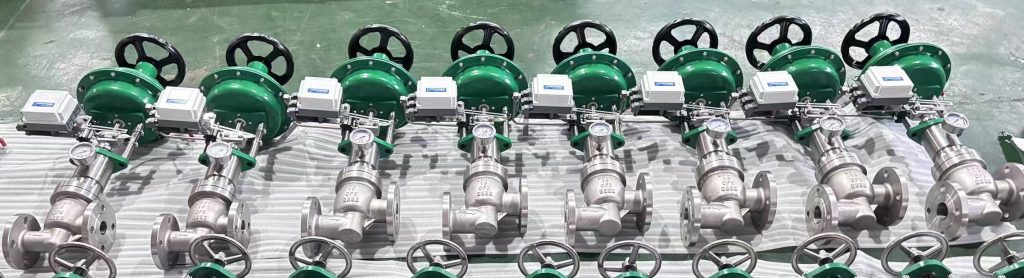
A cooling-fin bonnet greatly expands the surface area meant for shedding heat. By doing so, it helps cut down the total heat moving toward the actuator and the attached valve accessories.
During a recent MIWIVAL project, a DN65, PN40 Bellow Seal Globe Control Valve with Cooling Fin Bonnet was delivered for a demanding 300°C hot oil service. This specific setup featured a WCB body alongside stainless-steel and Stellite trim parts. It also included a diaphragm actuator, a smart electro-pneumatic positioner, and a reliable fail-close function.
This exact use case clearly shows why hot-environment control valves usually need custom, project-specific engineering. A simple, basic catalog pick is rarely enough.
What Should Be Monitored During Service?
Regular checkups remain incredibly important. This holds true even though a bellows seal gives a strong extra barrier against stem leaks.
Plant operators need to watch:
-
Valve response and control stability
-
Stem movement
-
Actuator condition
-
Positioner performance
-
External leakage
-
Abnormal vibration or noise
-
Changes in operating behavior
The schedule for inspections should match the local heat levels, cycle speeds, and system pressures. It must also consider the fluid traits and the facility’s safety rules. Highly severe or fast-cycling tasks will likely demand much shorter gaps between maintenance visits.
Why Choose MIWIVAL for High-Temperature Control Valve Projects?
Extreme heat applications usually need a very carefully paired mix of body materials, trim parts, bonnet styles, bellows, pipe connections, and automation gear. Partnering with a valve supplier that handles both the mechanical unit and the actuation package can greatly simplify this entire task.
MIWIVAL delivers highly customized valve units and smart automation solutions for a massive variety of industrial sectors.
A Reliable Valve and Automation Supplier
MIWIVAL builds valves and automation tools for many fields, including steam, mining, water and wastewater, pulp and paper, steel, chemical, power, fertilizer, food and beverage, and cement. Its globe control valves function as highly adaptable systems. They combine the main body, tight sealing, trim, seat, stem seal, actuator, and positioner into one unit.
Specifically for bellow seal globe control valves, MIWIVAL gives buyers many body materials, bonnet layouts, flow profiles, end connections, and actuator choices. This deep flexibility lets engineers tailor the valve setup to fit very harsh, high-heat process conditions. It completely avoids the flaws of a basic one-size-fits-all approach.
Conclusion
Bellow seal globe control valves are perfect for high-heat processes that demand precise flow control and better sealing near the stem. Nevertheless, true success relies on much more than just buying a valve with a high enough temperature score.
System engineers must carefully check the process fluid, heat levels, system pressure, and pressure drops. They also need to look at the required flow capacity, flow traits, body and trim metals, bellows layout, bonnet style, actuator type, and fail-safe actions. All these parts must be viewed as one unified system.
In hot oil, steam, chemical, petrochemical, and power plants, a well-built valve supports very steady process control. It also cuts down the danger of outward leaks and boosts long-term dependability. Whenever standard setups fail to handle the tough field conditions, custom body shapes and advanced cooling-fin bonnets can easily offer a much better answer.
FAQs
Can Bellow Seal Globe Control Valves Be Used for Steam?
Yes, they absolutely can. These units work great for steam tasks as long as the pressure class, heat limits, body and trim metals, bellows, bonnet, and actuator perfectly match the real steam environment. The exact steam pressure, heat levels, pressure drops, and needed flow range must be shared before starting the valve sizing and setup steps.
What Is the Purpose of Cooling Fins on a Bellow Seal Globe Control Valve?
Cooling fins actively help shed excess heat away from the bonnet zone. They also heavily reduce the amount of heat traveling toward the actuator and other accessories. These fins are incredibly useful in places where intense process heat might harm the long-term health of the upper valve parts.
What Information Should Be Sent to the Valve Supplier Before Ordering?
Buyers must supply details about the process fluid, design and working temperatures, and the inlet and outlet pressures. You should also include the minimum, normal, and maximum flow rates, pipe size, pressure class, connection style, material needs, control signal, shutoff rules, and the needed fail position. Be sure to mention any known risks like cavitation, flashing, rust, or physical erosion. Giving complete process data helps the supplier size and build the valve with top-tier accuracy.


 consult
 WHATSAPP
 leave message
 top
top