How to Select a High Performance Butterfly Valve for Large-Diameter Water and Wastewater Systems
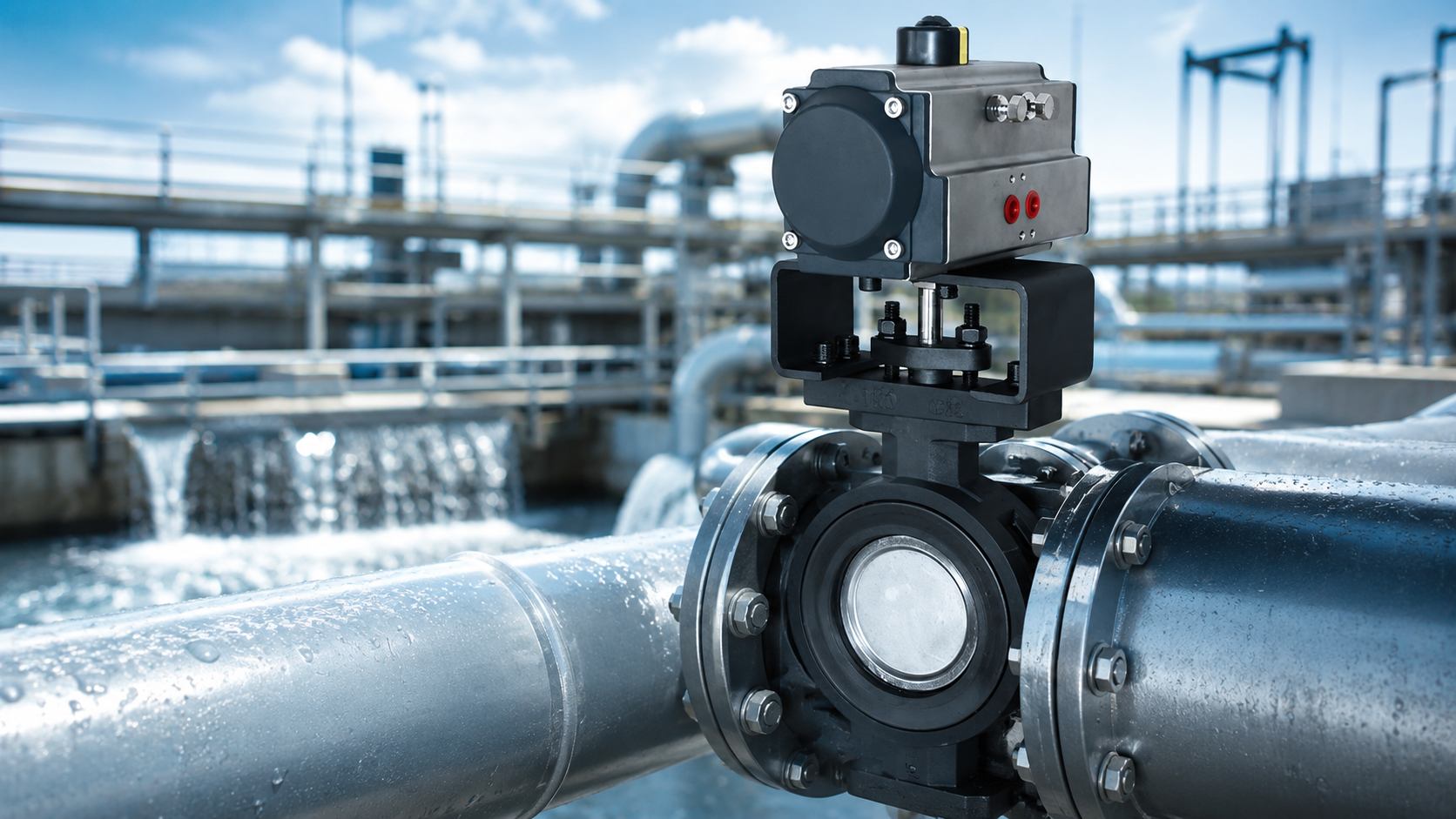
On a large water line, a butterfly valve is rarely “just an isolation valve.” Once the pipe diameter increases, disc area, flow velocity, actuator torque, installation space, and maintenance access all become more important. Wastewater adds another layer because grit, suspended solids, coatings, and seat contamination may affect service life. A useful specification therefore starts with the pipeline, not the catalog. EPC engineers and purchasing teams need to understand what the valve will actually see in operation, then judge whether the proposed design, materials, seat arrangement, and actuator are suitable for those conditions.
What Should Be Defined Before the Valve Is Quoted?
The first technical mistake often happens before a supplier even selects a valve. An RFQ that gives only diameter and pressure class leaves too much room for assumption.
The Pipeline Has More Than One Operating Condition
A large water line may run at a stable pressure for most of the day, then see a very different condition when a pump starts, stops, or trips. Backflow may occur. A normally open valve may close only a few times each year, while another valve in the same plant may cycle several times a day.
Those details change what matters in the valve.
For a useful quotation, the supplier should know the normal pressure, maximum pressure, temperature, expected flow range, flow direction, line orientation, and the valve’s actual duty. If the valve will sometimes operate against a substantial differential pressure, say so.
Wastewater needs a little more description. “Wastewater” by itself does not tell a supplier whether the fluid contains light suspended solids, abrasive grit, chemical residues, or material that tends to settle when the line stops.
Closing Time Is a Pipeline Question, Not Just an Actuator Question
Large valves move a large area through the flow. The speed of that movement matters.
A fast closure may suit one operating sequence but create an unwanted pressure transient in another. A very slow closure may reduce surge but be unacceptable for emergency isolation.
This is why required opening and closing times belong in the valve discussion early. If they are added after the actuator has already been chosen, the selection may need to be revisited.
What Makes a High Performance Butterfly Valve Different in Practice?
The phrase “high performance” is useful, but it should never replace a drawing. The internal arrangement is what determines how the valve behaves.
A buyer should be able to see how the disc, shaft, seat, bearings, and stem sealing are arranged before approving the valve.
Seat Contact Matters More Than the Label
In many high performance butterfly valve designs, the disc does not remain in continuous rubbing contact with the seat through the entire stroke. Offset geometry can reduce unnecessary friction as the valve opens and closes.
That can help reduce wear, particularly on valves that cycle regularly. It does not mean the seat will automatically last longer in every application. Poor alignment, abrasive solids, unsuitable seat material, or operation outside the intended pressure direction can still shorten service life.
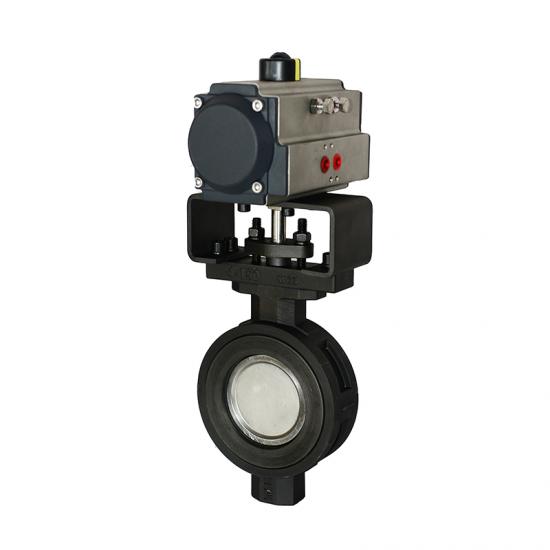
When reviewing a High Performance Butterfly Valve, look at the sectional drawing and ask a few simple questions:
- Is the shutoff performance the same in both directions?
- How is the seat retained?
- Can the seat be replaced?
- What part of the valve carries the shaft load?
- How is the stem sealed?
Those answers are more useful than a broad claim about “high performance.”
For projects that are still comparing valve types, Miwival’s Butterfly Valves category also provides a reference point for different butterfly valve configurations.
Which Materials Usually Cause Problems Later?
Material selection looks straightforward on a data sheet. In the field, it is often where maintenance problems begin.
A body material may be acceptable while the shaft, disc edge, fasteners, coating, or seat sees a different form of attack.
Water Quality Can Change the Answer
Clean treated water, raw river water, industrial wastewater, and seawater are very different services. Even two municipal wastewater plants may have different chemical exposure depending on treatment stages.
Instead of asking only, “What is the valve body material?” review the complete wetted construction.
- The proposal should identify:body material;
- disc material;
- shaft material;
- seat material;
- exposed fasteners;
internal and external coating systems where used.If coating is part of the corrosion protection strategy, it is also worth asking how the surface is prepared and what happens if the coating is damaged during installation.
A small coating defect may not seem important at delivery. Five years later, it may be exactly where corrosion starts.
Seat Maintenance Deserves an Early Discussion
Seats are wear components. That makes maintenance access important before the valve is installed.
Ask how the seat is changed. Can maintenance crews replace it on site? Does the whole valve need to leave the pipeline? Does the body need to be separated from the flanges?
For a valve installed in a chamber or a congested pump station, those questions matter more than they would on an open workshop floor.
Wastewater adds another concern: accumulation. Solids can settle when flow stops, particularly around low points or narrow gaps. A sealing arrangement that performs well in clean water should not automatically be assumed to behave the same way in grit-containing service.
How Should the Actuator and Installation Be Reviewed Together?
On a large butterfly valve, the actuator is part of the valve package. Treating it as a separate accessory often creates problems later.
The mechanical design, hydraulic load, operating speed, and site conditions all affect actuator choice.
One Torque Number Is Not Enough
A torque value on a quotation needs context.
Was it calculated at the maximum differential pressure? Does it include breakaway and seating torque? What safety factor was used? Was flow-induced torque considered?
These are particularly important questions for automated valves.
Manual gear operators can make sense for infrequent isolation. Electric actuation may suit remote utility systems. Pneumatic or hydraulic actuation can be appropriate where the plant already has the required utilities and faster operation is needed.
There is no single “best” actuator for a large water valve. The practical choice depends on operating frequency, available utilities, control philosophy, closing time, and how maintenance is handled on site.
Installation Space Can Change the Final Configuration
A valve that looks fine on the supplier drawing may still be awkward once it reaches site.
Disc clearance needs to be checked against the connected pipework. The actuator may interfere with a wall, platform, or adjacent line. A large gearbox may be technically correct but difficult to access for maintenance.
Pipe alignment matters too. A butterfly valve should not be used to pull badly aligned piping into position.
In Water & Wastewater systems, this becomes especially relevant because valves are often installed in pump stations, underground chambers, outdoor pits, or areas where lifting access is limited.
- Before final approval, check:face-to-face dimensions;
- flange compatibility;
- disc swing clearance;
- actuator orientation;
- lifting points;
maintenance access.What Should Be Resolved Before the Purchase Order Is Released?
The last technical review is the best time to remove assumptions. Once manufacturing starts, changes become slower and more expensive.
A useful review focuses on the actual configuration being purchased, not just the general product description.
The Drawing Should Match the Quotation
Check the drawing against the technical offer line by line.
- Does the drawing show the same body style?
- Is the seat construction the same one discussed during technical clarification?
- Are the materials consistent?
- Is the actuator orientation correct?
- Are the connection dimensions compatible with the piping specification?
If a supplier has taken an exception, it should be visible before the order is placed.
This sounds basic, but many purchasing problems come from one document being updated while another is not.
Maintenance Information Is Part of Procurement
It is worth asking what happens after commissioning.
Can replacement seats be ordered using the same identification? Are actuator spare parts available? Can the same material configuration be repeated several years later?
Keeping the approved drawing, material list, actuator data, and seat details with the maintenance record makes future replacement much easier.
For large valves, this matters because removing the valve from service can cost far more than the spare part itself.
How Can Technical Coordination Make the Selection More Reliable?
For large water and wastewater valves, the most useful technical discussion usually starts with the line conditions rather than a product brochure. Miwival can review application details such as pipe size, pressure, water quality, solids content, flow direction, installation space, and actuator requirements before the configuration is finalized. That gives engineering and purchasing teams a practical basis for discussing seat design, corrosion protection, torque, and maintenance access. It also makes supplier comparison easier because each proposal can be checked against the same operating conditions instead of being judged only by valve size, pressure class, and price.
Conclusion
A high performance butterfly valve for a large water or wastewater pipeline should be chosen in accordance to the operation of the line. Pressure class is only one factor in this decision. Seat construction, water quality, solids, corrosion exposure, actuator torque, closing time, installation space and future maintenance should all be considered prior to purchasing. Detailed operating description and a thorough review of the drawing will solve much more problems than added specification language after the fact that the valve has been ordered.
FAQs
1. What information should be sent to a butterfly valve supplier first?
Send pipe size, normal and maximum pressure, temperature, flow range, flow direction, media description, solids content, valve duty, installation orientation, and actuator requirements.
2. Is a high performance butterfly valve suitable for wastewater?
It can be, provided the seat, materials, coating, and internal design are compatible with the wastewater chemistry and suspended solids.
3. Does a larger butterfly valve always need an electric actuator?
No. Manual gear, electric, pneumatic, or hydraulic operation may all be suitable. The choice depends on torque, operating frequency, control needs, available utilities, and closing time.
4. Why should seat replacement be discussed before installation?
Large valves are often installed where removal is difficult. Knowing whether the seat can be replaced on site helps maintenance teams estimate future downtime and access requirements.
5. What is the most important document to review before ordering?
The approved sectional and dimensional drawing is especially important because it shows the actual valve configuration, seat arrangement, connections, actuator orientation, and dimensions being supplied.


 consult
 WHATSAPP
 leave message
 top
top