
Cryogenic Ball Valve Applications in LNG and Low-Temperature Systems
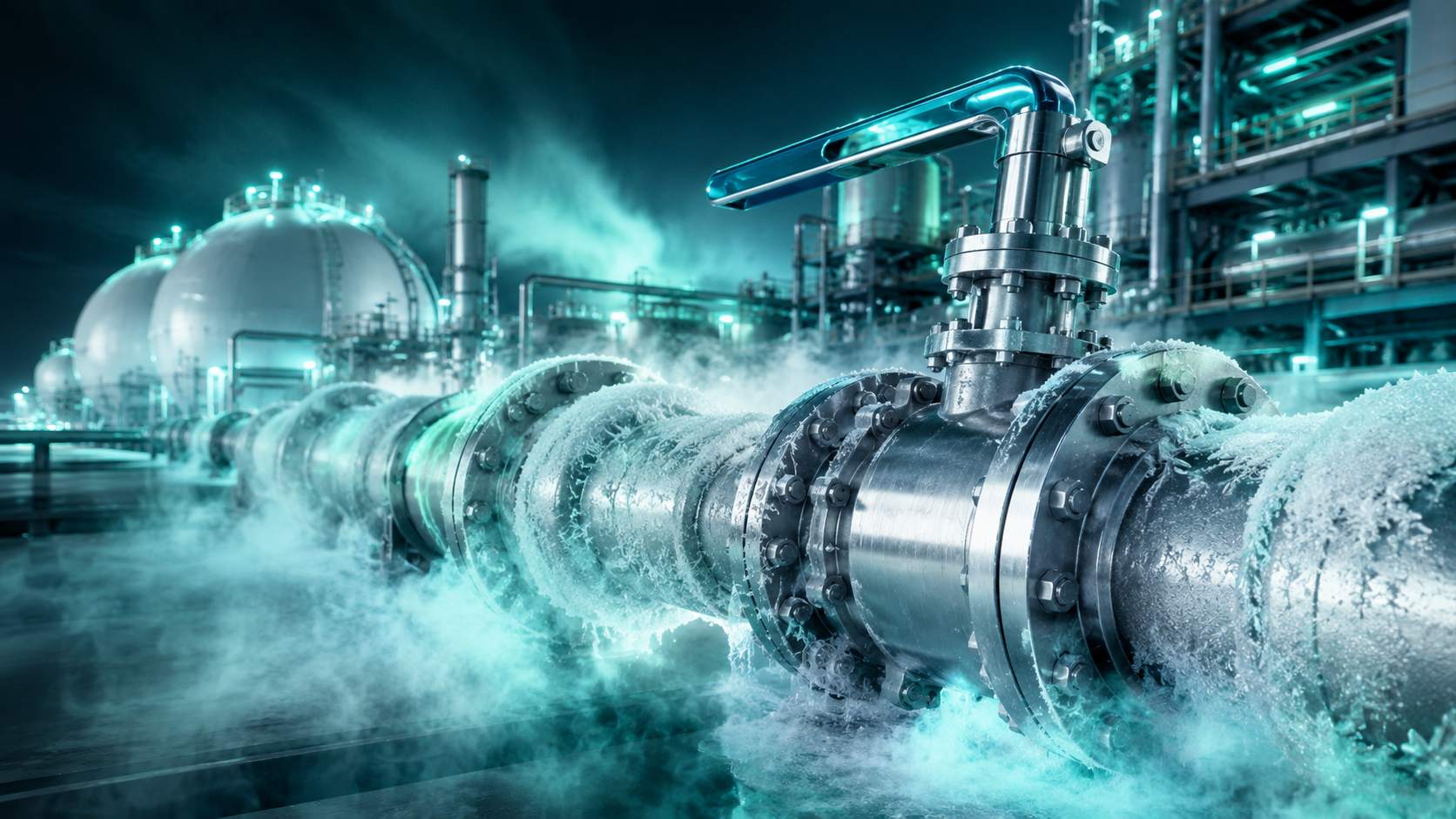
Cryogenic ball valves are used where ordinary valve designs can lose sealing force, seize, or leak as metal contracts and soft materials stiffen. LNG transfer, storage, vapor handling, and other low-temperature services place unusual demands on the body, seats, stem seals, cavity relief, and operating mechanism. A valve that works at ambient temperature may behave differently after repeated cold cycles. Reliable selection therefore begins with the actual fluid, minimum temperature, pressure, flow direction, cycling frequency, shutoff requirement, and installation orientation.
Why Do Cryogenic Conditions Change Ball Valve Performance?
Low temperature affects dimensions, friction, elasticity, and pressure behavior at the same time. The resulting problems are often small at first: rising torque, slower movement, or slight leakage around the stem. Left uncorrected, they can become isolation failures.
How Does Thermal Contraction Affect Internal Clearances?
The ball, seats, body, stem, and fasteners do not always contract at exactly the same rate. Seat contact may increase and raise operating torque, or decrease and weaken shutoff. Tight stem clearances can bind, while loose interfaces may permit leakage.
Designers control these effects through material pairing, machining tolerances, seat geometry, spring loading, and validated cold-cycle behavior. Ambient leakage tests alone do not prove that the same valve will seal reliably after cooling.
Why Is an Extended Bonnet Common?
An extended bonnet places packing and actuator connections farther from the cold process zone. This helps keep stem seals at a temperature where they can retain flexibility and reduces frost buildup around the operating interface.
Bonnet length, stem design, insulation thickness, and valve orientation should be considered together. If the extension is buried inside insulation or installed at the wrong angle, moisture accumulation and maintenance access may become problems.
Which Cryogenic Ball Valve Design Fits the Application?
Not every LNG line requires the same body arrangement or seat system. Full-port and reduced-port valves, floating and trunnion-mounted balls, and different seat constructions respond differently to pressure and cycling.
When Is a Floating Ball Suitable?
In a floating-ball design, line pressure pushes the ball toward the downstream seat. This can provide effective sealing in smaller sizes and moderate pressure ranges, but seat load rises with pressure differential.
For larger sizes, higher pressure, or frequent operation, torque may become excessive. Seat wear and body-cavity behavior also require close review, particularly when trapped cryogenic liquid can warm and expand.
When Should a Trunnion-Mounted Ball Be Considered?
A trunnion-mounted ball is mechanically supported, so line pressure acts mainly on the seats rather than forcing the ball downstream. This arrangement can reduce operating torque in larger valves and support double-block or controlled cavity-relief functions, depending on the design.
Buyers should verify seat directionality, pressure-relief path, stem construction, bearing materials, and actuator sizing. Similar external dimensions do not mean that two trunnion designs manage cavity pressure in the same way.
How Should Materials, Seats, and Stem Seals Be Selected?
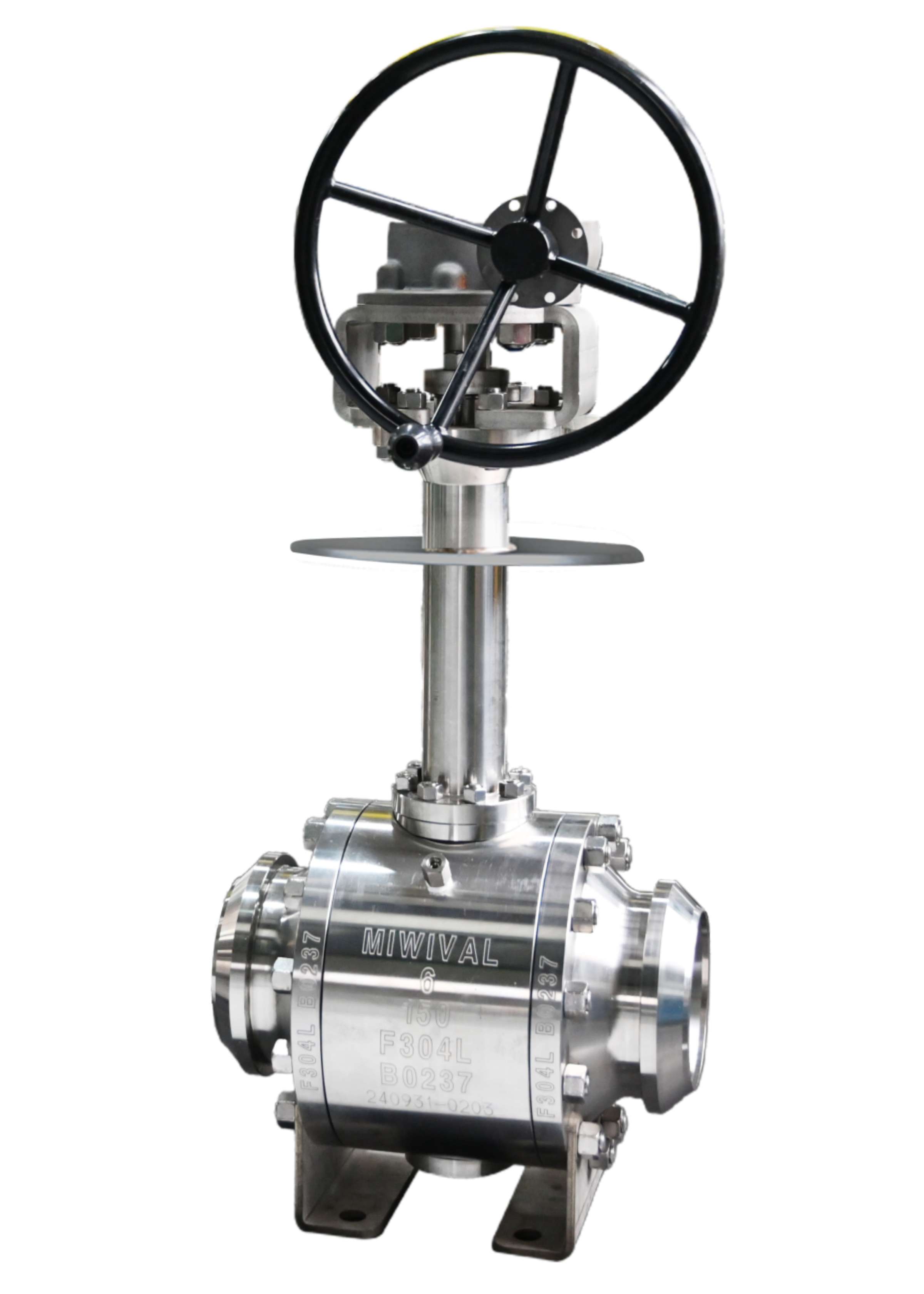
Cryogenic service requires more than a low-temperature body grade. Every pressure-retaining, moving, and sealing component must remain suitable after cooling, warming, and repeated cycling.
Which Material Properties Matter Most?
Body and trim materials should retain toughness at the minimum design temperature. The ball surface must remain smooth and dimensionally stable, while stems and fasteners need sufficient strength without becoming brittle.
Material compatibility also includes the process fluid, cleaning medium, and surrounding atmosphere. Review should cover casting or forging quality, weld procedures where applicable, traceability, and the exact grades used for the body, ball, stem, seat retainers, and bolting.
What Happens to Soft Seats at Low Temperature?
Polymers tend to contract, stiffen, and lose elasticity when the temperature decreases. As a result, a properly chosen cryogenic seat should provide the necessary contact without applying high torque. The material of seat inserts, backing rings, springs, and those mechanisms that relieve pressure also play an important role.
Metal seats are preferable when the operating conditions are associated with higher temperatures, subjected to fire, erosion, and cyclic loading than what polymer seats could handle. However, metal seats have different requirements for leakage and torque control than polymer seats. In addition, the shut-off capabilities should always be defined.
What Failure Risks Should Testing and Installation Control?
Many field failures are linked to cavity pressure, moisture, contamination, incorrect orientation, or actuator margin rather than a visible defect in the ball or body.
Why Is Body-Cavity Pressure a Critical Issue?
Cryogenic liquid trapped between closed seats can warm after isolation. As it expands, cavity pressure may rise sharply. The valve therefore needs an intentional relief path through the seat design, body arrangement, or external system.
The relief direction must match the piping philosophy. Installing a unidirectional valve backward can defeat the intended protection. Flow arrows, seat orientation, and operating procedures should be checked before commissioning.
Which Tests Reveal Problems Before Service?
Inspection should include dimensions, material identification, stem movement, seat condition, actuator travel, and cleanliness. Pressure and leakage testing should follow the approved procedure, while cryogenic qualification or production testing should use defined temperatures, stabilization times, cycling, and acceptance limits.
After installation, verify support, insulation clearance, stem orientation, valve stroke, and actuator response. Piping strain can distort the body and increase torque, particularly in larger welded or flanged assemblies.
How Should Buyers Evaluate Cryogenic Ball Valve Suppliers?
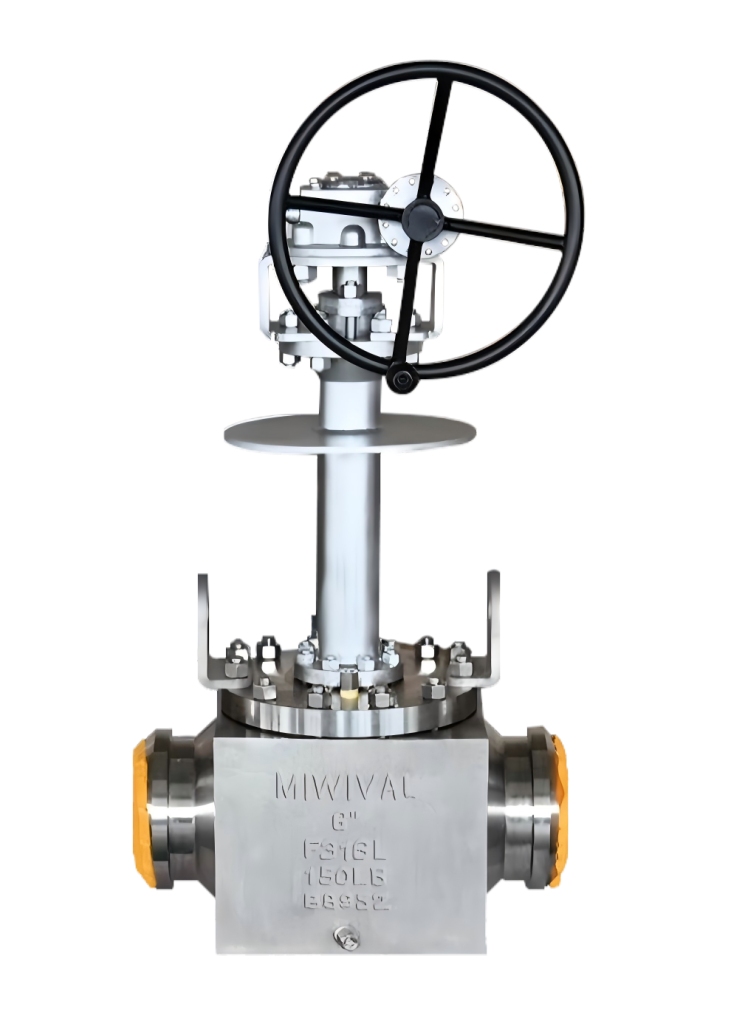
A useful quotation explains the complete configuration and the reasoning behind it. Listing only size, pressure class, and body material leaves major low-temperature risks unresolved.
What Information Should Be Included in the Inquiry?
Provide fluid composition, minimum and normal temperature, design pressure, operating differential, flow direction, line size, cycling frequency, shutoff requirement, end connection, installation orientation, and actuator preference.
The proposal should identify body style, port size, ball support, seat arrangement, cavity-relief direction, bonnet extension, stem seal, materials, leakage basis, actuator sizing, and required testing. Drawings should show insulation interfaces and service clearances.
Which Supplier Controls Reduce Repeat-Order Risk?
Approve drawings, material lists, seat construction, stem-seal details, actuator data, test procedures, and nameplates before production. Incoming inspection should check identification, flange or weld-end dimensions, valve travel, cleanliness, and documentation.
Changes to seat compound, spring design, ball coating, stem material, packing, actuator, or machining tolerances can alter torque and leakage. Those changes should require written review rather than silent substitution.
How Can a Valve Supplier Support LNG and Low-Temperature Projects?
Miwival supplies valves for industrial flow-control applications, including cryogenic ball valve configurations for LNG and other low-temperature media. Project inquiries can include fluid composition, minimum temperature, design pressure, differential pressure, line size, flow direction, cycling frequency, shutoff requirement, end connection, installation orientation, and actuator preference. Technical review should define body style, port size, ball support, seat arrangement, cavity-relief direction, bonnet extension, stem seal, materials, torque, and testing. A quotation should specify the approved construction, accessories, documentation, packaging, lead time, and inspection categories for the product. Besides, the buyer should approve all drawings, material listings, test procedures, actuator information, nameplate details, and change-control requirements for subsequent purchases.
Conclusion
Cryogenic ball valves have to be evaluated in terms of contraction, seating, stem sealing, cavity relief, and torque as an integrated system. Besides, the orientation, insulation, cleanliness, and test procedures define the proper functioning of cryogenic valves during the operation with liquid natural gas and low temperatures. The purchaser should establish the operating envelope, check the means for pressure equalization, and pay the specific attention to the materials and seat geometry in the course of specification writing. The leakage, binding, torque, and commissioning issues can be prevented by the diligent specification writing and supplier oversight.
FAQs
1. Why Do Cryogenic Ball Valves Use Extended Bonnets?
The extension moves packing and operating components away from the cold body, helping seals remain functional while reducing frost buildup and improving access around insulated piping.
2. Can a Standard Ball Valve Be Used for LNG Service?
Not without verified suitability. Standard designs may have inappropriate seats, stem seals, materials, cavity relief, or bonnet length for repeated operation under cryogenic service conditions.
3. What Causes High Operating Torque in a Cryogenic Ball Valve?
Thermal contraction, increased seat load, tight clearances, unsuitable seat material, piping strain, contamination, and inadequate actuator margin can all raise torque during cold operating conditions.
4. Why Is Valve Orientation Important in Cryogenic Service?
Orientation affects cavity-pressure relief, bonnet temperature, drainage, insulation, and actuator access. Installing a directional seat arrangement backward can prevent the intended relief path from working.
5. What Should Buyers Ask a Cryogenic Ball Valve Supplier to Provide?
Request drawings, material details, seat and cavity-relief design, bonnet dimensions, torque data, actuator sizing, leakage criteria, test procedures, inspection records, change-control terms, and packaging records.


 consult
 WHATSAPP
 leave message
 top
top