
Everything You Should Know About Knife Gate Valves
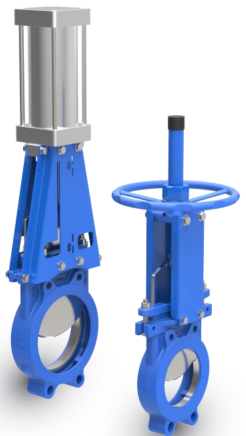
A Knife Gate Valve is often selected when a plant needs a valve that can isolate slurry, pulp, wastewater, powder, or dirty utility service without a bulky body. For buyers, engineers, and maintenance teams, the decision affects leakage risk, actuator sizing, downtime, spare parts, delivery timing, and inspection documents. A knife valve can be a practical choice, but only when the media, pressure, temperature, seat material, and installation direction are checked before purchase.
When is a Knife Gate Valve the right valve choice?
Note that Knife gate valves are NOT general replacement for Gate valves. Such application would require Isolation not fine throttling.
What media and process conditions fit knife valves?
A knife gate is a sharp edged gate that is inserted into solids or semi-solids and seats in a seat. These are typically used in wastewater treatment applications, as well as mining slurry applications, as well as others such as pulp and paper stock, cement in a powder form, food waste lines, and some of the bulk material handling applications. Your first consideration would be to describe the solids content, particle size, and the viscosity of the material being handled, as well as the flow direction, pressure, and temperature, and whether or not the material in the line will settle in the line during a shutdown.
Where should buyers avoid using them?
A knife valve is not generally recommended for frequent throttling, severe cavitation, high shock loading, or clean high-pressure steam service unless specifically designed by the supplier. MSS SP-81:2021 covers stainless-steel or stainless-steel-lined bonnetless flanged knife gate valves. These type valves are intended for use where shock loadings are not encountered. Pumps starting up suddenly or a pipeline subject to water hammer are examples where such shock loadings might occur.
Which design details change performance and maintenance?
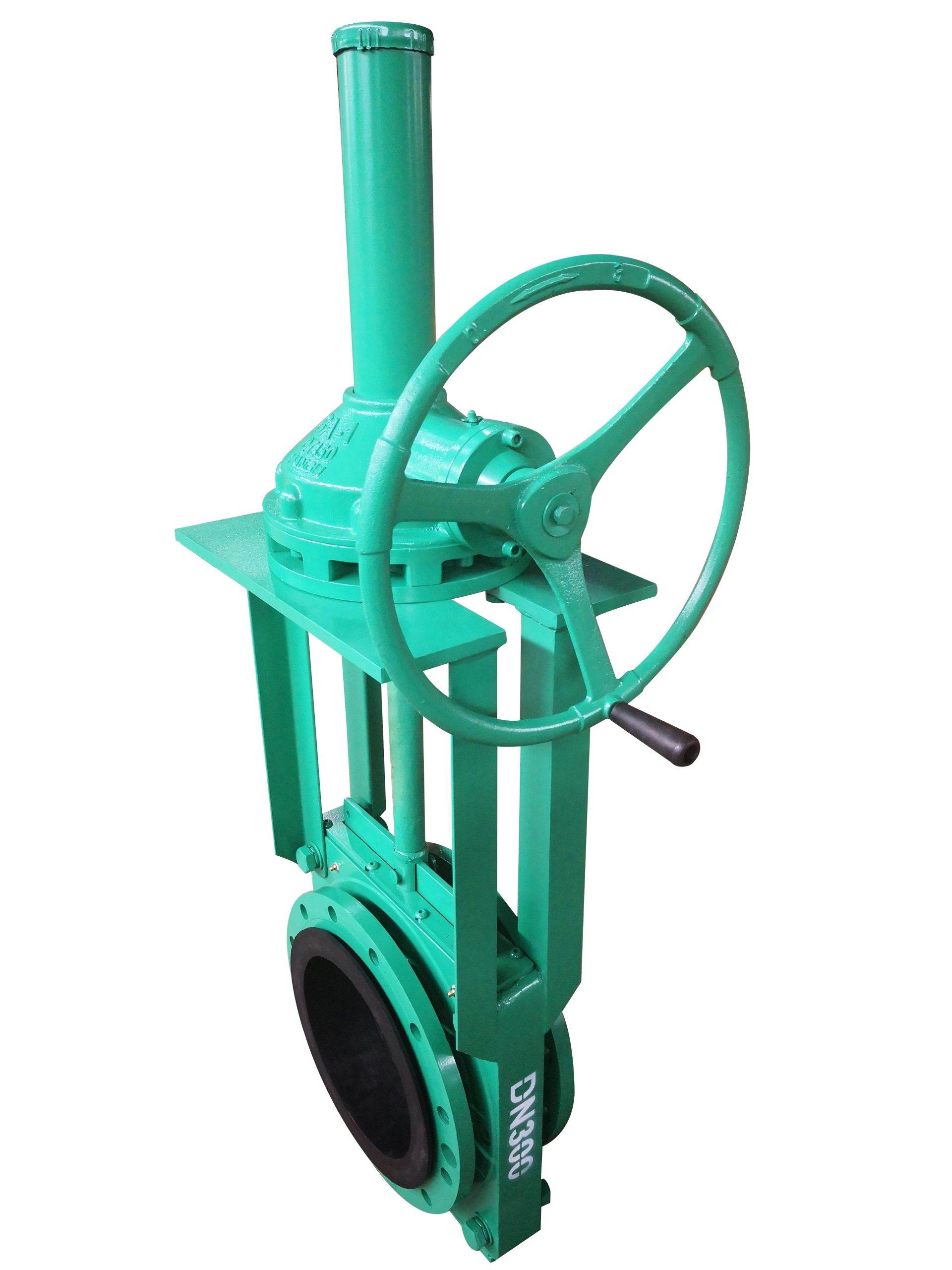
Two identical knife valves, same nominal size, can be of completely different nature depending on body, gate, seat, packing and actuator in order to allow easy installation and maintenance.
How do body style and gate design affect operation?
Body styles come in many flavors such as wafer, lug, flanged, through-conduit and square-port designs to name a few. In terms of saving space, a wafer body is the way to go. They do however require careful attention to flange alignment. Lug and flanged style bodies are easy to work with during valve repair. Through-conduit style valves can be very beneficial in applications where solids tend to settle or build up on the seat of the valve. It is also very important to verify if the valve is listed as unidirectional or bidirectional, as reverse pressure can have a severe affect on the valve’s sealing capabilities.
Which seat, packing, and actuator choices matter?
A soft seat can give a tighter shut-off but is prone to early wear with abrasive slurries. A metal seat is more resistant to abrasion but leakage expectations should be clearly documented. Packing around the stem or gate is critical and should be chosen based on temperature, the nature of the chemicals being used and the cleaning regime. For occasional use a manual handwheel will suffice but for remote operation, for interlock applications or for very large valves pneumatic, electric or hydraulic actuators are usually required.
What specifications and standards should appear in the RFQ?
A good RFQ includes data for supplier’s process control and inspection acceptance criteria. Just specifying size and pressure is not enough.
Which pressure, size, and material details should be fixed first?
List nominal size, flange standard, face-to-face dimension, pressure rating, design temperature, body material, gate material, seat material, packing material, operator, mounting position, and media. ASME B16.34 covers pressure-temperature ratings, dimensions, tolerances, materials, nondestructive examination, testing, and valve markings for new construction valves. Note: Inquiring whether a specific knife valve design complies to ASME B16.34 or to an MSS practice or to the buyer’s project specifications is always a good idea.
Which inspection and testing documents should buyers request?
Request drawings, material certificates when required, pressure test reports, seat leakage criteria, packing inspection records, coating details, actuator datasheets, and installation manuals. API Standard 598, Valve Inspection and Testing, covers inspection, examination, supplementary examination, and pressure test requirements for several valve types. If it is used for a knife valve order by agreement, the purchase order should state the edition, test scope, pressure, duration, and acceptance criteria.
How should buyers compare cost, service life, and supplier support?
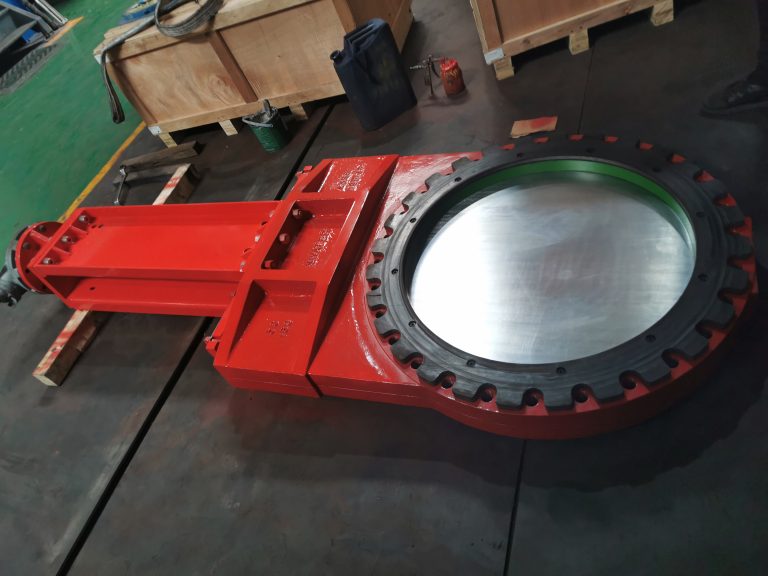
The cheapest valve can be very expensive if it clogs, leaks or can not be repaired quickly. The total cost of a valve includes installation, operation, cleaning, replacement parts and down time.
What hidden costs appear after installation?
A host of ”Hidden costs” can be linked to seat choice, actuator sizing, mounting kits, flange alignment, gasket delivery times and part numbers for wear parts. A abrasive slurry is much harder on seat, gate and liner material than clean water. Stick media can pack into cavities. In outside applications, protection against corrosion is required. In addition, stem covers, position indicators and a complete set of air-preparation equipment is required for pneumatic actuators.
What checklist helps avoid sourcing mistakes?
Before we give approval to process the order for production of your valve, we need to verify a number of pieces of media data relating to the production of your valve. This includes solids content, pressure, temperature, flow direction, flange drilling, face-to-face dimension, actuator torque or thrust margin, seat leakage allowance, recommended spare-part kit, documentation package, minimum order quantity, lead time, packaging and after-sales service. If you are an importer or distributor, we also need to verify the labeling and model traceability so that we can supply the correct replacement gates, seats and packing for the original valve.
|
Buyer question |
What to verify |
|
Will it seal in both directions? |
Bidirectional design and test basis |
|
Can it handle solids? |
Gate edge, cavity, seat, and liner design |
|
Is maintenance practical? |
Replaceable seats, packing access, spare kits |
|
Is documentation clear? |
Drawings, tests, materials, manuals |
Which valve supplier can support knife gate valve projects?
Miwival is a supplier of valves and automation. On their website you can find among others knife gate valves, butterfly valves, ball valves, diaphragm valves, pinch valves and strainers. All kind of flow-control products are offered on this website. For the Knife Gate Valve projects above this type of supplier can support the buyer in selecting the right products, in choosing the right actuator, in discussing the materials, in providing the right documentation, in making a plan for spare-parts and in communication with regard to standard as well as customized valve applications. However, buyers should still compare the specifications and other product details, the provided documentation, the prices, the delivery terms and conditions as well as the services offered by the suppliers.
Conclusion
The Knife Gate Valve is a robust valve, designed for applications such as slurries, pulp, wastewater, powder and other abrasive media. It must not be selected solely on the basis of size, pressure class or price. There are a number of important characteristics that must be confirmed prior to ordering, including body style, seat design, flow direction, actuation and testing. The valve must also be supplied complete with relevant spare parts. A number of standards can be used as a basis for discussion including MSS SP-81, MSS SP-135, ASME B16.34 and API 598. Applicability to the specific valve being purchased must, however, be confirmed prior to placing the order. A well planned RFQ is critical to avoid the potential for leakage, maintenance problems and project delays, which could result from an incorrect selection.
FAQs
1. What is a KGV Knife Gate Valve used for?
A Knife Gate Valve is typically used for isolation purposes in slurry, wastewater, pulp, powder and dirty other service applications where solids are present.
2. Is a knife valve suitable for throttling?
Generally no. The majority of knife valves are designed as open or closed, isolate type valves, not as flow control valves. Continuous use as a throttle can damage the seats and/or gates of most designs unless specifically designed otherwise.
3. What is the difference between unidirectional and bidirectional knife gate valves?
A unidirectional valve is used to seal off one pressure direction. A bidirectional valve is used to seal off either direction provided it is operated within the stated conditions for that valve.
4. What documents should buyers request before ordering?
When purchasing a pneumatic component, the buyer should ask for drawings, information about the used materials, test reports, the leakage criteria, information about the used actuators, coating information, information for the installation, and lists of spare parts.
5. How do buyers choose seat material for abrasive slurry?
Review solids content, particle hardness, pressure, temperature, chemical exposure and target leakage. Supplier can explain trade-offs between having a very tight shutoff and having a lot of wear resistance.


 consult
 WHATSAPP
 leave message
 top
top