
How a Segmented Ball Valve Works: Detailed Insights for Engineers
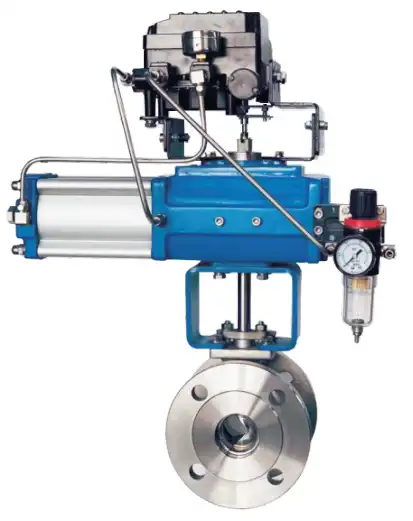
Segmented ball valves, also known as segment ball control valves or ball segment valves, are essential components in modern process industries. They combine the precise throttling ability of globe valves with the reliable sealing of rotary valves. Found in sectors such as chemical processing, pulp and paper, oil and gas, and water treatment, these valves manage complex flow conditions efficiently. Their design supports both high accuracy and durability, making them a preferred choice for engineers who need stable control under varying pressures and temperatures.
What Makes a Segmented Ball Valve Different from Other Control Valves?
Before we proceed with an explanation of how segmented ball valves operate it is best to describe how these valves are different from the majority of other control valves.
The Structural Design of a Segmented Ball Valve
The segmented ball valve is a type of V-type ball valve. Its V-shaped ball segment can be well controlled even at small opening degrees, and depends on the type of trim used, it has the features of linear or equal percentage. As to flow control ability, segmented ball valves have far more rangeability than typical globe or butterfly type valves. A segmented ball valve can have a rangeability of up to 200:1 or even more, for example, and thus is able to control flows of very large range very well.
Key Components and Their Functions
All the components of a segmented ball valve are precisely designed to make the movement of the segments in the valve completely smooth.
-
Segmented Ball: The contoured V-notch shape provides accurate throttling while maintaining consistent Cv values.
-
Seat Assembly: Designed for tight sealing performance even at low differential pressures.
-
Shaft and Bearings: Reduce friction during actuation, improving responsiveness and service life.
-
Actuator Interface: Enables pneumatic or electric actuation for integration with automation systems.
Material Selection and Durability Factors
The choice of materials has a significant impact on the performance and life span of products. While Stainless Steel and Carbon Steel are generally used for most applications, there are special Alloy Coatings available for extremely corrosive environments like Slurry applications or high temperature Steam service. By selecting the proper materials, excessive wear and tear and therefore more frequent maintenance can be avoided especially in high stress industrial environments.
How Does the Flow Control Mechanism Operate in Real Conditions?
Once installed, the segmented ball valve can function within a wide range of pressure and flow conditions.
The Principle of Flow Regulation
V-notch flowmeters have a self-cleaning action as they revolve in a liquid stream. They provide a clean area to measure in. Media that are viscous, paste-like or have fibers in them are best measured with a V-notch. The change in flow rate is in direct proportion to the angle of rotation and thus is very consistent during dynamic process changes.
Dynamic Performance Under Different Pressure Conditions
Research by the ISA (International Society of Automation) – Industry Studies, on segmented ball valves, show that the Cv remains constant when working under varying inlet pressures. The nature of a ball valve, which moves in a rotary manner as opposed to linear like a globe valve, also means that segmented ball valves are less prone to cavitation, a costly problem in high pressure drop applications.
Application Scenarios Across Industries
The various possibilities of application of segmented ball valves in industry.
In Pulp and Paper Mills
Self-wiping rubbers handle fibrous slurries without plugging.
In Chemical Processing Plants
Specialised products are used to accurately control highly corrosive fluids whilst maintaining the integrity of the seal.
In Power Generation Facilities
Some are used to control the feedwater to maintain thermal stability and avoid any disturbance to the process.
Why Do Engineers Prefer Segmented Ball Valves for Control Applications?
Segmented designs are preferred by engineers due to their cost-efficient performance.
Cost Efficiency and Maintenance Benefits
When compared to globe style valves, segmented valve models generally have fewer moving parts that require periodic service. This provides several advantages to the user, including reduced required frequency of maintenance. Also, the very fast disassembly of the valve segments for required service greatly reduces the amount of time that is required for down time for maintenance. According to refinery maintenance experience and practices (API 2023), the lower required torque of segmented valve actuators can save cost as well as provide energy savings.
Performance Metrics That Drive Adoption
These valves have been found to have a rangeability of 300:1. Furthermore, they require less torque to operate than would be required by a plug-type valve, allowing for better actuator selection, and increased energy efficiency, in an automated plant of large size.
Installation Flexibility in Complex Systems
Our small body design is perfect for small piping lines. Our valves are suitable for new installations as well as retrofits into existing process lines and can be supplied with either flanged or wafer end connections. A perfect solution when a process line is being upgraded.
How Is Automation Integrated with Segmented Ball Valves?
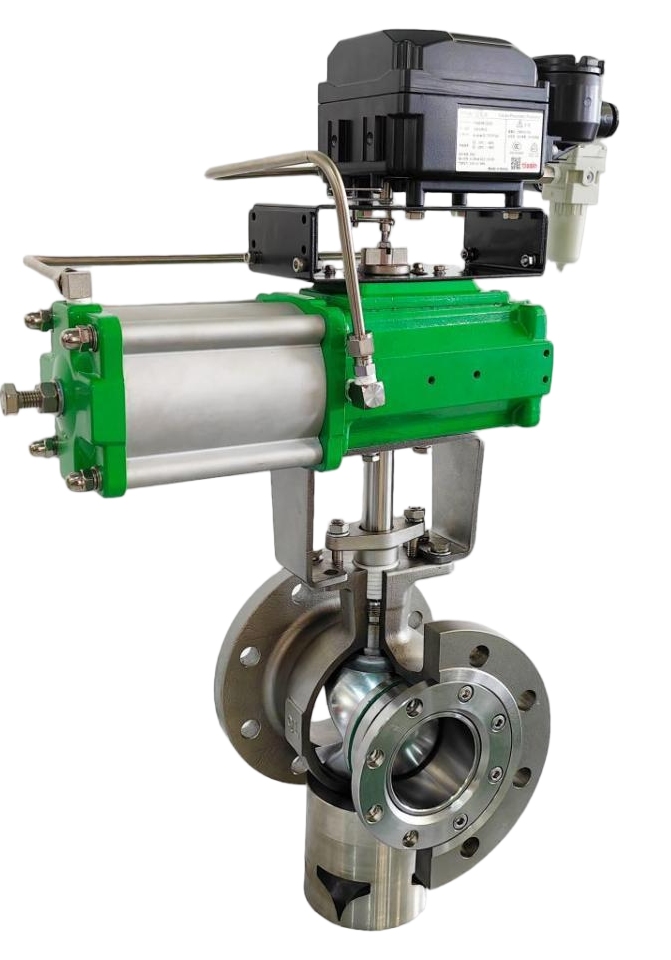
Automation of a Segmented Ball Valve increases the potential of accuracy and reliability.
Actuation Options for Modern Systems
Pneumatic actuators provide fast action for dynamic applications as steam control or chemical dosing. The electric actuators, on the other hand, are supplied with precise position feedback. This allows to control the actuators within a distributed control system (DCS). Here, the operator can influence the process in detail from a distance.
Positioners and Control Feedback Loops
Smart positioners which are equipped with communication via HART or Foundation Fieldbus enable an increase in accuracy of loop control of more than 15% according to studies of Emerson Process Management (2022). In automated plants with smart positioners real-time-diagnostics are possible which can be used for predictive analytics.
Predictive Maintenance Through Sensor Data Analysis
With advanced sensors monitoring the Torque and Seat wear in real time, Predictive algorithms will alert the Operator to potential failures well in advance, allowing for proactive maintenance to be carried out to prevent the risk of an unscheduled shut down. This type of proactive maintenance approach is in line with current reliability-centered maintenance practices currently adopted in many industries such as Petrochemicals and Power Generation, and would result in some 30% reduction in downtime.
Where Can Engineers Source Reliable Segmented Ball Valves? A Look at Miwival’s Engineering Approach
Miwival is known amongst process engineers for designing Segmented Ball Valves with long term reliability in mind and not just short term cosmetic benefit. With many years of field experience in Petrochemical, Paper Mill and Wastewater applications, Miwival designs in mechanical robustness to withstand the severest of service conditions. With extensive experience in valve sizing calculations and actuator selection, the Miwival engineering team will support you throughout your project ensuring the optimal interaction of all plant items. In addition to this, Miwival provides commissioning assistance and troubleshooting expertise to minimize your overall cost and ensure that precise flow control is achieved, in line with industry best practice.
Conclusion
Segmented ball valves are ideal for precise flow control and sealing. They are designed to operate in harsh environments, such as pulp and paper mills and power plants, by maintaining stable operation through varying pressure conditions. With their V-notch design, these valves are easy to service, and provide great control in a wide range of applications. To ensure the best performance and longer life, it is wise to select a qualified manufacturer, like Miwival, that can provide excellent product and technical assistance. This type of valve can improve process control and lower life cycle cost in critical applications.
FAQs About Segmented Ball Valves
1. What are the advantages of a segmented ball valve over a globe valve?
Segmented ball valves have higher rangeability and lower torque than globe valves. They are also easier to maintain to a high standard while providing similar accuracy to control.
2. Can segmented ball valves be used for handling of slurry or viscous liquids?
Yes. The segmented ball valve is a self-cleaning valve. The V-notch in the valve bore prevents any blockage. The valve can be used for all kind of fibrous materials like in pulp processing lines.
3. How do I choose the correct size for a segmented ball valve for my specific application?
Segmented ball valves are sized by calculating the required Cv value, the anticipated pressure drop, the fluid being used, and the required flow characteristics. Supplier’s engineers must be consulted to properly size the valve for specific applications.
4. Are segmented ball valves suitable for high-temperature environments?
With appropriate material selection—like stainless steel trims—they perform effectively at temperatures exceeding 400°F (204°C).
5. What type of actuator works best with a segmented ball valve?
Both pneumatic and electric actuators are effective; pneumatic types suit fast-response systems while electric options offer precise feedback integration within DCS frameworks.


 consult
 WHATSAPP
 leave message
 top
top