
How Should Buyers Plan Spare Parts Inventory for Three-Way Globe Control Valve Maintenance?
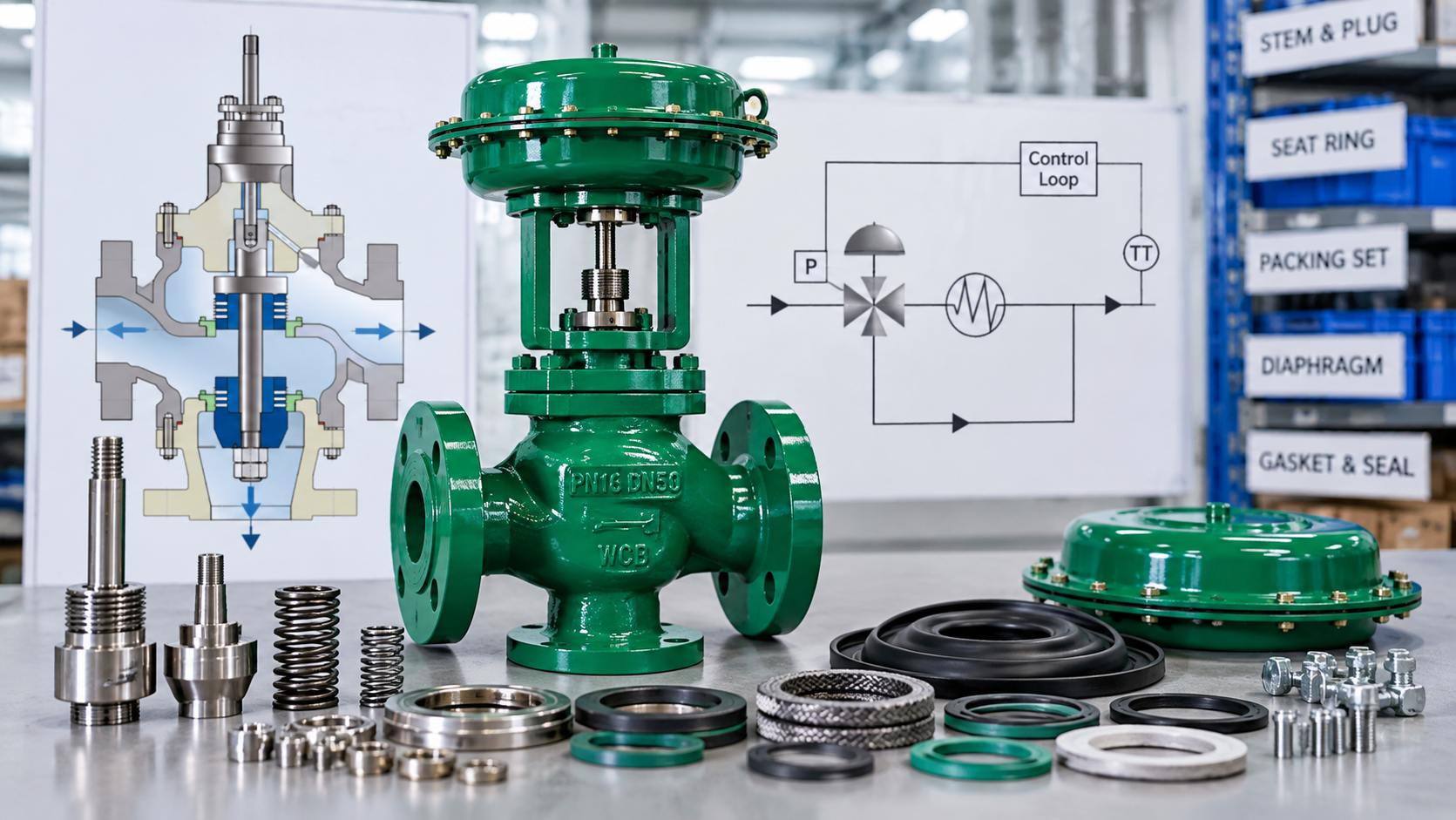
Spare parts planning for a three-way globe control valve should begin with the installed valve and its maintenance history, not with a generic spare kit. A plant may have several valves with the same nominal size but different trim materials, actuator types, positioners, or fail actions. If those differences are not captured, stores can appear well stocked while the parts needed for the next shutdown are actually missing. For maintenance and purchasing teams, the practical goal is to identify which components deserve routine stock, which can be ordered only when required, and how much inventory is justified by equipment criticality, service history, and supplier lead time.
What Should Be Identified Before Spare Parts Are Added to Inventory?
First, we have to establish which of the installed configurations the spare part belongs to and not decide on a quantity yet.
Build the Spare List From the Current Valve Configuration
Note the valve tag, size, pressure rating, body material and trim material. Describe the flow function. Identify the actuator type and describe the fail action. Note if a positioner is provided and list any additional accessories.
For three-way control valves, mixing and diverting duties should also be distinguished. Miwival’s Three Way Globe Control Valve product information lists both mixing and diverting functions, several bonnet arrangements, pneumatic and electric actuation, and multiple seat-leakage classes. That range of configurations is precisely why a spare should be linked to a specific installed valve rather than described only as a “three-way globe valve spare.”
Old purchase orders can be referenced to, but are usually not sufficient to rely on for historical reference. The maintenance records for the trim, actuator and accessories may have been updated after the initial order was placed.
Separate Valve Internals From Automation Components
It is easier to control a maintenance inventory if valve parts and automation parts are listed separately.
The parts that could be defined as valve related would typically be the plug, seat, stem, and packing. Additionally, items such as other trim parts identified in the maintenance parts list could also be considered as valve related. The Automation spares would typically consist of the actuator, positioner, air filter, solenoid, etc. that are actually attached to the valve assembly.
The Three Way Globe Control Valve project case from Miwival’s published records includes the diaphragm actuator, fail-close action, TS600L positioner and AW20 air filter as well as details of the valve body, trim, seat and stem materials. It highlights the importance of being able to trace the complete assembly.
Which Spare Parts Deserve Permanent Stock?
Not all replacement parts need to be stored as permanent inventory. Only parts that pose an unacceptable risk to maintenance or production should be stocked.
Start With Equipment Criticality
A valve that is out of stock for weeks waiting for a part to arrive is not required to be held in inventory to the same degree as a valve that will shut down an entire process if it is not available to restart when required.
The valve should be classified by consequence of failure rather than by the purchase cost of the valve.
Questions worth asking include:
- What happens if the valve cannot return to service after inspection?
- Is there a bypass or redundant line?
- Can the plant operate at reduced capacity?
- Is the component available locally?
- How long does a replacement normally take to obtain?
How long does a replacement normally take to obtain?
An expensive spare part is only justifiable in case of a long production stop due to a failure of this part. A low-cost part does not automatically deserve to be held in stock, because it may be easily ordered and rarely be replaced.
Use Maintenance History Instead of Guessing
Instead of referring to general advice, historical data is a much better guide.
Inventories should reflect your experience, i.e. packing is replaced on a regular basis while the trim is still in good shape. While a positioner might have caused problems leading to repeated shutdowns of your process, automation spares might get more attention than additional valve bodies.
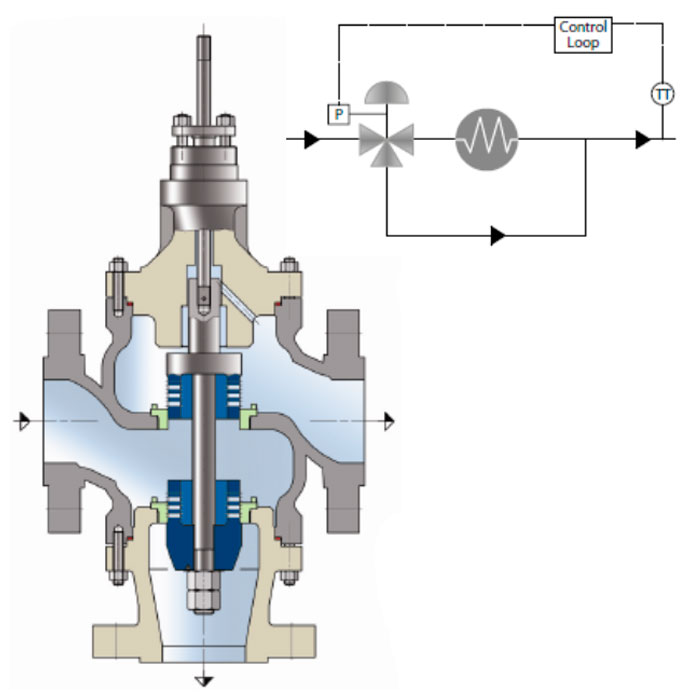
The broader Globe Control Valve product information describes a modular arrangement involving the valve body, trim, seat, stem sealing, actuator, and positioner. That modular structure is useful when reviewing maintenance needs because different parts of the assembly may have very different failure and replacement patterns.
How Should Buyers Decide How Many Spares to Keep?
A fixed percentage of installed valves does not make for a good inventory rule. Quantity ordered should be a function of average consumption, lead time, number of shutdowns per year, and cost of stockout.
Separate Shutdown Demand From Safety Stock
These two numbers should not be mixed.
Shutdown demand refers to parts required for planned maintenance and Safety stock refers to parts required due to unexpected findings or failures between planned shutdowns.
For example, if six valves will be opened during a shutdown but only two trims are scheduled for replacement, the planned requirement is two. The plant may still decide to hold an additional spare because inspection could uncover damage, but that is a separate decision.
A simple review can make the logic visible:
|
Inventory question |
What to review |
|---|---|
|
Planned usage |
Parts expected to be changed at the next shutdown |
|
Historical usage |
Actual consumption during previous maintenance |
|
Supplier lead time |
Time needed to obtain an approved replacement |
|
Equipment criticality |
Consequence if the spare is unavailable |
|
Existing stock |
Usable and correctly identified parts already on site |
|
Shelf condition |
Whether stored parts remain suitable for use |
Avoiding inventory quantity being determined by arbitrary rules.
Reorder Point Should Reflect Real Lead Time
Time required for technical confirmation, manufacturing, shipping and incoming inspection of a component should be included in the reorder time of that component.
Purchasing should not rely on supplier’s manufacturing time only.
A trim set that takes 6 weeks to make and another 2 weeks for delivery and receiving approval is not an 8 hour purchasing decision when you are out of stock.
How Can Spare Parts Inventory Avoid Becoming Obsolete?
Even when nothing physically deteriorates, value can be lost. A spare part can become obsolete while you are holding stock, for example, because the installed base has changed but your stores record hasn’t.
Control Revisions After Maintenance
During a shutdown an approved change to seat material or a new positioner is executed. The equipment record is updated but the spare parts list for purchasing is not and thus purchasing reorders parts for the old configuration.
That is how apparently correct stock becomes unusable.
Update the valve configuration and reference to approved spare parts plus any new automation components that were replaced. Return the equipment to normal status for inventory purposes.
A control valve category can be created to group together related families of control valves. However, the site’s spare parts record must remain equipment specific.
Check Existing Stock Before Every New Purchase
A physical stock review should be conducted before another reorder is raised.
Verify part ID, quantity, storage condition, and if the stored part is still the current approved configuration for the associated valve.
For components like trim and actuators that look very similar on the outside, this is particularly important.
Part that cannot be traced to installed valve should not be counted as dependable stock even though it looks close in terms of dimensions.
What Should Be Checked Before Spare Parts Are Released for Maintenance?
Having control of the Stores is of little use unless the component is delivered to the maintenance team at the time of the shutdown.
Connect part, valve tag to current approved configuration for final check.
Verify Identity Before the Shutdown Starts
Do not wait until the valve is dismantled.
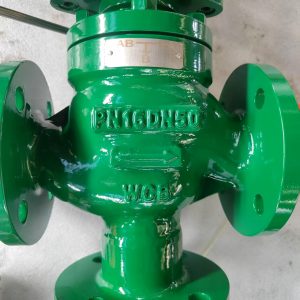
Before maintenance begins, confirm part identification, material where applicable, quantity, and the valve tags for which the component is intended. If several similar trim sets or actuator accessories are stored together, separate and label them in advance.
Any differences must be resolved whilst the process is still running.
The simple goal is that the person opening the valve should not be the first to find out that the spare does not fit.
Return Unused Parts to Controlled Inventory
Shutdown stock often becomes disorganized after maintenance.
Unused parts end up in the workshop, lose their packaging or get returned to the store without being clearly identified. This means the next maintenance cycle will be conducted in uncertainty.
Inspect the unused spares, relabel where necessary and record back to inventory against the correct valve configuration.
This small step preserves the value of the items you already bought and helps to avoid repeated orders of the same items.
Professional Technical Support from Miwival
Miwival supplies control valves and automation solutions for industry in the fields of chemicals, power, pulp and paper etc. Our Three Way Globe Control Valve is available in sizes DN25 up to DN250, in pressure ratings PN10-PN40 and in Classes 150/300/600. It is designed for mixing and diverting purposes and can be supplied with various types of bonnet. Actuation is available in pneumatic, piston and electric versions. Details of a recently completed project have been published to include full details of the supplied configuration to aid maintenance and purchasing personnel in identifying the installed valve and in managing the valve’s trim, actuator accessories and associated spare parts over time.
Conclusion
A three-way globe control valve spare-parts inventory should reflect the specific hardware actually installed, its history of maintenance, and the potential damage should there be no spare available. Since critical trim items, control-actuator parts, and accessories are not all to be held at the same inventory level, planned-shutdown demand must be kept separate from safety stock. The reorder points must include the time required for procurement and for inspection. The inventory must also reflect a change in the installed valve, and a small, well-controlled inventory of correctly-identified parts is more useful than a large, unknown store of similar parts.
FAQs
1. Which spare parts should always be stocked for a three-way globe control valve?
No universal list exists for establishing a company’s permanent stock holding. Stock holding for permanent spares should consider the trim fitted, actuator type, accessories required, maintenance history, supplier lead times and the operational impact if a part is required but is not held.
2. Should trim parts and actuator parts be stored together?
These items can be controlled under 1 equipment record but remain as separate identified items. The valve internals and the automation components will have different specifications, different maintenance frequencies and modes and different procurement processes.
3. How should buyers calculate spare-part quantity?
Planned maintenance consumption, historical replacement rates, current usable stock holdings, supplier lead times and plant equipment criticality are better than a fixed percentage of installed valves based on unreliable site data.
4. When should obsolete spare parts be removed from inventory?
Stock should be reviewed each time a valve configuration is changed. A trim, material, actuator, or accessory which is no longer compatible with approved equipment should not be counted as a spare and reclassified accordingly.
5. What should be checked before spare parts are issued for a shutdown?
Check for correct Part Number or identification, material where applicable, quantity and packaging, and against the correct Valve tag and configuration before removing from the valve for stripping.


 consult
 WHATSAPP
 leave message
 top