How Should Buyers Select Upward or Downward Discharge Valves for Reactor and Tank Bottom Service?
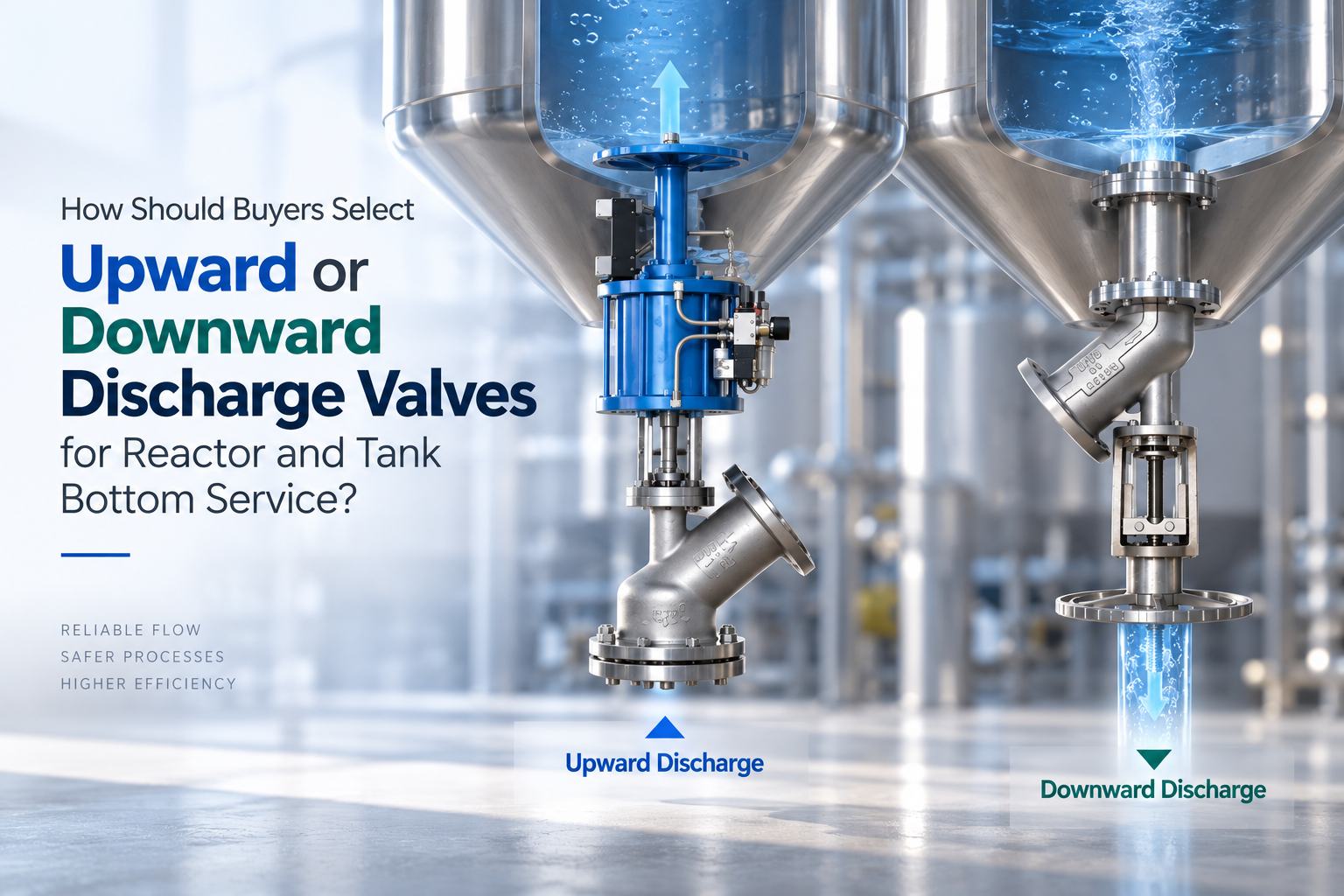
Selecting a discharge valve for a reactor or storage vessel depends on how the vessel empties, what may settle near the outlet, and how much access exists around the bottom nozzle. Upward- and downward-opening arrangements can behave differently when solids accumulate, agitators occupy the vessel bottom, or operators need reliable drainage with limited product retention. For process and purchasing teams, size and pressure class are only a starting point. The specification should connect vessel geometry, media behavior, discharge direction, materials, actuation, and maintenance access so the valve matches the actual unloading duty.
What Should Be Confirmed About the Vessel Before the Valve Type Is Chosen?
The outlet must be reviewed as part of the vessel rather than as an isolated pipe connection. Bottom geometry, agitation, sediment, and the route into the downstream line can all influence which opening direction is practical.
How Do Agitators and Sediment Change the Decision?
A reactor with an agitator close to the bottom may leave little room for a closure member to move into the vessel. In another tank, sediment may collect directly over the outlet and make a recessed opening prone to blockage. These details belong on the inquiry drawing because identical nozzle sizes can serve very different layouts.
For corrosive or process liquids, the chemical industry application is relevant when checking material compatibility and cleaning practice. State whether solids settle during standby and whether a residual heel is acceptable.
Why Does Outlet Orientation Matter?
Pipework below the vessel may turn immediately or need to clear supports. Body orientation and service space therefore need to be checked before fabrication. A drawing that shows the nozzle, nearby steelwork, and downstream pipe route can prevent a valve from fitting the process but not the installation.
When Does an Upward or Downward Opening Arrangement Make More Sense?
Opening direction changes how the closure member moves relative to the vessel contents and can affect operating force, blockage behavior, and available space.
What Favors an Upward-Opening Arrangement?
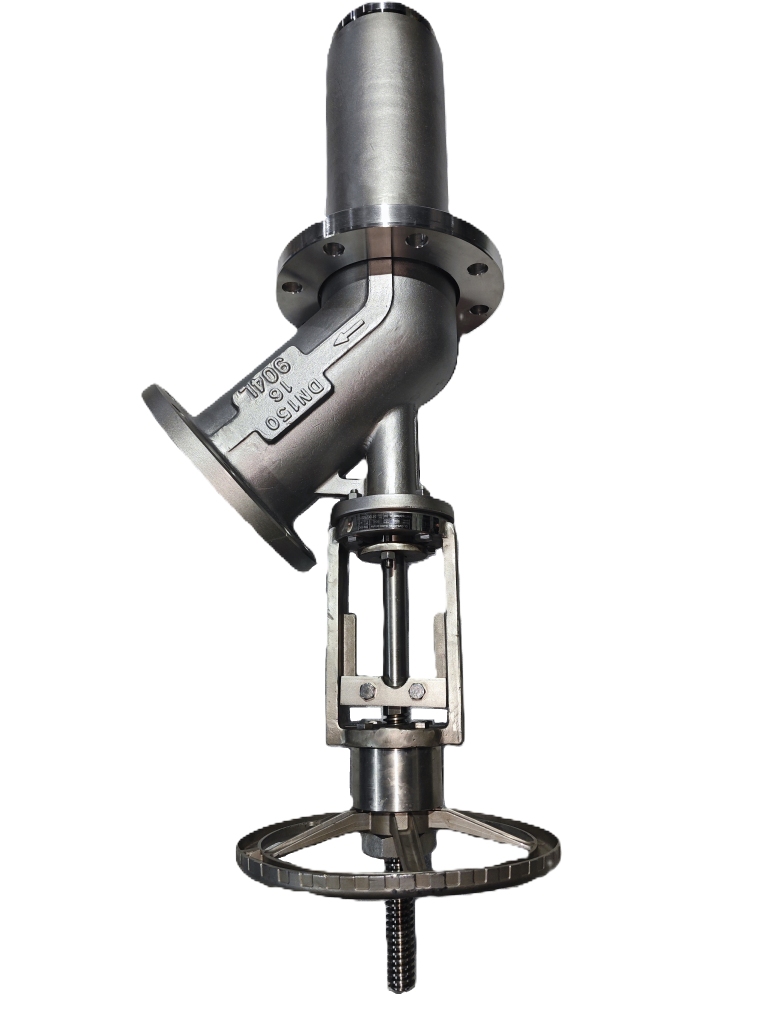
An upward-opening arrangement can be useful where sediment around the nozzle is a concern and the moving part can project toward the vessel bottom without interfering with an agitator or lining. The operating mechanism also has to work against process forces, so handwheel or actuator effort should be reviewed for the actual service rather than inferred from valve size.
What Favors a Downward-Opening Arrangement?
A downward-opening arrangement moves away from the vessel as it opens and may suit layouts with enough clearance below the nozzle. It can simplify the relationship with vessel internals, but external movement means piping space, insulation, supports, and maintenance access still need attention.
The gate, globe and check valve category provides context for related isolation equipment, although vessel geometry remains decisive.
Which Material and Connection Details Should Be Reviewed Before Purchase?
The bottom outlet may see concentrated process fluid, settled solids, and cleaning media. Material selection should therefore cover all wetted parts, while connection details should reflect how the valve will be installed and later serviced.
Why Should the Wetted Materials Be Checked as a Set?
Body material alone does not describe the wetted construction. Stem, seat, trim, fasteners, and any weld collar or loose flange may face the same process or cleaning chemicals. If the vessel handles corrosive media, the approved material list should identify these parts individually. The RFQ should also state whether cleaning chemicals differ from the normal process fluid.
How Do Connection Choices Affect Maintenance?
Threaded, socket-weld, butt-weld, and flanged arrangements create different maintenance paths. A flanged arrangement can simplify removal, while welded connections reduce detachable joints. Where orientation matters, verify that the valve can be positioned without forcing downstream piping.
| Item to confirm | Why it matters |
|---|---|
| Vessel bottom geometry | Checks interference with internals |
| Process and cleaning media | Defines corrosion exposure |
| Solids or sediment | Indicates blockage risk |
| Connection type | Affects installation and removal |
| Opening direction | Determines movement and clearance |
The table should be reviewed together with the vessel drawing rather than used as a generic checklist.
How Should Actuation and Maintenance Access Be Planned?
A bottom-mounted valve can become difficult to reach after insulation, platforms, and drain piping are installed. Operator choice and service access should be settled while the general arrangement drawing can still be changed.
What Determines the Operator Choice?
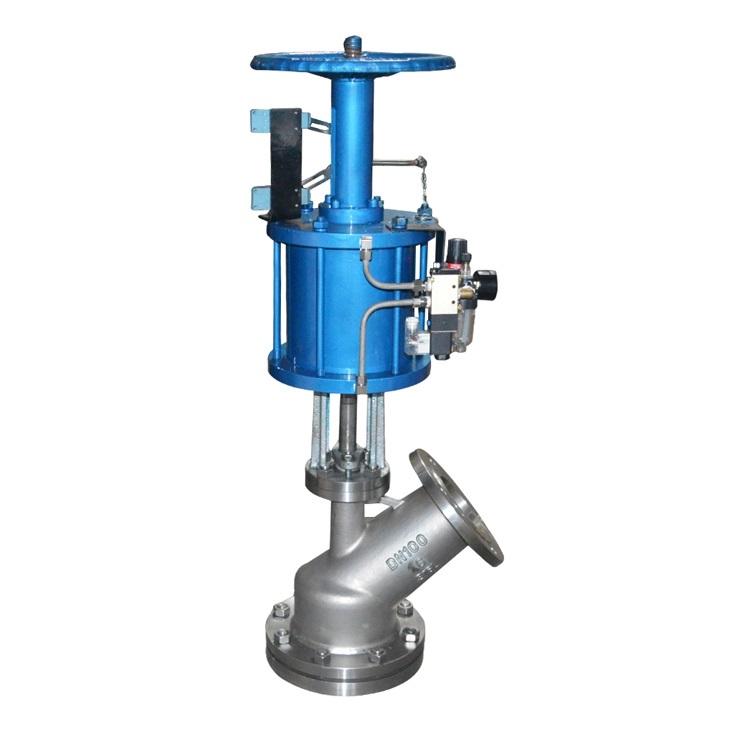
Manual operation may suit an accessible valve that cycles infrequently. Pneumatic, electric, or hydraulic actuation can be more practical where the outlet is remote, the operating force is higher, or discharge is automated. The operator should be checked against opening direction, process pressure, and required stroke time.
Maintenance crews need room to reach the stem area, remove the operator, and access body connections. The project case center can help during layout review by showing real piping and actuator arrangements.
What Should Be Resolved Before the Technical Bid Is Approved?
The final review should connect vessel duty with the valve drawing, material list, connection, operator, and test requirements. Any unresolved assumption can become a fabrication or commissioning problem later.
Which Documents Matter Most?
Keep the approved dimensional drawing, material specification, connection details, actuator or handwheel information, pressure-test requirements, and project inspection documents in the purchasing file. The drawing should show opening direction and the space required for movement and servicing.
If sediment is expected, confirm how the geometry handles the outlet area and whether the discharge path can be cleaned. For corrosive service, material substitutions should require approval. Before release, verify five points: the valve fits the vessel, opens without interference, uses suitable wetted materials, remains accessible, and can be serviced when required.
Professional Technical Support from Miwival
Miwival supplies industrial valves and automation equipment for chemical, pulp and paper, power, water, mining, and other process applications. Its Discharge Valve range includes upward and downward body constructions, multiple connection methods, manual or powered operation, and materials including WCB, CF8, CF8M, and 904L. Project review can start from vessel drawings, media, nozzle arrangement, material requirements, and actuation needs rather than nominal size alone. Miwival also publishes a 904L upward-discharge project case involving tank-bottom sediment, providing a reference for geometry and material selection.
Conclusion
A discharge valve should be selected around the vessel outlet and the behavior of material at that point. Opening direction, sediment, agitator clearance, wetted materials, connection method, actuation, and maintenance space can all change the suitability of a proposed design. The next step is to issue the vessel drawing with process and cleaning media data, then review the valve drawing against the real installation before approving materials, orientation, and operator arrangement.
FAQs
1. What is the main difference between upward and downward discharge valve arrangements?
The main difference is the direction in which the closure member moves when the valve opens. That movement affects operating force, clearance around vessel internals, sediment behavior, and the space required below the tank or reactor.
2. Which information should be included in a discharge valve RFQ?
Include vessel type, nozzle size, pressure, temperature, process and cleaning media, expected solids or sediment, agitator arrangement, connection, operating method, installation drawing, and any material or inspection requirements.
3. Can a discharge valve be selected only from the tank outlet size?
No. Outlet size establishes the connection, but vessel geometry, sediment, opening direction, corrosion exposure, operator access, and downstream piping can all affect whether the proposed construction is practical.
4. Why is maintenance clearance important for a bottom-mounted valve?
After piping, insulation, platforms, and supports are installed, access may be restricted. Enough clearance is needed for operator removal, packing inspection, body servicing, and safe valve removal when maintenance is required.
5. When should material substitutions require technical approval?
Approval is advisable whenever a substitution changes a wetted body, trim, seat, stem, weld collar, or another part exposed to process or cleaning media, especially in corrosive service.


 consult
 WHATSAPP
 leave message
 top