
How to Choose the Right Safety Valve for Steam, Gas and Liquid Service
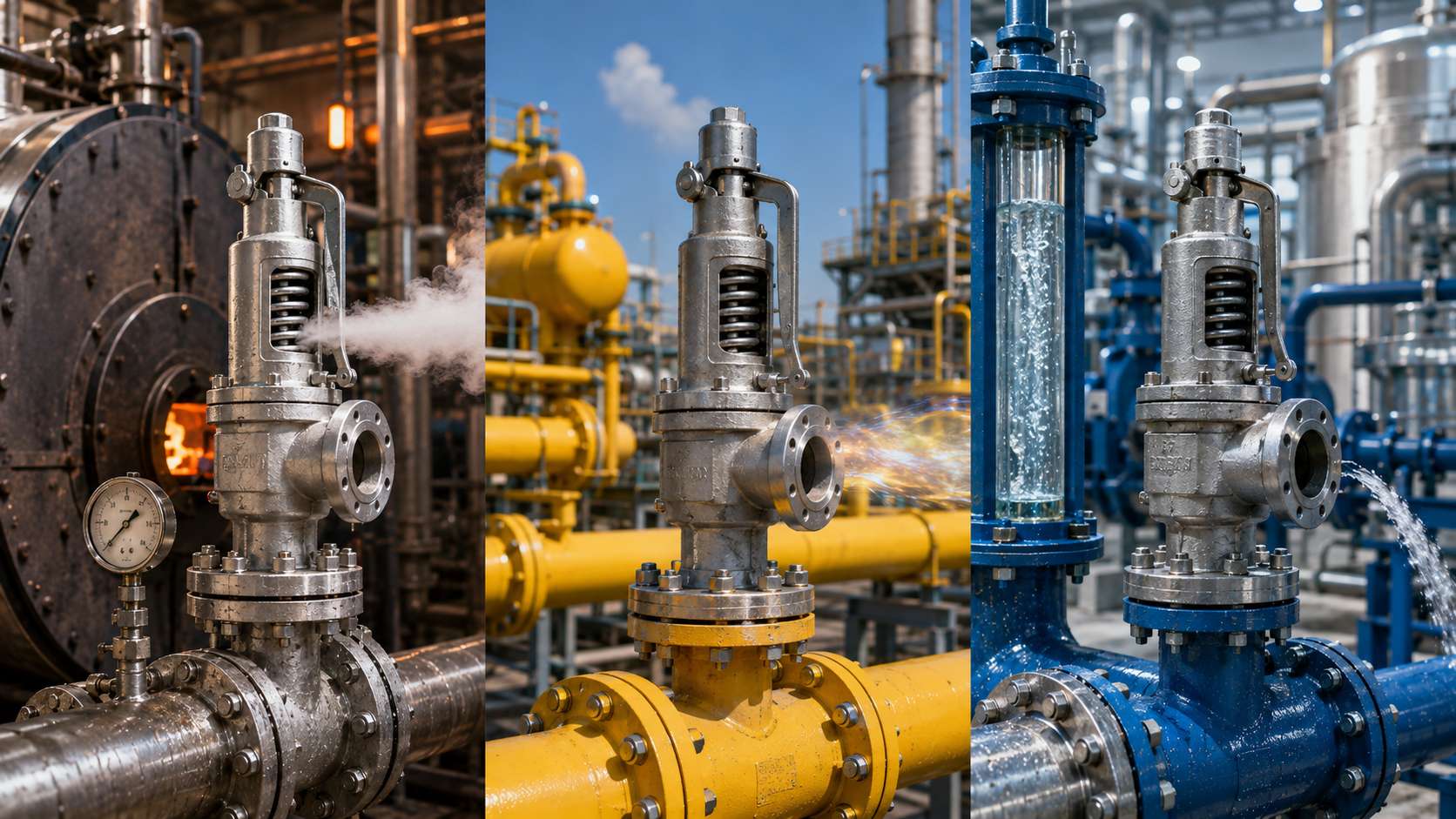
Selecting the proper safety valve is one of the most critical engineering decisions in process and power systems. The safety valve serves as the ultimate protection against overpressure, ensuring that equipment such as boilers, pressure vessels, and pipelines operate within safe limits. A mismatch between valve design and service medium—whether steam, gas, or liquid—can lead to catastrophic failure or loss of containment. Therefore, careful attention must be given to sizing, material compatibility, and compliance with relevant codes.
For safety valves, design and selection criteria are provided by a variety of standards, for pressure vessels e.g. ASME Section VIII, for relief systems e.g. API 520/521, for safety valves e.g. ISO 4126. The aim is to guarantee safe operation of the safety valve in the process at hand. The operation has to be reliable and safe. Furthermore it has to comply with the applicable laws and regulations of the industry, e.g. power generation, chemical processing, oil & gas production.
What Factors Influence the Selection of a Safety Valve?
The process of selecting the correct valve is based on a number of technical parameters that allow assessment of the required valve in practical applications.
Operating Pressure and Temperature Considerations
The operating pressure of a safety valve is set at the point at which the valve first opens. This also determines the amount of spring tension required, as well as the seating surface material. It is essential that the maximum allowable working pressure (MAWP) of a system does not exceed the set pressure of its safety valves. They must also be designed to handle the maximum expected pressure. At higher pressures, larger and more robust safety valves are required made from materials such as stainless steel or chrome-moly alloys in order to withstand the forces at work.
Temperature also has a large effect on the choice of materials. In steam service materials may suffer thermal expansion or creep at higher temperatures, thus they must be very thermally stable for both the main parts of an item and details or trim. On the other hand, some of the gas services are cooled to very low temperatures and in these cases the material must retain ductility at these very low temperatures in order to form and perform adequately in cryogenic service.
Type of Medium: Steam, Gas, or Liquid
The nature of the medium flowing through a valve has significant effects on the flow characteristics. Because steam and gas are compressible fluids which expand rapidly when opened and then released, their control and safe blowdown through a valve is critical. In addition, control of the reseating of the valve is important to ensure that there are no unwanted re-opens. The flow of liquids, which are incompressible, can cause the fluid to discharge in a very different manner, which can cause problems such as hydraulic shock if not controlled.
Steam service valves can use full lift to control, boilers have large increases in pressure very quickly. Gas valves require very accurate control to prevent chattering caused by back pressure fluctuations. Soft-seated valves are ideal for liquid applications because they have minimum leakage, and can have a very tight shut off after a relief event.
Material Compatibility and Corrosion Resistance
Material compatibility ensures long-term reliability by preventing chemical attack or mechanical degradation. For corrosive environments—such as those involving acidic gases or saline liquids—special alloys like Monel®, Hastelloy®, or duplex stainless steels may be necessary. In high-temperature steam systems, chrome-molybdenum steels offer excellent strength retention.
The balance of cost effectiveness and durability is very important. Although there are more exotic materials available, which might have a higher initial investment, they are able to reduce the amount of maintenance required and will last longer in extreme conditions.
How Do Design Standards Affect Safety Valve Selection?
The various International codes offer methods for sizing and specifying the appropriate safety valve configuration for use in various industries.
Compliance with International Codes and Standards
ASME Boiler and Pressure Vessel Code (BPVC) Section I deals with power boilers that use steam. Section VIII covers unfired pressure vessels that are typically used in chemical processing facilities and refineries. API 520/521 outlines the sizing of gas and liquid relief vent systems typically found in hydrocarbon processing facilities. ISO 4126 sets performance requirements for relief valves that are worldwide applicable and independent of the used medium.
Compliance ensures that we can trace all our products back from where they have been installed to where they were manufactured. As part of our factory approval process we test certified valves for lift accuracy, seat tightness and discharge capacity prior to release into the market. These products are often specified by power utilities and oil & gas operators and are covered by the quality assurance programs that we operate.
Sizing and Capacity Calculations According to Standards
Proper sizing of a safety valve is important. To ensure that the valve does not exceed the “allowable accumulation” as defined by code (which is typically 10% above MAWP), the engineer must determine the required relieving capacity of the safety valve. This is typically done by determining the required flow, by use of flow equations which relate to the thermodynamic properties of the medium in question. For gases and steam, this would be in terms of mass flow rate, and for liquids, in terms of volumetric flow rate.
The flow coefficient (Cv) of a given valve is defined by the manufacturer. In selecting a proper Cv, one must make certain that the chosen valve is not too small and restrictive or too large and create unstable conditions. In addition, back pressure effects on reseating of the valve must also be considered to ensure that adequate back pressure is not present to restrict reseating of the valve after discharge.
What Are the Key Differences Between Valves for Steam, Gas, and Liquid Services?
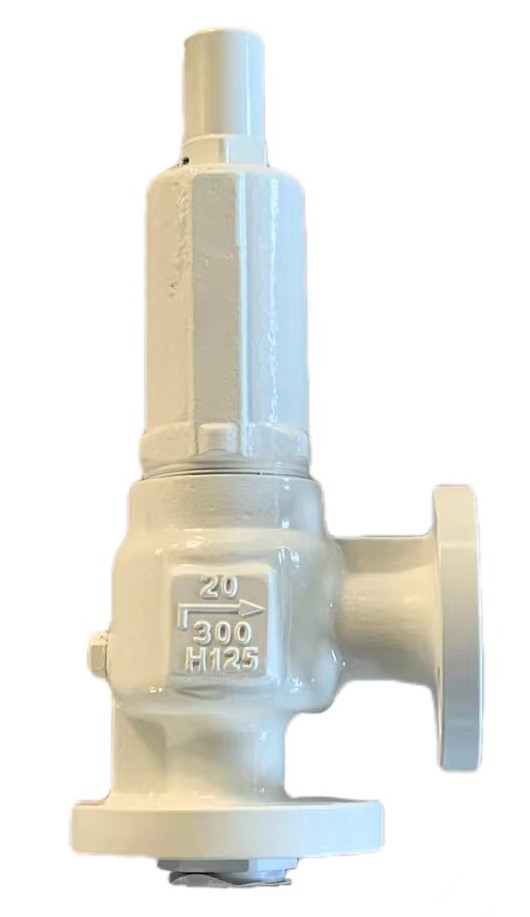
Different media create different problems and need different valve designs to run successfully.
Characteristics of Safety Valves for Steam Systems
Steam valves must withstand extreme temperatures often exceeding 500°C while responding quickly to sudden overpressure events common in boilers. They typically feature thermally stable alloys such as stainless steel 316 or Cr-Mo steels to prevent warping under cyclic heating. Seat designs include full-nozzle configurations that promote efficient blowdown control and minimize leakage after reseating.
Features of Safety Valves for Gas Service
Gas service demands precise control over blowdown—the difference between opening and reseating pressures—to avoid chattering due to compressible flow dynamics. Lightweight construction reduces inertia during actuation while specialized trim geometries optimize discharge efficiency across varying pressures. Clean gas systems may use standard stainless-steel trims; however, corrosive gases like hydrogen sulfide require nickel-based alloys with superior resistance properties.
Selection Criteria for Liquid Service Valves
Rapid discharge can cause water hammer which is a major risk for liquid service. In order to control such risk, damping is a critical element in the design of liquid service valves. Soft-seated valves made of PTFE or elastomers are typically used for liquid service as they can ensure tight shut off under static conditions. Any leakage could be catastrophic to process. Sizing of flow passages are also critical to avoid cavitation erosion which can occur due to sudden drop in pressure within the body of the valve.
How Does Installation Environment Affect Performance?
Installation practices have a significant effect on the reliability of installed pumps in operation.
Orientation and Piping Layout Requirements
Safety valves should be installed vertically to ensure that they open and close properly. Straight piping should be used on the inlet side in order to minimize frictional losses. Excessive use of bends, as well as installation of safety valves on a horizontal plane, can cause stresses in the piping that lead to nozzle and disc misalignment. Safety valves also require adequate support of the outlet piping in order to prevent the body of the valve from being deformed by reaction forces during discharge. Inadequate support can also cause increased back pressure, affecting reseating accuracy.
Maintenance Accessibility and Inspection Frequency
Making periodic tests easy to access, in order to comply with the requirements of regulatory authorities such as OSHA or local boiler inspection boards, is important. In order to test without having to disassemble the entire system, test levers or even remote actuation should be integrated into the system. The more severe the service conditions, the more frequent the checks have to be performed. While high-risk services have to be checked every 6 months, average services are checked on an annual basis. Seals leaking from the seats or slow lifting can however be a sign of wear and need to be serviced quickly.
Why Is Miwival Considered a Reliable Supplier for Safety Valves?
Miwival is a global leading manufacturer of high quality of safety-relief valves for Steam, Gas and Liquid service in various Industries. Miwival products meets International Codes and Standards such as ASME BPVC and ISO 4126 for all its products and services. Our team of engineering experts able to assist in the sizing, selection of proper materials and to troubleshoot problems encountered during the commissioning of the valves. Our plants equipped with latest technologies and backed up by our experienced quality team to ensure that every process from casting to final assembly is of high standards and are tested before they are dispatched with complete documentation and traceability as per the industry practice.
Conclusion
Safeguarding of people, of plant and of the environment when dealing with processes running with steam, gases or liquids is guaranteed by the proper choice of safety valves. Depending on the fluid in question, not only different areas of application are to be considered but also different aspects in terms of design. Thus, for steam applications the aspect of thermal expansion must be taken into account whereas for liquid services the aspect of hydraulic shock must be prevented. The corresponding design adaptations are guaranteed by adherence to the recognized standards, but a supplier specialized in safety valves, such as Miwival, must be involved in the selection of the appropriate safety valves. In cooperation with his experienced engineers, he can offer qualified engineering solutions that have been certified for the specific application and thus provide an optimal operational safety.
FAQs
What is the primary difference between a safety valve for steam service versus one for liquid service?
Steam service valves are designed to withstand temperature and pressure changes found in vapor service. Liquid service valves are designed to address hydraulic shock and form tight shutoff using a soft-seated design.
How often should safety valves be inspected or tested?
For some critical services the inspection interval may be as often as every six months but in general for most services we would recommend an annual inspection under normal operating conditions. However under certain circumstances such as exposure to corrosive media or high cycling, it may be required to inspect more frequently.
Can one type of safety valve be used interchangeably across steam, gas, and liquid applications?
Interchangeability is not recommended, because each medium has its own physical properties, and is thus best used in specific applications where the medium and the design have been optimized for the best possible function.


 consult
 WHATSAPP
 leave message
 top
top