How to Select a Y Type Strainer for Industrial Pipeline Protection Systems
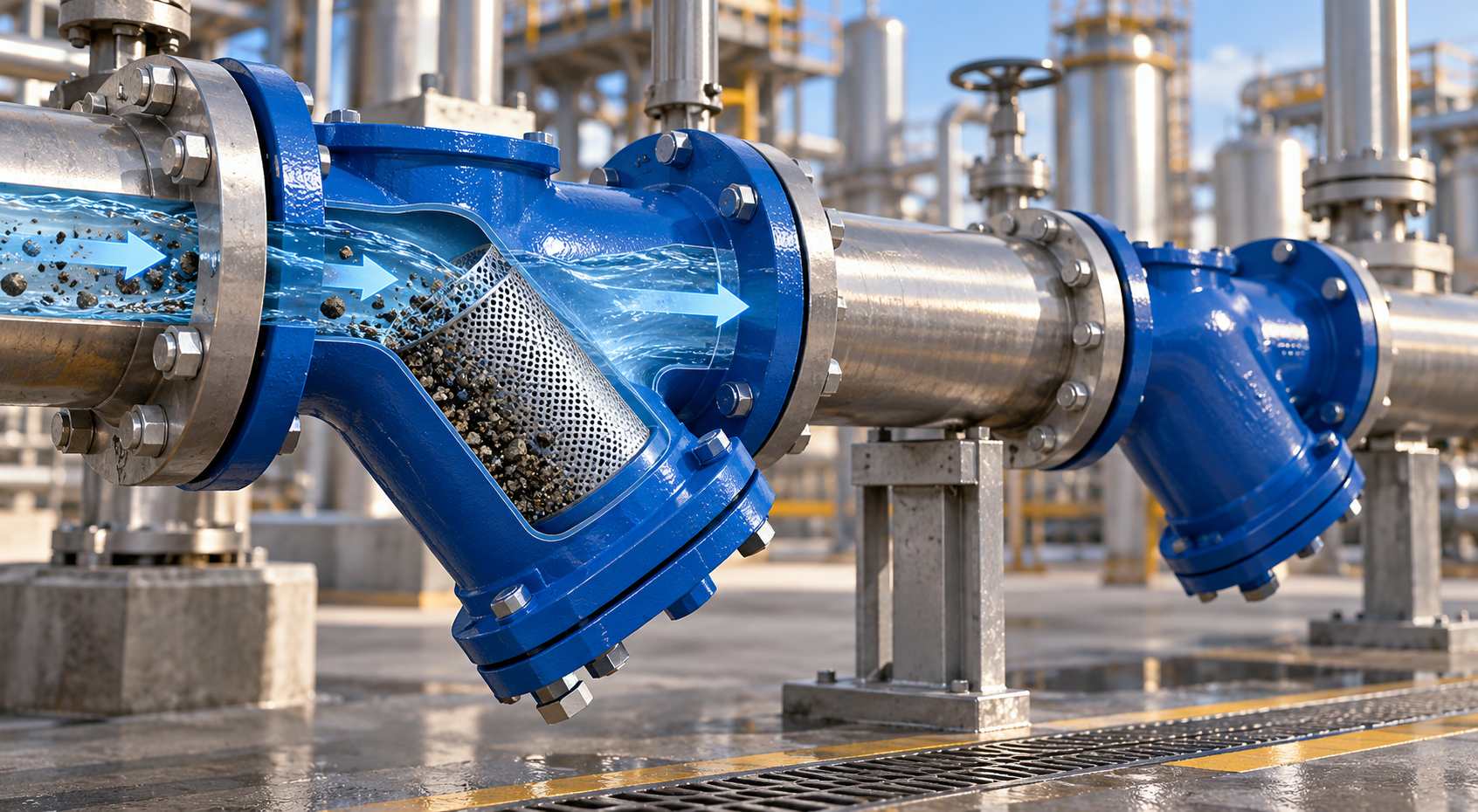
Selecting a Y type strainer for an industrial pipeline means balancing debris removal with acceptable flow resistance and realistic maintenance access. A screen that is too coarse may allow particles to reach pumps, valves, meters, or other downstream equipment, while an unnecessarily fine screen can foul quickly and increase pressure loss. The right choice therefore depends on the actual medium, expected contamination, pipeline duty, cleaning frequency, material compatibility, and available installation space. This article focuses on the questions a process engineer, maintenance manager, or technical buyer should resolve before approving a Y type strainer for pipeline protection.
What Process Information Should Be Defined Before Selecting a Y Type Strainer?
A strainer can only protect downstream equipment effectively when the filtration requirement is tied to the process rather than chosen from a generic specification. The first step is to understand what is flowing through the line and what type of debris must be intercepted.
What Does the Strainer Need to Protect?
The protected equipment should influence the filtration decision. A pipeline carrying occasional construction debris into a robust isolation valve presents a different problem from a line feeding a pump, control component, or instrument with narrower internal passages.
Before requesting a quotation, identify the downstream equipment, the type of solids likely to be present, and whether contamination is continuous or mostly associated with startup, maintenance, or piping work. Rust, scale, welding residue, fibers, process solids, and other contaminants do not behave in the same way inside a screen.
The medium also matters. Water, steam, process chemicals, and industrial fluids create different material and cleaning requirements. Applications in water and wastewater systems may involve turbidity, suspended material, chemical treatment, or corrosive exposure, so the service description should be more specific than simply stating “water.”
Why Should Flow Conditions Be Included in the RFQ?
Flow rate and pipeline size affect how quickly debris reaches the screen and how much resistance the strainer adds to the system. A clean screen already introduces some restriction; collected solids increase that resistance further.
For purchasing purposes, the useful question is not whether a strainer has “low pressure drop,” but whether its screen arrangement and flow area are suitable for the expected duty. If the process cannot tolerate much additional resistance, this needs to be stated before the strainer is selected.
The RFQ should therefore describe normal flow, operating pressure, temperature, line size, medium, expected contaminants, and whether flow is steady or frequently changing. This gives the supplier enough context to discuss filtration without guessing at the service.
How Should Screen Opening and Debris Load Be Evaluated?
Screen selection is where filtration performance and maintenance burden meet. Finer filtration can capture smaller particles, but it also leaves less open area for flow and may shorten the interval between cleanouts when the process carries a significant solids load.
Match the Screen to the Real Contamination Problem
A practical specification begins with the smallest particle that genuinely threatens downstream equipment. Selecting a finer screen simply because it appears more protective can create unnecessary maintenance.
The relationship is straightforward: smaller openings retain more debris, while retained debris gradually occupies the available screen area. As the screen loads, differential pressure rises and flow can be affected. Miwival’s published material on custom strainers also emphasizes that screen specification, debris characteristics, and flow requirements need to be considered together rather than independently.
For that reason, purchasing teams should ask how the proposed screen was selected. A useful technical answer should connect the opening size with the protected equipment, expected contamination, and anticipated cleaning method rather than quoting a mesh number without context.
|
Procurement question |
Why it matters |
|
What debris must be stopped? |
Determines the required screen opening |
|
How much solid material is expected? |
Influences cleaning frequency and usable screen area |
|
What equipment is downstream? |
Defines how much particle passage is acceptable |
|
Can pressure loss increase during operation? |
Affects how much screen loading the system can tolerate |
|
How will the screen be cleaned? |
Determines maintenance access and shutdown planning |
This comparison helps prevent two common specification errors: choosing a screen that is too open to protect the system, or choosing one so fine that the strainer becomes a frequent maintenance point.
Which Material and Construction Details Should Be Checked?
Once filtration duty is understood, material selection becomes the next major procurement issue. The body and screen may experience different forms of corrosion, erosion, temperature exposure, and mechanical stress, so they should not be treated as a single material decision.
Why Should the Body and Screen Be Reviewed Separately?
The body must suit the pipeline pressure, temperature, medium, and connection requirements. The screen, however, is directly exposed to both the fluid and the particles it captures. A material combination that is acceptable for clean water may not remain suitable in a chemical or abrasive service.
This becomes particularly relevant in industrial chemical processing, where corrosion resistance can influence equipment life and maintenance planning. The broader industrial application portfolio shows that strainers may be used across water, chemical, power, mining, pulp and paper, and other process environments rather than one uniform service.
What Construction Details Affect Maintenance?
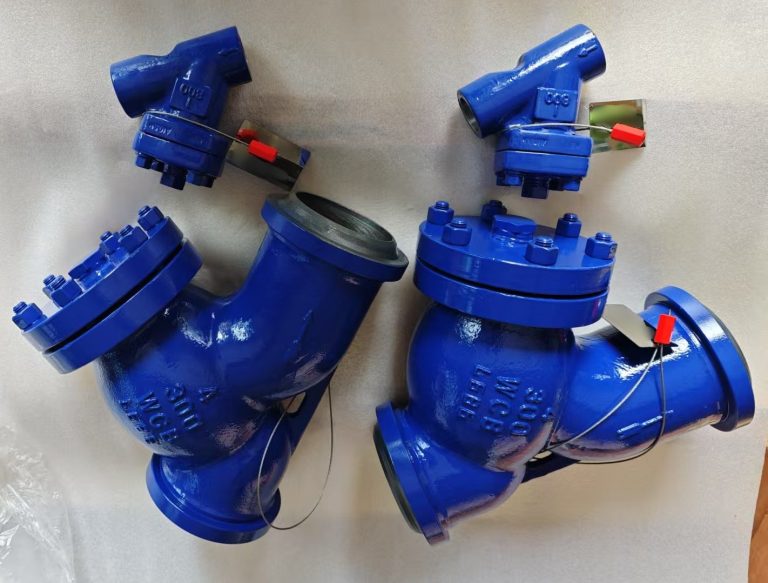
The removable screen, cover arrangement, drain point, connection style, and installation orientation all affect how easily a strainer can be inspected and cleaned.
A strainer installed in a congested pipe rack may be technically suitable but difficult to service if the cover cannot be removed without disturbing adjacent piping. Maintenance clearance should therefore appear on the installation review, especially where cleaning is expected more than occasionally.
The wider strainer product category can also help technical buyers distinguish standard Y-pattern filtration from other strainer arrangements when the process requires a different cleaning or debris-handling approach.
How Should Pressure Drop and Maintenance Be Considered Together?
Pressure loss and maintenance cannot be evaluated independently because screen fouling changes the hydraulic condition over time. A strainer that performs acceptably when clean may become restrictive if the process accumulates debris faster than maintenance can remove it.
Plan for the Dirty Condition, Not Only the Clean Condition
Technical evaluation should consider how operators will know when cleaning is required. Depending on plant practice, this may involve inspection intervals, pressure observations, or differential pressure monitoring across the strainer.
The cleaning plan should match process criticality. If the pipeline cannot be shut down easily, frequent manual cleaning may create an operational problem even when the strainer itself is correctly sized. In other services, scheduled cleaning during routine maintenance may be entirely acceptable.
Power and utility systems provide a useful example of why this matters: equipment reliability depends on maintaining predictable flow conditions through the wider process, not simply on installing a filtration component. Application requirements for power and energy systems illustrate the range of operating environments in which flow-control equipment has to be coordinated with the process rather than assessed in isolation.
What Should Buyers Confirm Before Approving the Purchase Order?
The final procurement review should make the proposed strainer traceable to the original process problem. If the quotation does not explain why the selected screen, materials, and construction suit the service, important assumptions may remain hidden until commissioning.
Use the Technical Bid to Remove Assumptions
Before approval, compare the quotation and drawing with the process data. Check the medium, line size, pressure and temperature conditions, screen specification, body and screen materials, connection type, flow direction, maintenance access, and any drain or cover arrangement that affects servicing.
The drawing is particularly useful because installation problems often come from dimensions rather than filtration performance. Verify that the Y-leg has enough clearance for screen removal and that the installed orientation allows collected debris to be managed as intended.
Spare screens should also be discussed when the application is maintenance-sensitive. Keeping the approved screen specification with the equipment record reduces the chance that a later replacement uses a different opening or material without technical review.
Professional Technical Support from Miwival
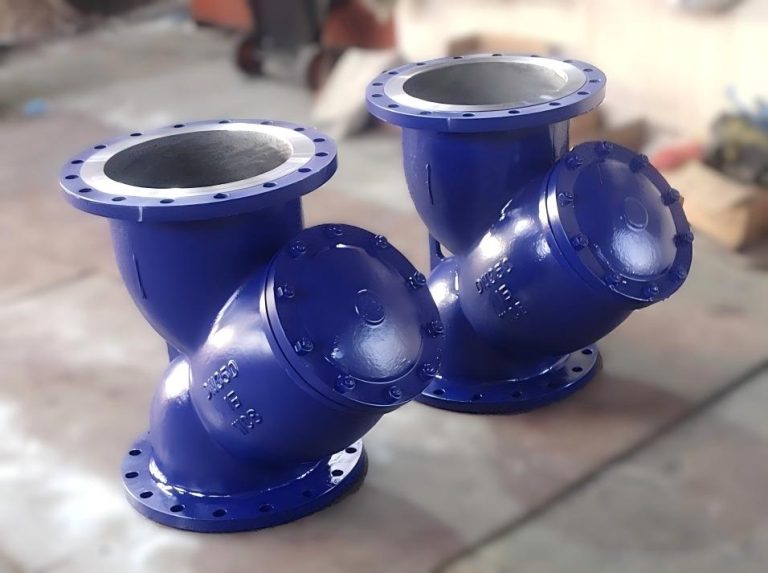
Miwival supplies valves, automation equipment, accessories, and strainers for industrial applications including water and wastewater, power, mining, chemical processing, pulp and paper, and other process sectors. For projects requiring Y Type Strainers, technical discussions can be based on the pipeline medium, pressure, temperature, expected debris, filtration requirement, connection, and maintenance conditions rather than a generic size request. Miwival’s published quality process covers incoming casting and forging inspection, dimensional checks, chemical analysis and PMI, machining and assembly inspection, NDT, pressure testing, painting, final inspection, and packing inspection. These documented stages give buyers specific points to define and verify during technical and quality review.
Conclusion
A Y type strainer should be selected according to the contamination problem it must control, the downstream equipment it protects, and the maintenance conditions of the pipeline. Screen opening, debris load, material compatibility, pressure loss, installation clearance, and cleaning access all influence whether the strainer remains useful after commissioning. Before releasing the purchase order, engineering and procurement teams should confirm the proposed screen and construction against the same process data and retain the approved specification for future maintenance and replacement.
FAQs
1. How fine should the screen in a Y type strainer be?
The screen should be fine enough to stop particles that could damage or obstruct downstream equipment, but not finer than the process requires. An unnecessarily fine screen can collect debris faster and increase pressure loss, so particle risk and solids loading should be reviewed together.
2. Where should a Y type strainer be installed in a pipeline?
It is normally positioned where downstream equipment requires protection from debris carried by the process fluid. The exact location should also provide sufficient access for opening the cover and removing the screen without dismantling nearby piping or equipment.
3. How can buyers judge whether pressure drop will become a problem?
Review the expected flow condition together with the screen design and likely debris load. The clean condition is only the starting point; accumulated solids reduce available flow area, so the maintenance plan should account for how pressure loss changes between cleaning intervals.
4. What information should be included when requesting a Y type strainer quotation?
Provide line size, medium, operating pressure and temperature, flow conditions, expected contaminants, filtration requirement, pipeline connection, installation orientation, and maintenance limitations. Identifying the equipment being protected also helps explain why a particular screen opening is required.
5. Which spare parts should be considered when purchasing a Y type strainer?
The screen is the main component to identify for future maintenance because its opening, dimensions, and material must remain consistent with the approved filtration duty. Where shutdown access is limited, keeping an appropriate spare screen can simplify planned maintenance.


 consult
 WHATSAPP
 leave message
 top