
Pneumatic or Electric Flow Control Gate Which Actuator Fits Your Plant
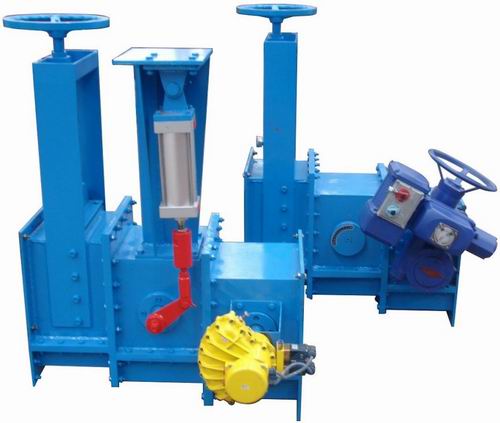
Pneumatic flow control gates and electric flow control gates are used in industrial process systems to control the flow of a wide variety of materials including liquids, gases and bulk solids. The type of actuator used for flow control gates is critical to their performance and reliability. The choice between using a pneumatic actuator or an electric actuator for a flow control gate has significant implications for plant operation, including process efficiency, the time required to respond to changes in process requirements, energy consumption and maintenance. This article compares the main features of both types of flow control gates to assist users select the most appropriate type of actuator for a particular process application.
What Are the Core Differences Between Pneumatic and Electric Flow Control Gates?
Before we are able to compare the respective performance metrics of the introduced actuation concepts a brief overview of how each concept functions and which components of a system each requires needs to be given.
Mechanism and Operating Principles
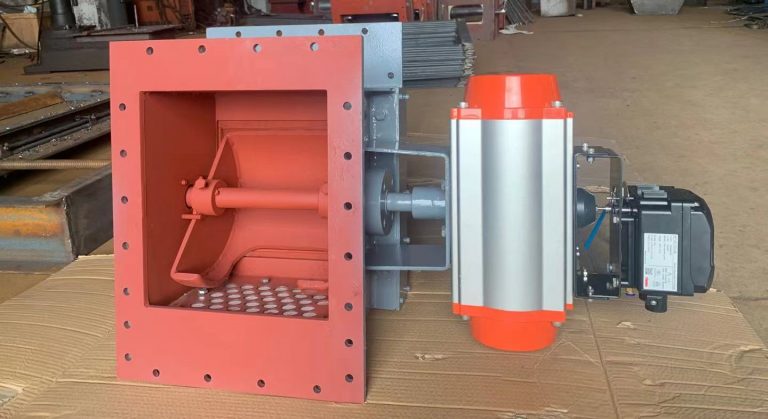
Pneumatic flow control gates are operated by pushing pistons or diaphragms with compressed air. The air pressure is converted into linear or rotary movement, for example to open or close a gate. This movement is fast, even under high loads. In contrast to pneumatic flow control gates, electric flow control gates are operated by motor-driven actuators, like for example stepper motors or servo motors. These actuators precisely position the gate by means of electrical control signals. While pneumatic solutions are optimal for fast and frequent operations, electric solutions offer better modulation accuracy and a more smooth movement between positions.
Key Components and System Requirements
An air powered system requires an integrated air supply system consisting of air compressors, air regulators, air filters, solenoid valves and air hoses etc. This system requires consistent air pressure to activate the air motors and other air operated equipment. On the other hand, an electric system consists of motors and other associated equipment which are powered by electrical sources by means of control systems viz variable frequency drives or PLC controlled systems. A pneumatic system would be economically better to install within an existing plant having air lines already in place.
How Do Performance Factors Compare Between Pneumatic and Electric Actuation?
The key characteristics of actuators affect the process’ stability and efficiency. In certain situations, different types of actuators have advantages over others.
Speed and Response Characteristics
Pneumatic actuators are fast-acting because of the fast travel time of air. Applications that require frequent cycling and have shut-off functions in case of an emergency can thus be implemented quickly and cost-effectively. Electric actuators are somewhat slower than pneumatic systems at first, but offer more gradual acceleration and braking, thereby avoiding excessive stress on the moving parts of the gate. In comparison to pneumatic systems, electric systems thus have a clear advantage in terms of process exactness as against speed.
Precision and Control Accuracy
Fine control of electric actuators’ flow rates is better than for corresponding pneumatic actuators. They can open their gates step by step using their electric motor, based on the information from sensors or the actuators’ own encoders. A pneumatic gate is typically open or closed, as with most other pneumatic devices. This simple operation is adequate for most processes but for processes where such a gate is to be used, the main demand is for sufficient reliability for variable loads.
Which Option Offers Better Energy Efficiency and Maintenance Benefits? Sustainability in operation does not only refer to immediate properties of products but also refers to long-term consumption of energy and maintenance.
Energy Consumption Considerations
Pneumatic systems inherently consume more energy because compressors must continuously maintain air pressure even during idle periods. This leads to higher operational costs over time due to leakage losses within pipelines or fittings. Electric actuators convert electrical energy directly into mechanical motion without intermediate conversion losses, resulting in better overall energy efficiency. For plants aiming to reduce carbon footprint or electricity bills, electric actuation offers a more sustainable path.
Maintenance Demands and Reliability Over Time
The complexity to maintain pneumatic systems in comparison to electric actuators is considerable. Pneumatic systems have to be checked for leakage of seals, valves, lubricators and hoses on a regular basis in order to maintain the performance efficiency. Unlike pneumatic systems, electric actuators have only a few wear points which have to be checked from time to time. However, the motor windings, the gearboxes as well as the control electronics need to be checked regularly in order to guarantee a trouble-free operation. In addition, pneumatic systems are more resistant to moisture and dust than electric actuators, unless the electric units are equipped with special enclosures for harsh environments.
How Do Environmental Conditions Affect Actuator Selection?
Environmental conditions have a significant effect on actuator durability and on safety in different industries.
Suitability for Harsh or Hazardous Environments
Pneumatic actuators are naturally suited for hazardous areas because they operate using non-sparking compressed air rather than electrical currents. This makes them ideal for petrochemical plants or grain-handling facilities with explosive atmospheres. Electric actuators can still function safely under such conditions if equipped with explosion-proof housings or intrinsically safe circuitry; however, these modifications increase cost and complexity compared to standard installations.
Temperature Tolerance and Operational Stability
Pneumatic systems function well in a wide variety of temperatures as the properties of air do not change much with temperature. Electric units on the other hand have difficulties in extreme temperatures as motors can over heat in hot temperatures and in cold temperatures the efficiency of a battery can decrease. Insulation of the wires and active cooling can compensate for these problems but they do require extra design consideration for the installation.
What Are the Economic Considerations When Choosing Between the Two Systems?
When we speak of economic evaluation, we refer to more than just the purchase price of a product. In addition to the effort required to install a product, the normal running expenses and the required spare parts, there is also the loss of production caused by downtime.
Initial Investment vs Long-Term Operating Costs
For pneumatic configurations the initial investment for the control valves is lower, since usually the air supply is already integrated in the industrial plant. The higher cost for the operation of the compressors, however, is offset against this in the long term by higher energy costs. For electric flow control gates higher initial investment costs must be expected for the required motor assemblies and the corresponding electric controllers. However, in terms of the operational costs, these offer enormous savings potential, especially with regard to the low requirement for maintenance and the energy-efficient operation.
Total Cost of Ownership Evaluation Criteria
A comprehensive cost analysis should include installation complexity—pneumatics often need extensive piping whereas electrics require wiring integration—as well as spare parts availability from suppliers. Downtime risk assessment also matters: replacing worn seals in a pneumatic cylinder might be faster than diagnosing a failed circuit board within an electric actuator system depending on local technical support accessibility.
Why Should You Consider Miwival as Your Flow Control Gate Supplier?
Miwival stands out as a trusted manufacturer specializing in valve automation solutions tailored for diverse industries worldwide. The company focuses on engineering excellence by combining advanced materials with precision manufacturing techniques that ensure durability under demanding conditions. Its product portfolio includes both pneumatic flow control gate models optimized for rugged reliability and electric flow control gate variants designed for high-accuracy modulation tasks across processing plants. Miwival also provides end-to-end service capabilities covering consultation during design stages, customization per client specifications, installation guidance aligned with international standards, comprehensive training programs for operators, and long-term maintenance contracts ensuring sustained performance throughout equipment lifespan.
Conclusion
When choosing between a pneumatic or an electric flow control gate, several operational criteria must be weighed up, including speed, precision, operating environment, energy efficiency and investment costs. Pneumatic solutions are typically used in very harsh environments where extremely high demands are placed on durability. In contrast, electric flow control gates are more controllable and therefore better suited for process optimization in automated smart factories.
FAQs
1. Can a pneumatic actuator be replaced with an electric one in an existing system?
Yes, retrofitting is possible if mechanical compatibility between mounting interfaces is confirmed along with proper integration into existing signal wiring networks; minor modifications may be necessary depending on actuator stroke length differences or torque capacities.
2. Which actuator type performs better in continuous operation environments?
Electric actuators typically maintain consistent output during continuous duty cycles because they rely on stable power input without pressure fluctuations common in compressed air networks; this reduces component fatigue over extended runtime periods compared to pneumatics.
3. How do I determine the correct actuator size for my flow control gate?
Sizing of the gate opens up design parameters that include the size of the opening in relation to the conveyed material’s density profile and required thrust to overcome the differential pressure at operating temperatures. Reference to a data sheet for the actuator being used will enable correct sizing in relation to process loads to ensure optimum operation.


 consult
 WHATSAPP
 leave message
 top
top