What Is a Check Valve and Why It Matters
A check valve pulls off this low-key but crucial job in whatever setup handles fluid flow. Folks might not catch it in action, but that tiny piece sure as heck prevents pipes from backing up with overflow, saves pumps from frying themselves, or blocks dirty stuff from sneaking back into a fresh stream. In setups hauling water, muck, harsh liquids, vapor, or whatever else, nailing that steady forward push can mean the gear chugs along smooth or grinds to a halt right when you need it most.
If you are looking for long-term stability rather than short-term fixes, you tend to compare materials, internal structures, closure speeds, and pressure behavior. At this point, many engineers also want a manufacturer with full-series valve solutions, testing capability, and project experience across heavy industries. This is where a dedicated industrial valve provider such as Miwival becomes useful. You can browse its products, see how different valve designs work inside complex system layouts through its solutions, or review actual industrial cases from the case center if you need a real-world reference. These resources help you make a clear and practical decision rather than guessing on paper.
What Does a Check Valve Do?
A check valve allows fluid to move forward and closes when pressure shifts backward. You do not need to operate it manually or connect it to a control system. It reacts only to flow and pressure, which is why it appears in water plants, chemical loops, slurry pipelines, steam lines, and pump discharge outlets.
When forward pressure rises, the valve opens. When pressure drops or reverses, the disc, ball, or plate returns to its seat and seals the passage. A small thing, yet in systems that handle high temperatures or high-density media, this automatic action prevents pump damage, pipeline contamination, and water hammer.
Before exploring specific valve types, think of the situations you deal with daily. A pump that suddenly stops. A line with solid particles that can jam moving parts. A pressure spike that travels several meters in less than a second. These scenarios are exactly where good valve design shows its value.
Why Backflow Protection Matters?
Backflow often happens in a split second. One moment the pump is pushing water forward, the next moment pressure collapses and everything rushes back. If you have instruments, heat exchangers, filters, or dosing systems in the line, the damage is not small. In many plants, a single backflow incident can cause several hours of downtime.
A check valve prevents this reverse movement. It also holds pressure in sections of a pipeline so you can isolate or restart equipment smoothly. In water systems, it also stops contaminated water from entering clean zones, something that matters more than many realize.
How Pressure Differential Controls Valve Action?
Every check valve works on the same basic principle. Forward pressure pushes the internal part open. Once flow drops below a set point, known as cracking pressure, the valve closes again. Springs, gravity, or fluid force help with the closing motion depending on the design. No electronics. No actuator. Just mechanical response.
Although the principle is simple, the details matter. A valve with the wrong cracking pressure may chatter during low-flow conditions. A valve with the wrong internal structure may close too slowly and create water hammer. This is why choosing based on pipeline layout, fluid type, and pressure range is important.
What Are the Main Types of Check Valves?
Different designs respond differently to flow patterns. Heavy-industry pipelines often carry abrasive, corrosive, or high-temperature media, so you need a structure that fits real operating conditions rather than a generic choice.
Before going into the common types, think about your own pipeline. Does the flow stay steady or surge? Does the medium carry solids? Does the valve need to work vertically? These small details decide whether a valve lasts years or fails early.
Swing Check Valve
A swing check valve uses a hinged disc that swings open with flow. It’s widely used in water and wastewater systems because the design handles relatively clean flow and moderate velocities. You often see it in large pipelines because the internal path has minimal resistance.
Lift Check Valve
Lift designs behave more like globe valves. The disc lifts straight up when flow pushes forward and drops back onto the seat when flow stops. This straight-line movement makes lift valves suitable for steam lines, gas systems, and higher-pressure loops.
Ball Check Valve
A ball check valve uses a free-moving or spring-supported ball. It’s simple and sturdy, and this is why it appears so often in slurry systems or chemical lines with solid particles. The ball can move freely enough to avoid jamming and returns quickly to the seat when pressure reverses.
Dual-Plate Wafer Check Valve
A dual-plate valve uses two spring-loaded plates. The springs keep the plates stable and help them close quickly when flow stops. Because the body is compact and lightweight, it fits well in systems with limited installation space.
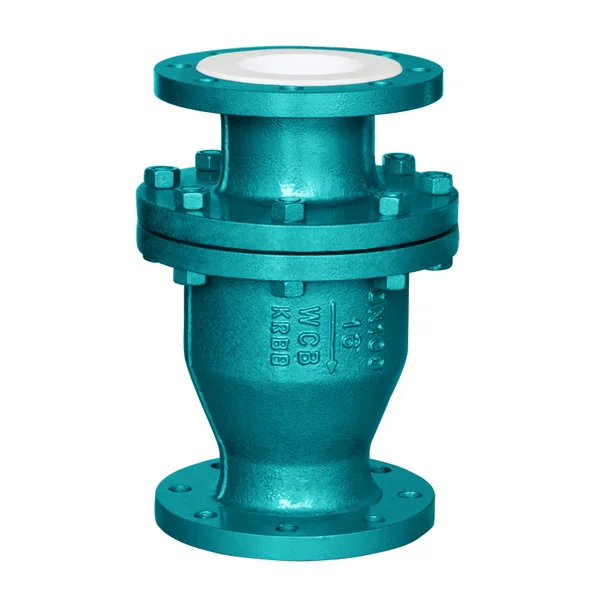
When you work with lines carrying corrosive media or mixed chemical compositions, you may need a design that protects the internal sealing surface. This is where a corrosion-resistant option such as a Lined Check Valve appears in many projects, especially in chemical distribution or acid-transfer loops. The lined structure reduces direct chemical contact with the metal body, which extends service life and keeps the seat shape stable over longer operating hours.
Tilting Disc Check Valve
A tilting disc design tilts around a pivot. The motion is more controlled than a full swing, which gives smoother operation. It’s often used in power plants, petrochemical loops, and high-temperature systems.
The controlled movement keeps the disc closer to the seat, reducing turbulence and noise. In lines where pressure conditions change gradually, tilting disc structures give a long service life.
Diaphragm and Duckbill Check Valve
These valves use flexible elastomer materials. The shape opens with flow and collapses gently when flow stops.
How Do Check Valves Work in Pump Systems?
A pump system without a check valve is almost impossible to manage. Reverse rotation, pressure loss, and sudden surges all happen more frequently than many assume. Your pump invests energy to move fluid forward. Without a check valve, all that work can reverse instantly.
Why Pumps Need Backflow Protection?
When a pump stops, the fluid column collapses and tries to move backward. If the reverse force reaches the impeller, it can bend vanes or damage mechanical seals. Even a small reverse flow can make a pump lose prime, which means extra time for recovery.
A check valve holds the pressure on the discharge side. It stops the backward rush and keeps fluid in place so the pump can restart smoothly.
How Check Valves Reduce Water Hammer?
Water hammer is a pressure spike caused by sudden flow reversal. A good check valve closes quickly yet smoothly. Spring-loaded and dual-plate designs close before the reverse wave builds force, which controls the impact. In pump stations, this behavior prevents vibration and noise that sometimes confuse operators.
Where Do You Use Check Valves?
Because check valves rely on flow and pressure rather than external control, they appear across many industries. Some sectors use them daily, almost without noticing their importance.
When selecting a valve, consider the temperature, medium, and any suspended particles. Not all valves handle solids or high temperatures equally well.
Water and Wastewater Applications
Water plants use check valves to protect pumping stations and prevent clean water from mixing with wastewater. In networks with multiple pressure zones, they keep higher-pressure sections stable when pumps shut down. In wastewater treatment, ball and diaphragm types handle sludge or chemical additives well.
Oil, Gas, and Chemical Systems
In chemical loops, backflow can cause contamination or hazardous reaction. High-alloy or corrosion-resistant valves keep the system stable. Lift and tilting disc types handle high temperatures and high pressure, which is why they appear in refineries and processing units.
Power, Steam, and High-Temperature Lines
Steam lines use lift and tilting disc valves because the internal structure resists deformation at high temperatures. In condensate return systems, fast closing is important because steam traps and heat exchangers rely on steady direction flow.
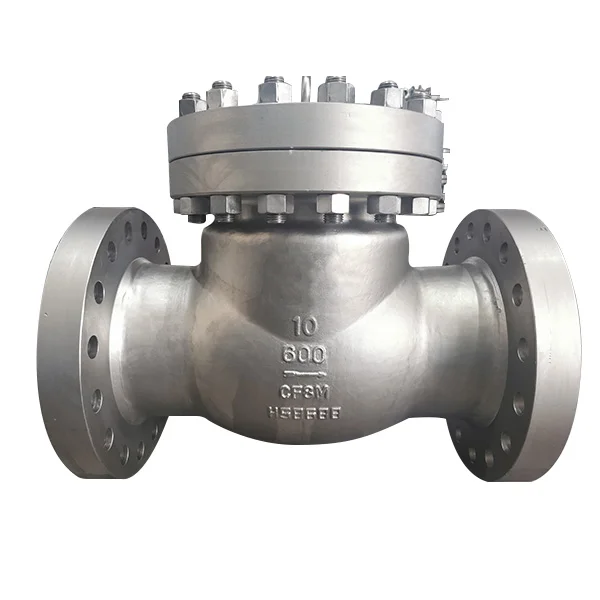
In many industrial loops, especially those running water, steam, or neutral media, a general-purpose Check Valve remains the common choice. Its structure matches most medium-pressure pipelines and supports equipment that cycles daily. Many engineers keep this type as a baseline option when building or upgrading standard utility lines.
Mining, Slurry, and Heavy Solids
Pipelines carrying slurry need clearance inside the valve. Ball and diaphragm structures are common because solids don’t get stuck easily. Abrasion is a daily factor in mining, and these designs are built to handle that.
HVAC and Building Services
In circulation loops, check valves reduce pump cycling and stop reverse pressure waves. Dual-plate designs work well because they are compact and easy to mount between flanges.
How Should You Select a Check Valve?
Choosing a check valve is less about guessing a model and more about understanding your line behavior. Every system has its own pressure pattern, flow pulse, and fluid characteristics.
A quick example: a line with low flow often causes a swing disc to hover instead of sealing firmly. This creates noise and wear. In such cases, a spring-loaded valve would fit better.
Which Factors Influence the Choice?
Consider flow rate, pressure range, fluid type, temperature, and pipeline direction. A vertical pipeline behaves differently from a horizontal one. If your fluid carries debris, avoid valves with narrow flow paths.
Some systems require tight shutoff. Others need fast closing. The right choice depends on what problem you want solved. If the main issue is water hammer, a dual-plate wafer valve is usually better.
Why Material Selection Matters?
Materials vary a lot. Stainless steel handles corrosion. Ductile iron works well in general industrial settings. Bronze appears often in clean water. Plastics resist chemical attack.
When transporting corrosive chemicals or abrasive slurries, a lined design like the Lined Check Valve helps extend service life because the internal surface resists chemical erosion.
If you need a standard structure for general pipelines, a traditional Check Valve fits most medium-pressure water or industrial lines.
Why Cost and Life Cycle Both Matter?
A low upfront cost might look attractive, but early wear, leakage, or repeated replacement can quickly outweigh the savings. A durable valve reduces downtime, especially in systems that run continuously. In industries where one hour of shutdown costs thousands, long service life becomes a priority.
If you need more reference points, the news section and company overview provide background about manufacturing capability, testing, and application experience.
FAQ
Q1: What is the main job of a check valve?
A: It stops fluid from flowing backward. This protects pumps, keeps pipelines stable, and prevents contamination between pressure zones.
Q2: Where should a check valve be installed in a pump system?
A: Usually on the discharge side of the pump. This placement keeps the pump from reversing and helps maintain prime during shutdown.
Q3: Why do some pipelines experience water hammer?
A: Water hammer happens when flow reverses too fast. If a valve closes slowly or the line has high velocity, the sudden stop creates a pressure spike.
Q4: Which type works best for slurry or fluids with solids?
A: Ball check valves and diaphragm types usually handle solids better because the internal path is open and less likely to trap particles.


 consult
 WHATSAPP
 leave message
 top
top