
Where Can Export Packing Damage a Lined Weir Diaphragm Valve?
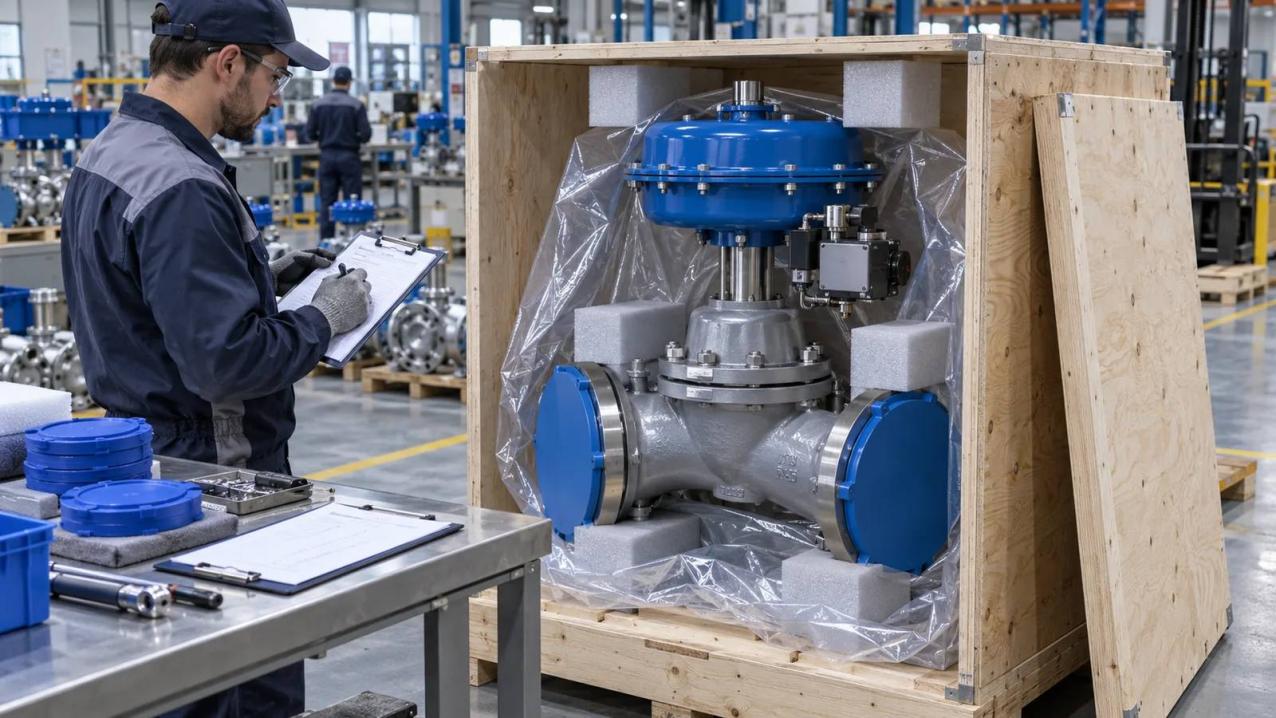
A crate can arrive with every board in place while the valve inside has still been harmed. The shell may never be pierced while a flange cover rubs the lining for the whole voyage. A tall actuator may also swing a few millimetres at every lift and feed that load into the bonnet. Neither problem is obvious from the outside.
“Seaworthy case” offers no way to settle those questions. The packing note needs to identify the valve’s bearing points, keep hard parts away from the lining, and call for images of supports that the closed crate will hide.
How Should the Body, Lining, and Actuator Be Supported?
The assembly has two very different transport problems. Its body can usually accept restraint at selected metal areas, whereas the lined bore and flange faces cannot be treated as convenient bearing points. Above the body, an actuator adds mass at a distance from the base. A pack that solves only one of those problems remains incomplete.
The Crate Can Stay Sound While the Lining Is Damaged
A flange cover is useful only when its contact is understood. A narrow cover rim turns vibration into repeated rubbing at the lined sealing face. The end of an overlong cover screw can protrude into the port, and a staple near the aperture can score the same bore. A pad becomes a moving piece of abrasive when grit is trapped below it or its cover is free to creep.
Small loose parts create a second contact route. Hardware or an accessory bag can break free and tap the coating throughout the trip. A fixed compartment away from both ports keeps those parts with the shipment without letting them become projectiles.
Parts above the bonnet face handling rather than abrasion risk. Because the indicator, air line, positioner, and nameplate are exposed, one of them may be grabbed to steady the unit. A recess around these parts, paired with an obvious place to hold the assembly, changes where the handler’s hand goes. These parts are not lifting handles, and they should not become braces simply because they are close to a board.
Actuator Mass Must Return to a Strong Load Path
When the case stops sharply, the upper actuator mass keeps loading the assembly in its previous direction. Without an upper restraint, that moment passes through the actuator mounting into the bonnet. Two blocks around the valve body do not solve that motion when the upper mass can still sway between them.
Transport support can intercept the actuator movement without forcing the operating stem sideways. The brace must meet a load-bearing actuator feature, not terminate against an indicator or pneumatic line. Removing the actuator makes the crate lower; in exchange, connections have to be closed, mating parts kept together, and the valve reassembled and function-tested after arrival. Choose between those arrangements by comparing the support possible inside the case with the assembly work available at destination.
How Should Each Port Be Closed?
The cover drawing should show the contact ring, attachment, and clearance into the bore. That drawing answers a practical question that “fit flange protectors” does not: when the fasteners are tightened, does any hard edge load the lining?
What Should the Cover Drawing and Closure Sequence Show?
Sequence matters at the moisture barrier. Driving a cover fastener through film that is already sealed makes a leak path. Installing the cover first places its materials inside the sealed volume. The selected sequence can work either way, provided the barrier remains continuous and the cover cannot fret against the valve.
The clearest inspection view exists immediately before closure. A photograph looking squarely into each port can show the flange face, visible bore, and a readable valve tag. The next image can show that same port covered. These two views connect the protected surface to the tagged item without relying on a generic packing photograph.
Where Should Blocking Touch the Valve?
Restraint normally returns transport force through the body or another manufacturer-approved structural point. It should stay away from the lined openings, handwheel, stem, actuator accessories, and instrument tubing.
Which Contact and Unpacking Details Prevent Damage?
Contact material and direction both matter. A hard block may hold the body on packing day yet polish or gouge it after a week of vibration. A suitable interface spreads the load and stays in place. Opposed restraints stop walking across the base without requiring workers to hammer a block free beside a lined flange.
Unpacking can undo good transport design. Showing which panel opens first and where the slings belong keeps crowbars away from the port and lifting gear away from the actuator. Marked mass and center of gravity must be calculated for the packed item in front of the crew, not carried over from a different case.
How Long Will the Moisture Barrier Be Working?
The preservation duty comes from the whole interval between packing and installation. A direct protected road trip is unlike a breakbulk move with open-quay transfers. During a long wait in a humid yard, daytime heat and night cooling repeatedly change the air condition around the package.
How Should Sealing and Desiccant Be Planned for the Route?
The seam, the amount of desiccant, and the readable range of the humidity indicator should be selected for the same air volume and preservation period. Moist air can enter at an imperfect fold, while opening the bag for customs replaces the air that was originally sealed inside. If such an opening is expected, provide a closure that can be sealed again and place fresh desiccant before restoring the barrier.
At packing time, confirm the route’s current carrier provisions, destination import rules, and requirements for treated timber. Compliance with them allows the package to travel and enter the destination. Valve blocking and protection of the lined face remain engineering details of the case, not outcomes guaranteed by those shipping rules.
Can Receiving Reconstruct What Was Hidden?
Once the lid is fixed, body blocks, actuator supports, and moisture materials disappear. The useful dispatch sequence therefore follows the same tagged valve through the steps: open ports, fitted covers, body restraint, upper support, completed barrier, and closed case. The purpose is not a thick photo report. It is to remove doubt about which hidden arrangement belongs to which item.
What Should Receiving Inspect Before Handling Changes the Evidence?
Inspect the case where it was set down and before the first lift changes its condition. Unloading can disturb a water streak, move a loose panel, break a marginal seal, or alter a tilt indicator. After opening, receiving can compare the cover positions, restraints, accessory compartment, and lining with the dispatch sequence.
When moisture is visible at a port, or its cover is no longer seated, leave the bore as found and keep the valve stationary until the likely path is checked. The first wipe can remove the deposit line that leads back toward the leak. Operating the valve can create fresh contact marks. The pause protects both the component and the distinction between transport damage and later handling.
Review the Packing Points for the Selected Valve
The weir and straight-through products shown on Miwival’s diaphragm valve page are placed in context by the chemical-industry application page. The selected size, lining, actuator orientation, route, lifting stages, and storage interval can be sent through the company profile and contact page. An order drawing can then locate the supports and protected clearances on this assembly instead of leaving them implicit in a general product description.
Conclusion
A lined valve package works when transport forces bypass the lining and operating parts. Port covers must close the bore without loading its protected surface. Body restraints stop translation, while a suitable upper support controls actuator motion. Moisture protection must survive the real route and any planned opening. When dispatch images follow the tagged valve through those hidden steps, receiving can inspect the same arrangement instead of guessing from an intact crate.
FAQs
Is “seaworthy packing” a complete requirement?
No. It leaves the valve contact points, actuator restraint, moisture duration, opening method, and shipment evidence undefined.
May a cover rest on a lined flange face?
Only if the manufacturer has reviewed the cover’s bearing area and fastening load for that valve. Without that review, the cover rim may fret against the liner or indent it as the case moves.
Must the actuator be removed for shipping?
No. An installed actuator may be shipped with suitable transport support. Removal adds protection, identification, reassembly, and functional-check work of its own.
Which photograph best protects the port condition?
The view taken immediately before each cover is fitted, with the valve tag and the visible lined surface in the same sequence.
When should receiving stop handling the valve?
Pause if water, a displaced port cover, missing parts, or a fresh surface mark is found; cleaning or cycling the valve can change the condition before it is understood.


 consult
 WHATSAPP
 leave message
 top