
Why Knife Gate Valves Are Ideal for Handling High-Solid Slurry Applications

High-solid slurry service exposes weaknesses that remain hidden in clean-liquid systems. Fibers, mineral particles, scale, and settled solids can pack into cavities, score seats, and stop a valve from closing. A knife gate valve addresses those conditions with a thin gate that moves directly through the media and leaves a relatively open flow path when raised. That geometry reduces obstruction, but reliable service still depends on the body, seat, actuator, materials, and installation matching the actual slurry.
Why Do High-Solid Slurries Cause Conventional Valves to Fail?
A slurry can settle when velocity falls, bridge across restrictions, or become trapped between moving parts. Concentration, particle shape, hardness, and cycling frequency determine where the trouble appears first.
Where Do Solids Accumulate Inside a Valve?
Pocketed bodies, narrow seats, and recessed passages give solids somewhere to collect. Once deposits form, the closing member may stop short or require sharply higher torque. Applying more actuator force can bend stems, damage seats, or compact the blockage.
A knife gate valve has a comparatively direct bore. As the blade descends, its edge can pass through soft deposits, fibrous material, and settled slurry rather than pushing the entire mass sideways. That is useful in mining, pulp, wastewater, ash, and mineral-processing lines.
Why Do Abrasion and Poor Shutoff Often Appear Together?
Hard particles erode locations where velocity rises or flow changes direction. Particles trapped at the seat can also scratch the gate or hold it open, producing wear and leakage at the same time.
Selection should therefore start with particle-size distribution, solids concentration, temperature, pressure differential, settling tendency, chemistry, and required closure frequency—not only nominal pipe size.
How Does Knife Gate Valve Construction Manage Slurry Flow?
The basic arrangement is simple: a flat gate travels through the body to isolate the line. The details around that gate determine whether the valve keeps working after repeated exposure to abrasive or sticky media.
What Does the Blade Do During Closing?
The gate edge enters the slurry and separates material as it moves downward. Because the blade is thinner than a plug or disk, it displaces less media. In many designs, it passes through the seat area and clears solids from the sealing interface.
That action has limits. Large stones, metal fragments, or hardened deposits can chip the edge, jam travel, or overload the actuator. Screens, purge points, and suitable shutdown procedures may still be necessary.
Which Body and Seat Designs Matter Most?
Unidirectional and bidirectional valves handle pressure and sealing differently. Some use resilient perimeter seats; others rely on metal seats or sleeve-type arrangements. The right choice depends on shutoff expectations, abrasion, temperature, chemistry, and flow direction.
A full-port body limits obstruction when open, although chest and seat cavities still need review. Flush ports help remove settled material. Replaceable sleeves or seats can simplify maintenance when access is planned into the piping layout.
Which Materials and Actuation Options Suit Severe Slurry Duty?
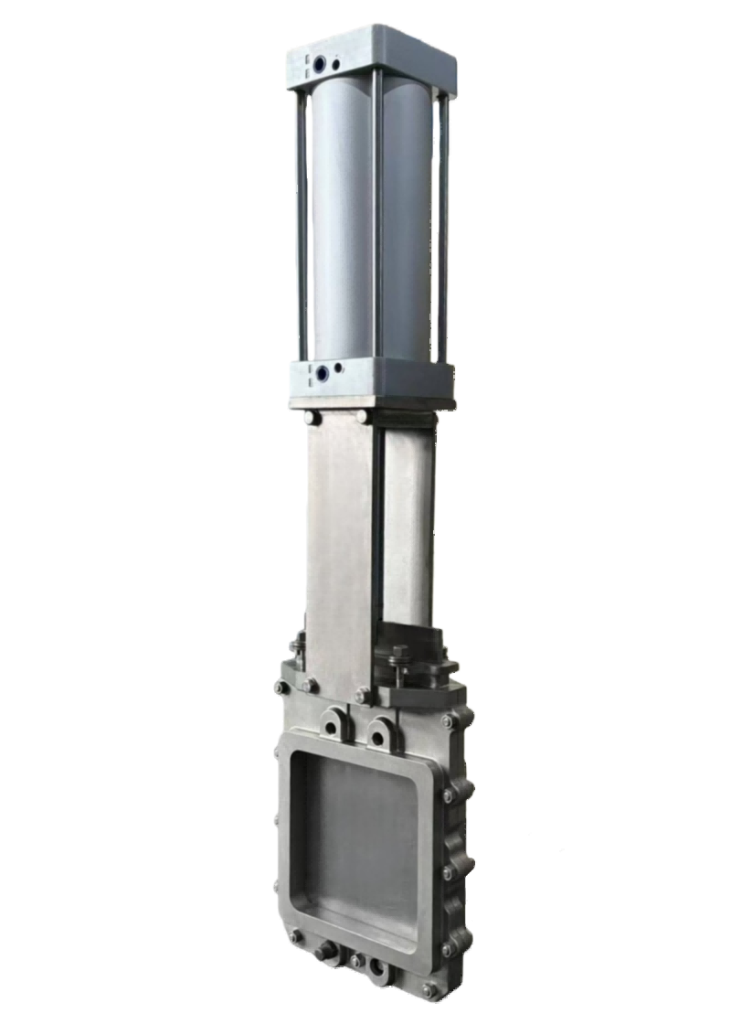
Gate, body, seat, packing, fasteners, and actuator connections may face different combinations of abrasion, corrosion, and mechanical stress. The least suitable component often determines service life.
How Should Gate and Body Materials Be Chosen?
Stainless steel gates are widespread in areas where resistance to corrosion and a smooth surface are essential. Hardfacing, coatings, or more resistant alloys can be applied to such gates to improve their resistance to abrasive wear, but the increased hardness may not be enough to withstand impacts. Besides, if the coating is brittle, it may chip when struck by foreign objects, leaving the gate surface exposed to corrosion.
Body and seat materials must match the process chemistry. A lined body can protect pressure-containing metal, while an elastomer sleeve may isolate wetted surfaces. Compatibility review should include cleaning chemicals, temperature excursions, and shutdown conditions.
What Determines the Right Actuator?
Manual handwheels suit some infrequently operated valves. Pneumatic or hydraulic cylinders are useful where repeatable movement and strong linear thrust are required. Electric actuators may fit remote operation or slower travel.
Sizing should include differential pressure, packing friction, seat resistance, solids drag, and reasonable buildup. Excess force is not a cure for poor geometry. It may hide jamming until the gate, stem, or yoke is damaged.
What Installation and Maintenance Practices Prevent Premature Failure?
Piping strain, incorrect orientation, weak flushing, and neglected packing cause many field problems. The valve must travel freely while solids remain removable from the body.
How Should the Valve Be Installed in a Slurry Line?
Flow direction must follow the approved design, particularly with unidirectional seating. Piping should support the valve without twisting the body or loading the flanges. Large actuators and yokes may need independent support.
Where slurry settles quickly, material can collect in the lower body chest. Drains, purge ports, or periodic flushing can reduce packing. Leave enough clearance to remove the gate, seat, or actuator without dismantling unrelated equipment.
Which Warning Signs Should Operators Track?
Longer stroke time, higher actuator pressure, packing leakage, incomplete travel, and gate scoring are early warnings. Uneven closing can point to buildup, stem misalignment, or guide wear.
Maintenance should cover cleaning, packing adjustment, stem inspection, seat examination, and limit-switch checks. After a forced closure, inspect the blade before normal operation. A slightly bent gate may continue cycling while cutting into the seat.
How Should Buyers Compare Knife Gate Valve Suppliers?
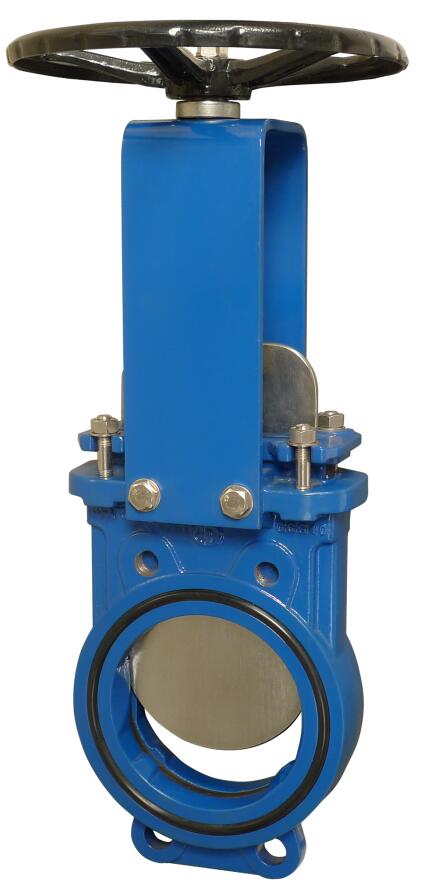
A quotation that lists only size, pressure class, and actuator type leaves important slurry risks unresolved. Small differences in seat geometry, gate thickness, and body cavities can change field performance.
What Should Be Included in the Technical Inquiry?
Supply such information as slurry composition, solids content, particle size, temperature, pressure, flow direction, cycling requirements, shutoff, installation, and supply of actuators. State whether the fluid is settled, crystallized, fibrous, or hardened when shut off.
The proposal should identify body style, seat construction, gate material and thickness, packing, stem, actuator-sizing basis, flush connections, face-to-face dimensions, and replaceable parts. Drawings should show the supplied configuration, not a generic catalog version.
Which Quality Controls Reduce Repeat-Order Risk?
Inspect body dimensions, flange drilling, gate finish, seat condition, packing arrangement, stem alignment, actuator travel, and leakage testing. The valve should complete its full stroke smoothly before shipment.
For repeat orders, approve the material list, drawings, actuator specification, coating details, and acceptance criteria. Changes to the gate, seat compound, sleeve, packing, cylinder bore, or body machining should require notice and renewed review.
How Can a Valve Supplier Support High-Solid Slurry Projects?
Miwival suppliers can provide solutions to manufacturers for industrial valves used for flow control, including knife gate valves for abrasive, fibrous, and high-solids applications. A project inquiry may specify the nature of the slurry, its concentration, solids content, particle size, temperature, operating pressure, flow direction, frequency of cycling, need for shutoff, installation location, and actuator preference. Technical evaluation should include consideration of body style, gate material, seat design, packing, and connections for flushing, size of actuators, maintenance access, and availability of replaceable parts. Quotations should identify the approved construction, accessories, inspection items, packaging, lead time, and required documentation. Before production, buyers should approve drawings, material lists, test procedures, actuator data, nameplates, and change-control requirements for future repeat orders.
Conclusion
The knife gate valves are suitable for use with high-solids slurries, as their design minimizes the contact surfaces and facilitates cleaning. The reason is the reduced number of places where the product can adhere, due to the thin gate, the open bore, and the direct motion of the closure element. Nonetheless, the valves’ performance is highly dependent on the seat design, materials, the actuator capacity, proper installation, and maintenance. Therefore, it is essential to describe the properties of the fluid and examine the valve’s geometry, ensuring that it is possible to flush the system and replace the components. Overall, the proper choice of the knife gate valves allows isolation of the challenging medium without applying excessive actuation forces.
FAQs
1. Can a Knife Gate Valve Cut Through All Solid Material in a Slurry?
No. It can pass through soft deposits, fibers, and settled slurry, but large stones, metal fragments, or hardened scale may jam the gate or damage the edge.
2. Are Knife Gate Valves Suitable for Throttling Slurry Flow?
They are mainly used for isolation. Partial opening can create high velocity, vibration, and concentrated wear unless the valve is specifically designed and sized for control duty.
3. Which Seat Type Is Suitable for Abrasive Slurry?
The choice depends on particle hardness, temperature, chemistry, shutoff requirement, and flow direction. Resilient sleeves, perimeter seats, and metal seats involve different wear and leakage trade-offs.
4. Why Does a Knife Gate Valve Become Difficult to Close?
Common causes include settled solids, packed body cavities, damaged seats, bent gates, tight packing, stem misalignment, or an actuator undersized for the actual operating condition.
5. What Data Should Buyers Send a Knife Gate Valve Supplier?
Provide media composition, solids percentage, particle size, temperature, pressure, flow direction, cycling frequency, shutoff requirement, installation orientation, settling behavior, and available actuator power details.


 consult
 WHATSAPP
 leave message
 top
top